
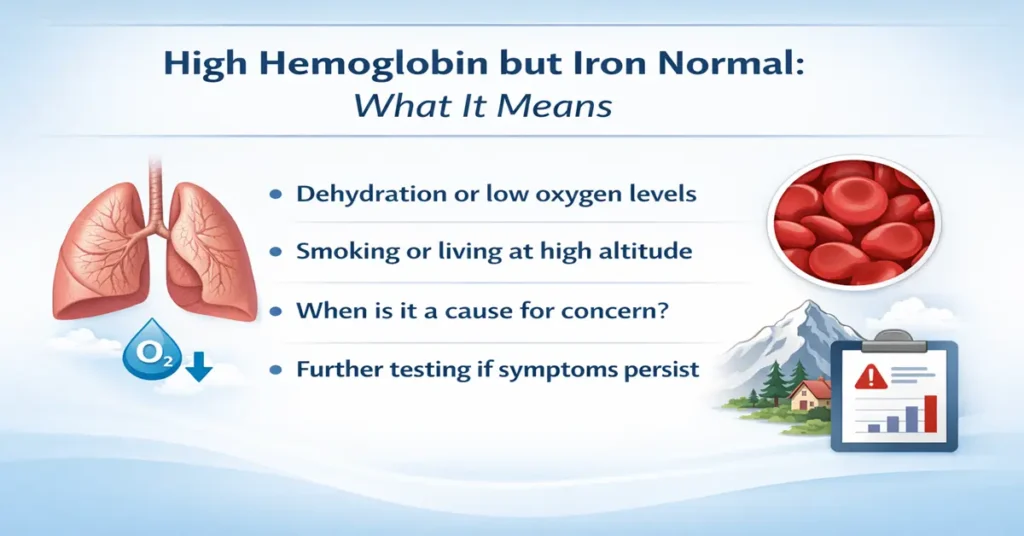
High Hemoglobin but Iron Normal – What It Means in Real Lab Practice
This is a situation I see almost every day in diagnostic labs and OPD settings:
Hemoglobin is reported as high, but iron levels are completely normal.
Naturally, this confuses patients and even some students, because iron is commonly linked with hemoglobin. Many people assume that if hemoglobin is high, iron must also be high. Clinically, that assumption is not always correct.
This article focuses only on this specific report combination. It does not explain the general hemoglobin test, normal ranges, or treatment methods. The goal here is simple: to help you understand why this happens, how doctors interpret it, and when it matters.
Why This Combination Creates Confusion
In everyday understanding, iron is seen as the main driver of hemoglobin. So when iron studies come back normal, people start worrying that something is being missed or that the report is inaccurate.
From real laboratory experience, this combination is very common and, in most routine cases, not a sign of disease. Hemoglobin levels are influenced by many factors beyond iron availability.
Iron helps build hemoglobin, but it does not control how concentrated your blood is on the day of testing.
What High Hemoglobin with Normal Iron Usually Indicates
In routine diagnostic practice, this pattern most often reflects blood concentration or physiological variation, not excess iron or a serious disorder.
In simple terms:
- Your body has enough iron
- There is no iron overload
- Hemoglobin appears high due to factors affecting blood volume or oxygen demand
This is why doctors usually remain calm when reviewing such reports.
Real-World Lab and OPD Examples
Mild dehydration before testing
Patients who come for blood tests after poor fluid intake often show higher hemoglobin. Iron remains normal. After proper hydration and repeat testing, values usually settle.
Smoking-related changes
Smokers frequently show slightly elevated hemoglobin while iron studies remain normal. This is a well-known physiological response and not an iron problem.
Outdoor work and heat exposure
People working long hours in hot environments often show higher hemoglobin due to fluid loss and concentration of blood.
Natural body variation
Some individuals naturally maintain hemoglobin on the higher side without any underlying disease. Iron studies help confirm that this is not iron-related.
Why Iron Can Be Normal Even When Hemoglobin Is High
Iron tests measure:
- Iron availability in blood
- Iron storage in the body
They do not measure blood thickness, plasma volume, or oxygen demand.
Hemoglobin levels can rise due to:
- Reduced plasma volume
- Increased red cell concentration
- Environmental or lifestyle factors
So normal iron with high hemoglobin is clinically logical and frequently seen.
How Doctors Clinically Interpret This Report
From a diagnostic and clinical coordination perspective, doctors usually think along these lines:
- Iron deficiency is ruled out
- Iron overload is unlikely
- Correlate with hydration, habits, and symptoms
- No treatment needed if the patient feels well
Doctors do not make decisions based on hemoglobin alone. The full blood count, iron profile, and clinical condition always matter more.
When This Finding Is Usually Harmless
From routine lab experience, this combination is usually harmless when:
- Iron studies are normal
- Hemoglobin elevation is mild
- Other CBC parameters are stable
- The patient has no concerning symptoms
- There is no relevant medical history
In such cases, reassurance and observation are sufficient.
When Doctors Pay Closer Attention
Further evaluation is considered if:
- Hemoglobin remains high on repeated tests
- Hematocrit is also persistently elevated
- The patient reports symptoms such as headaches or dizziness
- There is a known history of heart, lung, or sleep-related conditions
Even in these situations, normal iron is considered a reassuring finding.
Should Iron Supplements Be Taken?
From practical lab experience, the answer is clear: no.
Iron supplements are not given when iron levels are normal. Taking iron unnecessarily can create imbalance and may complicate future reports. Doctors only prescribe iron when iron deficiency is proven.
Is Repeat Testing Always Required?
In most routine cases:
- Repeat testing is not urgent
- Doctors may advise a repeat CBC after ensuring good hydration
- This is done for confirmation, not because of immediate concern
If the patient is asymptomatic, repeat testing is often optional.
What This Report Does Not Mean
This combination does not automatically indicate:
- A blood cancer
- Iron overload
- A need to reduce hemoglobin urgently
- A serious medical condition in most cases
These fears are common but rarely supported by routine lab findings.
How This Is Explained to Patients in OPD
In daily OPD practice, the explanation is usually simple and reassuring:
“Iron levels are normal, which is good. Hemoglobin is slightly high, often due to body concentration or lifestyle factors. No treatment is needed right now.”
This approach avoids unnecessary anxiety.
Test Preparation
To avoid falsely high hemoglobin readings:
- Drink adequate water before blood sampling
- Avoid heavy smoking before the test
- Follow fasting instructions if advised
- Inform the lab about recent illness or dehydration
Proper preparation improves report accuracy.
When to Consult a Doctor
Consult a doctor if:
- Hemoglobin remains high on repeated tests
- You experience persistent symptoms such as headache or dizziness
- Other blood parameters are abnormal
- A doctor advises further evaluation based on clinical findings
Otherwise, routine follow-up is usually enough.
Important Word Explanations
Hemoglobin
A protein in red blood cells that carries oxygen throughout the body.
Iron Studies
Blood tests that assess iron availability and storage.
Dehydration
A state where the body has low fluid levels, causing blood concentration.
CBC (Complete Blood Count)
A test that measures different components of blood.
Hematocrit
The proportion of blood volume occupied by red blood cells.
Final Practical Takeaway
From real diagnostic laboratory experience, high hemoglobin with normal iron is usually a physiological or lifestyle-related finding, not a disease.
Doctors interpret this combination calmly, correlate it with clinical context, and rarely recommend treatment when iron levels are normal.
~END~