
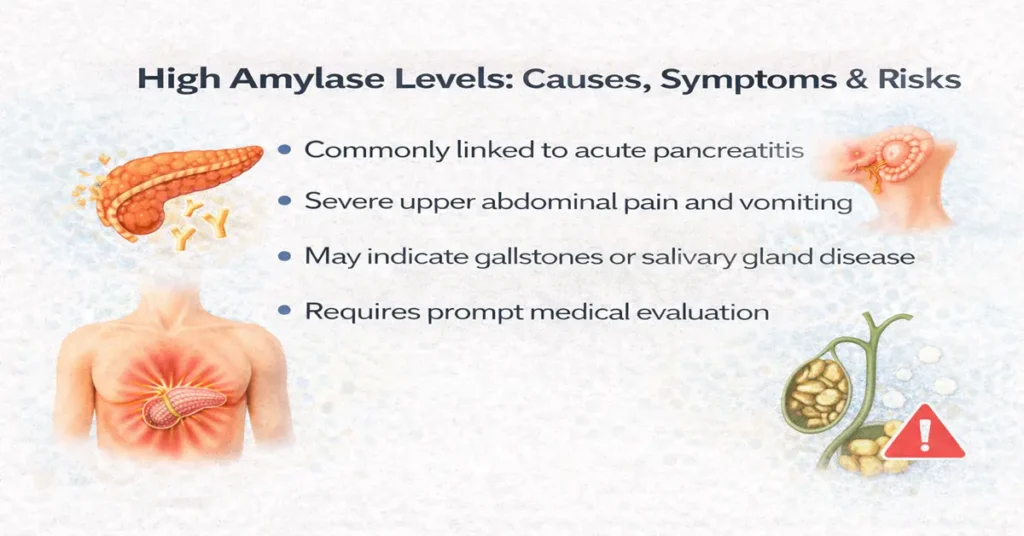
Causes and Symptoms of High Amylase Levels
Amylase is a digestive enzyme that helps break down carbohydrates into simpler sugars so the body can absorb and use them for energy. It is produced mainly by the pancreas, with a smaller contribution from the salivary glands. When amylase levels rise above the normal range, it usually signals irritation, inflammation, blockage, or injury involving the pancreas, salivary glands, or nearby organs.
High amylase levels matter clinically because they are rarely a problem on their own. In routine lab practice, an elevated value almost always points toward an underlying condition that needs to be understood and addressed. There is no safe way to “lower amylase” directly at home. Management is always about identifying and treating the cause, not suppressing the enzyme itself.
Understanding High Levels
High amylase levels, also called hyperamylasemia, occur when excess enzyme leaks into the bloodstream. This leakage most commonly happens when pancreatic tissue is inflamed or when normal drainage of digestive juices is blocked.
Clinically, amylase is often checked when a patient presents with abdominal pain, vomiting, or suspected pancreatic disease. Sometimes, elevated levels are found incidentally during routine testing, before symptoms become obvious. In such cases, doctors usually pause and correlate the result with symptoms, examination findings, and other tests rather than reacting to the number alone.
It is important to remember that amylase by itself does not confirm a diagnosis. It is one piece of the clinical picture and must be interpreted alongside lipase levels, imaging studies, and the patient’s overall condition.
Major Causes of High Amylase Levels
The most common and medically significant cause of high amylase is acute pancreatitis. Inflammation of the pancreas allows digestive enzymes to escape into the blood, leading to a sharp rise in levels.
Chronic pancreatitis can also raise amylase, especially during flare-ups. However, in advanced chronic disease, amylase may become normal or even low because enzyme-producing tissue is lost.
Salivary gland conditions are another frequent cause. Infections such as mumps, inflammation of the salivary glands, or blockage of salivary ducts can elevate amylase because saliva contributes to circulating enzyme levels.
Gallstones are a well-known trigger. When a stone blocks the pancreatic duct, enzymes back up into the pancreas, causing inflammation and enzyme leakage.
Other causes seen in practice include intestinal obstruction, perforation of the gastrointestinal tract, severe peptic ulcer disease, abdominal trauma, kidney disease (due to reduced clearance of amylase), and certain cancers involving the pancreas or digestive system. Some medications, including specific painkillers, diuretics, and chemotherapy agents, may also increase amylase levels.
Symptoms That Commonly Appear
Symptoms depend mainly on the underlying condition rather than the enzyme level itself. In pancreatic causes, upper abdominal pain is the most prominent feature. The pain may radiate to the back and often becomes worse after eating.
Nausea and repeated vomiting are common, particularly in acute pancreatitis. Many patients also experience loss of appetite, abdominal tenderness, and bloating.
When salivary glands are involved, swelling or pain near the jaw or cheeks may be noticed, especially during meals.
Fever, weakness, and general discomfort can occur if infection or significant inflammation is present. In more severe cases, dehydration, rapid heartbeat, or low blood pressure may develop and require urgent medical attention.
Complications of Long-Term High Levels
Persistently high amylase levels usually reflect ongoing disease activity. If the underlying problem is not treated, complications can develop.
Repeated pancreatic inflammation can lead to permanent pancreatic damage, chronic pancreatitis, diabetes, and long-term digestive difficulties. Severe episodes may result in pancreatic necrosis, infection, fluid collections, or organ failure.
If gallstones or duct obstruction are responsible, delayed treatment increases the risk of infection and recurrent pancreatitis.
In kidney disease, elevated amylase often reflects reduced clearance rather than increased production, but it still signals the need for close monitoring and careful interpretation.
Early recognition and appropriate management significantly reduce the risk of these long-term problems.
How Levels Are Managed Safely
Amylase is an essential digestive enzyme, so there is no safe or appropriate way to reduce its level directly. Any attempt to suppress enzyme production without medical supervision can be harmful.
Safe management always targets the underlying cause. In acute pancreatitis, this may involve hospital care, pain control, intravenous fluids, and temporary restriction of oral intake to allow the pancreas to rest.
When gallstones are the cause, procedures to remove stones or relieve duct blockage may be required. Infections are treated according to their cause, and medication-related elevations often resolve once the drug is adjusted or stopped under medical guidance.
Avoiding alcohol and following medical advice for underlying conditions help prevent recurrence but are not direct methods to lower amylase.
Additional Information
Amylase is often measured together with lipase, another pancreatic enzyme that is more specific for pancreatic injury. Lipase tends to stay elevated longer and often helps confirm pancreatic involvement.
Some people have persistently high amylase without symptoms, a benign condition known as macroamylasemia. In this situation, amylase binds to large proteins in the blood and is cleared slowly, causing high readings without true disease. Differentiating this from serious conditions requires additional testing and clinical judgment.
Test Preparation
Preparation for an amylase test is usually simple. Some laboratories recommend short fasting, depending on protocol.
Alcohol should be avoided before testing, as it can influence pancreatic enzyme levels. Patients should inform their healthcare provider about all medications, supplements, and recent illnesses, as these can affect results.
When to See a Doctor
Medical evaluation is important if symptoms such as severe or persistent abdominal pain, repeated vomiting, fever, or unexplained weakness occur.
Urgent attention is needed if pain is sudden, intense, or accompanied by signs of dehydration or low blood pressure.
People with a history of pancreatitis, gallstones, heavy alcohol use, or kidney disease should seek medical advice promptly if amylase levels are elevated.
Sample Type
The amylase test is usually performed on a blood sample drawn from a vein in the arm. In selected cases, urine amylase testing may also be used to support diagnosis.
Results are always interpreted alongside other laboratory tests and clinical findings.
Important Word Explanations
Amylase: A digestive enzyme that breaks down carbohydrates into simple sugars
Pancreatitis: Inflammation of the pancreas that often causes abdominal pain and enzyme elevation
Hyperamylasemia: Abnormally high levels of amylase in the blood
Lipase: A pancreatic enzyme that helps digest fats and supports diagnosis of pancreatic disease
Macroamylasemia: A benign condition where amylase remains elevated due to reduced clearance, not active disease
People Also Ask
Is a high amylase level always serious?
Not always. Some elevations are mild or temporary, but they should still be evaluated in context.
Can high amylase be temporary?
Yes. Levels may rise during short-term inflammation or illness and return to normal after recovery.
Does high amylase always mean pancreatitis?
No. Salivary gland problems, gallstones, kidney disease, and other conditions can also raise amylase.
When do doctors usually worry about high amylase?
When levels are significantly elevated and accompanied by abdominal pain or other symptoms.
Is repeat testing common for high amylase?
Yes. Repeat tests are often done to monitor trends and response to treatment.
Can amylase be high without symptoms?
Yes. Some people have elevated levels without symptoms, but this still needs proper evaluation.
~END~