
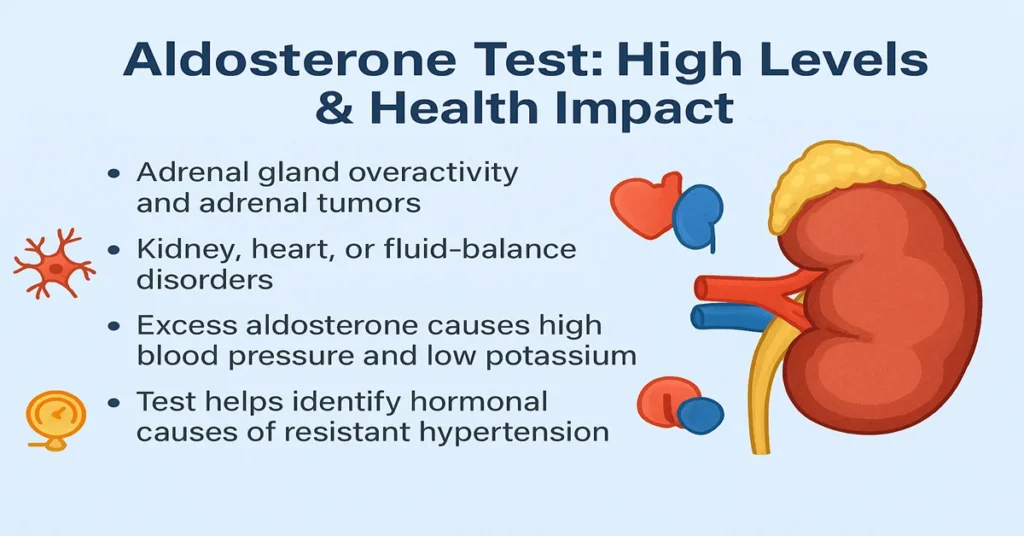
Causes and Symptoms of High Aldosterone Levels
Understanding High Aldosterone Levels
Aldosterone is an important hormone produced by the adrenal glands, which are located on top of the kidneys. In routine clinical terms, its main job is quite practical: it helps the body decide how much sodium and water to keep and how much potassium to remove through the kidneys. By doing this, aldosterone plays a direct role in controlling blood pressure and overall fluid balance.
High aldosterone levels, medically referred to as hyperaldosteronism, occur when the adrenal glands release more aldosterone than the body actually needs. When this happens, the kidneys hold on to excess sodium and water while pushing out potassium. Over time, this imbalance leads to persistent high blood pressure and low potassium levels.
Clinically, high aldosterone is rarely just a lifestyle issue. In most patients, it points toward an underlying hormonal or organ-related cause. One important challenge is that many people feel “mostly fine” in the early stages, which is why the condition is often discovered only after repeated blood pressure problems or abnormal lab reports.
Major Causes of High Aldosterone Levels
The causes of high aldosterone levels are broadly divided into primary and secondary types, based on where the problem originates.
Primary hyperaldosteronism occurs when the adrenal glands themselves are overproducing aldosterone. The most common reasons are aldosterone-producing adrenal adenomas (benign tumors) and bilateral adrenal hyperplasia, where both adrenal glands are overactive. In these situations, aldosterone secretion is excessive even though the body does not actually need it.
Secondary hyperaldosteronism develops when another condition sends signals that stimulate the adrenal glands to release more aldosterone. This is commonly seen in chronic kidney disease, narrowing of the kidney arteries, heart failure, liver cirrhosis, or states of significant fluid loss. In these cases, the body incorrectly senses low blood volume or pressure and responds by increasing aldosterone output.
Certain medications, particularly long-term use of diuretics, can also increase aldosterone levels indirectly. Rare genetic or inherited conditions affecting hormone regulation may be responsible, especially in younger individuals with early-onset or resistant hypertension.
Symptoms That Commonly Appear
High aldosterone levels do not cause symptoms directly. Instead, symptoms arise from the effects of excess aldosterone on blood pressure and electrolytes.
One of the most common clinical features is high blood pressure that is difficult to control, even with multiple medications. Many patients are referred for aldosterone testing only after repeated treatment failures.
Low potassium levels caused by excess aldosterone can lead to muscle weakness, fatigue, muscle cramps, and tingling sensations. In routine practice, patients may describe feeling unusually tired or having heavy, weak muscles without a clear reason.
Frequent urination and increased thirst may occur due to altered kidney handling of fluids. Headaches, dizziness, or visual disturbances can appear when blood pressure remains uncontrolled for long periods.
In more pronounced cases, low potassium may trigger abnormal heart rhythms, which can present as palpitations or a feeling of skipped heartbeats. Some patients, however, may have very few symptoms, making blood tests essential for diagnosis.
Complications of Long-Term High Aldosterone Levels
If high aldosterone levels remain untreated, they can lead to significant long-term complications. Persistent high blood pressure increases the risk of heart attack, stroke, and heart failure.
Beyond blood pressure alone, aldosterone has a direct damaging effect on the heart and blood vessels. Over time, it can cause thickening of the heart muscle and stiffening of arteries, increasing cardiovascular risk even more than expected.
The kidneys are also affected. Ongoing sodium retention and potassium loss place stress on kidney function and may contribute to chronic kidney disease. Severe or prolonged potassium imbalance can increase the risk of dangerous cardiac arrhythmias.
From clinical experience, patients often do much better when aldosterone excess is identified early, before permanent heart or kidney damage develops.
How to Reduce Aldosterone Levels Safely
Aldosterone is a hormone, and there is no safe way to reduce its levels naturally or without medical supervision. Management always focuses on identifying and treating the underlying cause.
Doctors may prescribe medications called aldosterone antagonists, which block the hormone’s effect on the kidneys. These medications help lower blood pressure and correct potassium levels. In cases caused by adrenal tumors, surgical removal of the affected adrenal gland may be advised.
When high aldosterone is secondary to another condition, treating that primary problem—such as improving heart function or managing kidney disease—often brings aldosterone levels down.
Lifestyle measures like moderating salt intake and following prescribed blood pressure treatment can support medical care, but they cannot replace proper diagnosis and treatment. Regular follow-up is essential.
Additional Information
Aldosterone testing is usually interpreted together with renin levels, using the aldosterone-to-renin ratio to identify the cause more accurately. Imaging studies such as CT scans may be needed to assess adrenal structure.
Not every person with high blood pressure needs aldosterone testing. It is especially valuable in younger patients, those with resistant hypertension, or individuals with unexplained low potassium levels. Early detection often changes long-term outcomes.
Test Preparation
Proper preparation is important for accurate aldosterone results. Certain blood pressure medications, diuretics, and hormone-related drugs may need adjustment before testing under medical guidance.
Salt intake, posture, and time of sample collection can influence results. Patients are usually advised to maintain a normal salt diet and follow specific instructions about standing or resting before sample collection.
When to See a Doctor
You should consult a doctor if your blood pressure remains high despite treatment, particularly if it started at a young age. Symptoms such as muscle weakness, unexplained fatigue, frequent urination, or repeated low potassium reports should not be ignored.
Early evaluation is especially important if there is a family history of hormonal disorders, early strokes, or difficult-to-control hypertension.
Sample Type
The aldosterone test is typically done using a blood sample drawn from a vein in the arm. In some situations, a 24-hour urine sample may be used to assess aldosterone production over time. The choice depends on clinical judgment.
Important Word Explanations
Aldosterone: A hormone produced by the adrenal glands that controls sodium, potassium, and blood pressure.
Hyperaldosteronism: A condition in which too much aldosterone is produced.
Electrolytes: Minerals such as sodium and potassium that support nerve, muscle, and heart function.
Hypertension: Persistently elevated blood pressure.
Aldosterone Antagonists: Medicines that block aldosterone’s action on the kidneys.
People Also Ask
Is high aldosterone always dangerous?
Not always immediately, but long-term elevation can damage the heart, kidneys, and blood vessels if untreated.
Can high aldosterone be temporary?
Yes. In some cases, it can rise temporarily due to dehydration, medications, or acute illness.
Does high aldosterone always mean an adrenal tumor?
No. Many cases are caused by kidney, heart, or circulation-related conditions rather than tumors.
When do doctors usually worry about aldosterone levels?
When high levels are linked with difficult-to-control blood pressure or low potassium.
Is repeat testing common for aldosterone?
Yes. Repeat or confirmatory tests are often needed to establish the diagnosis.
Can high aldosterone exist without symptoms?
Yes. Many patients have minimal symptoms, which is why lab testing plays a key role.
~END~