
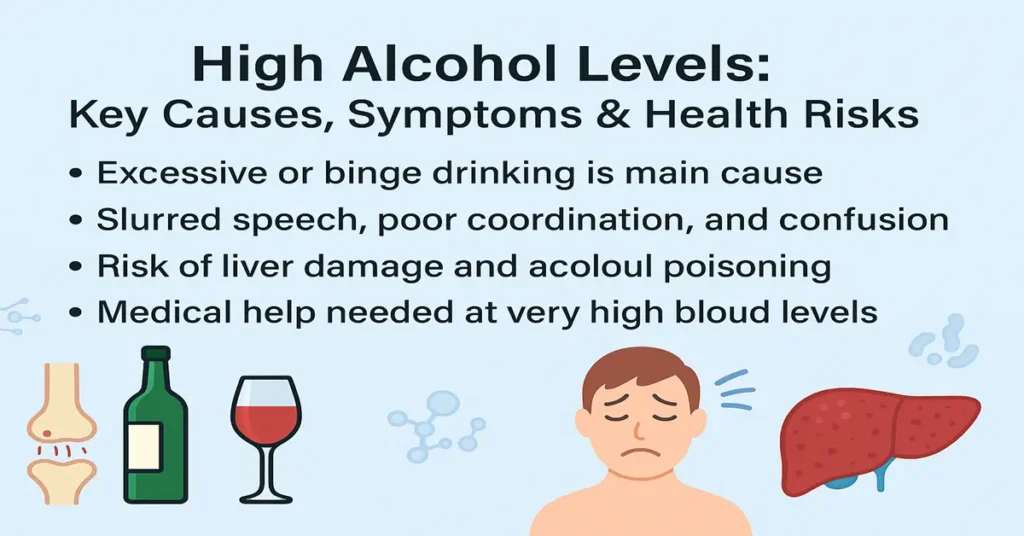
Causes and Symptoms of High Alcohol Levels
Understanding High Levels
High alcohol levels refer to an increased concentration of alcohol in the blood, usually measured as Blood Alcohol Concentration (BAC). After alcohol is consumed, it is absorbed quickly from the stomach and intestines into the bloodstream and then processed mainly by the liver. The liver can break down only a limited amount of alcohol per hour. When drinking happens faster than this processing capacity, alcohol starts to accumulate in the blood.
In routine clinical practice, high alcohol levels are not seen only in people who drink heavily every day. They are also commonly seen after binge drinking episodes, social drinking without food, or in individuals whose bodies metabolize alcohol more slowly. Liver health, body weight, age, and genetic factors all influence how quickly alcohol is cleared.
Persistently high alcohol levels matter because alcohol affects almost every organ system. Short-term effects may look mild at first, but as levels rise, the impact on the brain, heart, and liver becomes more pronounced and potentially dangerous.
Major Causes of High Levels
The most direct cause of high alcohol levels is consuming a large quantity of alcohol in a short time. Binge drinking overwhelms the liver, leading to a rapid rise in blood alcohol levels.
Chronic heavy alcohol use is another important cause. Over time, repeated exposure damages liver cells, slowing alcohol metabolism. In routine lab settings, patients with fatty liver, alcoholic hepatitis, or cirrhosis often show higher and more prolonged blood alcohol levels even with smaller amounts of intake.
Drinking on an empty stomach plays a significant role. Without food to slow absorption, alcohol enters the bloodstream much faster, resulting in higher peak levels. This is a common reason people feel intoxicated more quickly than expected.
Certain medications can intensify alcohol’s effects or slow its breakdown. Sedatives, pain medications, antidepressants, and some sleep aids are well-known examples. Age and body composition also matter. Older adults and individuals with lower muscle mass tend to develop higher blood alcohol levels from the same intake compared to younger or more muscular individuals.
Symptoms That Commonly Appear
Symptoms of high alcohol levels depend on how much alcohol is present in the blood and how quickly it has risen. Early signs often include relaxation, reduced inhibitions, impaired judgment, and slowed reaction time. Clinically, this is the stage where people underestimate risk.
As levels increase, coordination becomes poor. Speech may slur, walking becomes unsteady, and concentration declines. Nausea, vomiting, headache, and dizziness are common at this stage. Emotional changes such as irritability, sadness, or aggression may appear.
With further rise, memory blackouts can occur. Patients may be awake but unable to recall events later. In routine emergency practice, this is a frequent presentation after binge drinking.
At very high levels, alcohol becomes toxic. Symptoms include confusion, extreme drowsiness, slowed or irregular breathing, low body temperature, pale or bluish skin, and loss of consciousness. This stage represents alcohol poisoning and requires urgent medical attention because vital functions can be suppressed.
Complications of Long-Term High Levels
Repeated exposure to high alcohol levels causes cumulative damage. The liver is most commonly affected. Conditions such as fatty liver, alcoholic hepatitis, fibrosis, and eventually cirrhosis can develop. As liver function worsens, alcohol clearance slows further, creating a harmful cycle.
The brain and nervous system also suffer. Long-term effects include memory impairment, difficulty concentrating, nerve damage, and mood disorders such as anxiety and depression. Clinically, patients often report poor sleep and reduced cognitive performance.
Cardiovascular complications include high blood pressure, irregular heart rhythms, and increased risk of stroke. Digestive system problems such as gastritis, ulcers, pancreatitis, and poor nutrient absorption are also common.
High alcohol levels weaken immune function, making infections more frequent and severe. Beyond physical health, long-term alcohol exposure often leads to accidents, injuries, and social or occupational difficulties.
How to Reduce Levels Naturally or Safely
Once alcohol is in the bloodstream, there is no safe or quick method to remove it instantly. The only real solution is time, allowing the liver to metabolize alcohol at its natural rate. Stopping further intake is the most important step.
Drinking water helps prevent dehydration and supports overall body function, but it does not speed up alcohol breakdown. Eating food before or while drinking slows absorption and reduces how high levels rise, but it does not eliminate alcohol already absorbed.
Adequate rest allows the body to recover as alcohol levels fall naturally. For individuals who drink regularly, spacing drinks, setting limits, and avoiding binge patterns reduce the risk of high levels.
People with liver disease or long-standing heavy alcohol use should not attempt sudden changes without medical advice. In such cases, supervised reduction may be necessary to avoid withdrawal complications.
Additional Information
Alcohol tolerance can be misleading. A person who appears “used to” alcohol may still have dangerously high blood levels and ongoing organ damage. Feeling alert does not mean alcohol levels are safe.
Caffeine, cold showers, or physical activity do not lower blood alcohol levels. They may change how alert someone feels, but the amount of alcohol in the blood remains the same. In routine lab practice, only time changes BAC.
Alcohol levels are assessed using blood tests, breath analysis, and clinical examination. Blood testing remains the most accurate method for medical evaluation.
Test Preparation
For planned alcohol blood testing, patients are usually advised to avoid alcohol for a specified period unless testing is done for emergency or legal reasons. It is important to inform the healthcare provider about recent alcohol intake, medications, and existing medical conditions. Fasting is not required unless other tests are being performed at the same time.
When to See a Doctor
Medical help is required if there is confusion, repeated vomiting, fainting, slowed breathing, seizures, or unresponsiveness after alcohol intake. Ongoing symptoms such as abdominal pain, jaundice, persistent fatigue, or difficulty controlling alcohol use should also prompt medical evaluation. Early intervention reduces long-term harm.
Sample Type
Alcohol levels are most commonly measured using a blood sample drawn from a vein. Breath and urine tests may be used in some settings, but blood testing provides the most accurate measurement for clinical decision-making.
Important Word Explanations
Blood Alcohol Concentration (BAC): The amount of alcohol present in the blood.
Binge Drinking: Consuming a large quantity of alcohol in a short period.
Metabolism: The process by which the body breaks down alcohol.
Cirrhosis: Advanced scarring of the liver due to long-term damage.
Alcohol Poisoning: A life-threatening condition caused by extremely high alcohol levels.
People Also Ask
Is a high alcohol level always dangerous?
Mild elevations may cause only temporary symptoms, but very high levels can be life-threatening.
Can alcohol levels stay high longer in some people?
Yes. Liver disease, age, body composition, and genetics can slow alcohol breakdown.
Does tolerance mean alcohol levels are safe?
No. Tolerance does not protect organs from damage or reduce blood alcohol levels.
When do doctors usually worry about alcohol levels?
When there are neurological symptoms, breathing problems, or signs of organ stress.
Is repeat testing common for alcohol levels?
Yes. In hospitals, repeat testing is often done to monitor clearance and safety.
Can coffee or cold showers lower alcohol levels?
No. They may increase alertness but do not reduce alcohol in the blood.
~END~