
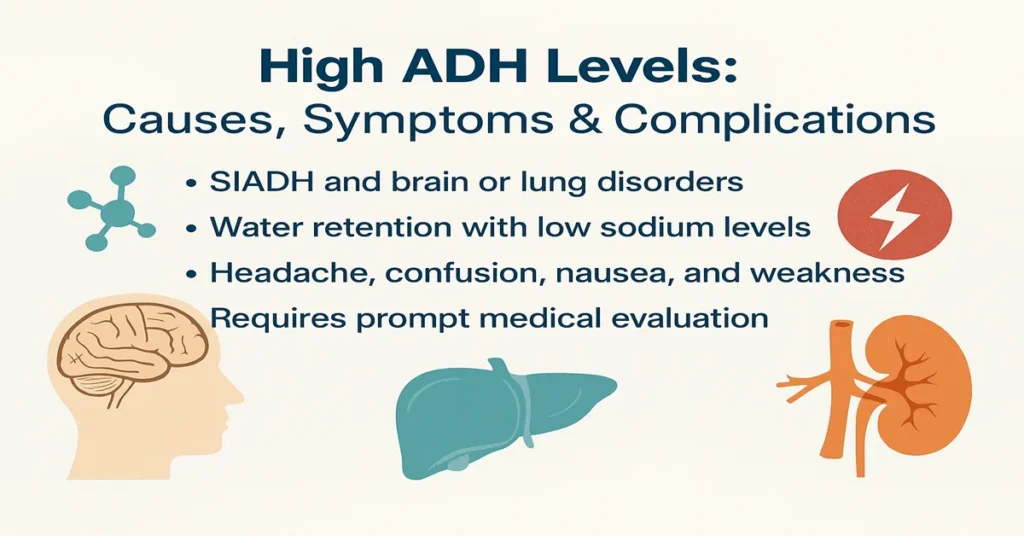
Causes and Symptoms of High ADH Levels
Antidiuretic hormone (ADH), also called vasopressin, plays a central role in controlling how the body handles water. It tells the kidneys how much water to retain and how much to pass out as urine. When ADH levels become higher than needed, this balance shifts. The body holds on to excess water, blood becomes diluted, and sodium levels fall. Clinically, this situation needs careful attention because even modest changes can lead to significant symptoms.
High ADH levels are not something to manage on your own. ADH is tightly regulated by the brain–kidney system, and incorrect correction can be harmful. Understanding why ADH becomes high and how it affects the body helps patients and clinicians respond in a safe, timely way.
Understanding High Levels
High ADH levels mean that the hormone is being released or acting even when the body does not need to conserve water. The kidneys respond by reabsorbing more water than usual, leading to reduced urine output and dilution of blood sodium.
In routine hospital practice, this pattern is most often seen in a condition called syndrome of inappropriate antidiuretic hormone secretion (SIADH). In SIADH, ADH release continues despite normal or low body water needs. This is very different from the normal rise in ADH that occurs during dehydration, where conserving water is protective.
High ADH may develop slowly or appear suddenly, depending on the cause. Early on, symptoms can be vague, which is why laboratory testing is often required to identify the problem before it becomes severe.
Major Causes of High ADH Levels
High ADH levels usually result from abnormal hormone release, increased sensitivity to ADH, or as a response to illness elsewhere in the body.
Neurological conditions are a common trigger. Stroke, head injury, brain tumors, infections of the brain, or bleeding within the brain can all disturb normal ADH regulation. Clinically, this is often seen after neurosurgery or acute brain injury.
Lung-related diseases are another important group. Pneumonia, tuberculosis, chronic lung infections, and certain lung cancers can stimulate excess ADH release. Some tumors are capable of producing ADH themselves, leading to persistent elevation.
Medications are a frequent and sometimes overlooked cause. Drugs such as antidepressants, antipsychotics, anti-seizure medicines, chemotherapy agents, and some pain medications can raise ADH levels or enhance its action. Severe stress, major surgery, or acute illness can also temporarily increase ADH as part of the body’s stress response.
Rarely, endocrine or inherited conditions interfere with the normal feedback mechanisms that control ADH secretion.
Symptoms That Commonly Appear
Symptoms of high ADH are mainly related to water retention and low blood sodium, a condition known as hyponatremia.
Early symptoms are often mild and nonspecific. Patients may feel nauseated, develop headaches, lose appetite, or feel unusually tired. Because these symptoms are common in many illnesses, they are easy to miss.
As sodium levels fall further, neurological symptoms become more noticeable. People may experience confusion, poor concentration, muscle cramps, and generalized weakness. In clinical practice, this is often the stage where blood tests reveal the underlying problem.
In more severe cases, symptoms can escalate to vomiting, severe headache, personality changes, agitation, or abnormal behavior. When sodium drops rapidly or to very low levels, seizures, loss of consciousness, and coma can occur. This is why timely diagnosis is so important.
Complications of Long-Term High Levels
Persistently high ADH levels can cause chronic hyponatremia, which carries real risks if left untreated. One major concern is brain swelling, as excess water moves into brain cells. Over time, this can result in lasting neurological problems.
Older adults are particularly vulnerable. Balance issues, falls, memory problems, and reduced independence are commonly seen when sodium remains low for prolonged periods.
Severe electrolyte imbalance can also strain the heart and kidneys, especially in people who already have chronic medical conditions. Many patients with advanced symptoms require hospitalization for safe correction.
It is equally important to note that correcting sodium too quickly can be dangerous. This is why treatment must be controlled and medically supervised.
How to Reduce Levels Safely
There is no safe home method to lower high ADH levels. Management always focuses on identifying and treating the underlying cause.
In practice, this means treating infections, stabilizing lung disease, or managing neurological conditions when present. Reviewing medications is essential. If a drug is contributing to high ADH, doctors may adjust the dose or switch to an alternative.
Fluid restriction is commonly used, but only under medical guidance. This helps prevent further dilution of sodium. In more severe cases, doctors may use medications that reduce ADH action or carefully controlled intravenous fluids.
Close monitoring is critical. Sodium levels must be corrected gradually to avoid complications, which is why many patients are treated in a hospital setting.
Additional Information
High ADH levels are rarely diagnosed on hormone testing alone. Clinicians usually interpret results alongside serum sodium, plasma osmolality, and urine concentration tests to understand the full picture of water balance.
Symptoms can fluctuate with fluid intake, medications, and intercurrent illness. For this reason, repeat testing and follow-up are common. In critically ill patients, high ADH may coexist with other hormonal disturbances, making a broader endocrine assessment necessary.
Test Preparation
Preparation for ADH testing depends on the clinical context. Patients are often advised not to drink excessive fluids before testing, as overhydration can affect results.
Some medications may need temporary adjustment, but only under medical advice. In certain situations, fasting or controlled fluid intake is required to obtain accurate measurements. Following instructions carefully helps avoid misleading values.
When to See a Doctor
Medical evaluation is important if symptoms such as persistent nausea, headaches, confusion, muscle cramps, or unexplained fatigue appear. Sudden changes in mental status, seizures, or severe weakness require emergency care.
People with lung disease, neurological conditions, or those taking medications known to affect ADH should seek medical advice promptly if symptoms develop. Early diagnosis allows safer correction and prevents long-term complications.
Sample Type
ADH testing is performed on a blood sample drawn from a vein. To assess water balance more accurately, urine samples and additional blood tests are often collected at the same time. In complex cases, specialized testing protocols may be used in hospital settings.
Important Word Explanations
Antidiuretic Hormone (ADH): A hormone that helps regulate body water by controlling urine output.
SIADH: A condition in which ADH is released inappropriately, leading to water retention and low sodium.
Hyponatremia: Abnormally low sodium levels in the blood.
Osmolality: A measure of how concentrated blood or urine is.
Electrolytes: Minerals such as sodium and potassium that are essential for nerve and muscle function.
People Also Ask
Is a high ADH level always serious?
Not always, but it needs evaluation. Persistent or severe elevation can cause dangerous sodium imbalance.
Can high ADH be temporary?
Yes. It can occur temporarily during acute illness, stress, or after surgery and may resolve as the condition improves.
Does high ADH always mean SIADH?
No. SIADH is common, but other illnesses and medications can also raise ADH levels.
When do doctors usually worry about high ADH?
When sodium levels are low, symptoms are neurological, or changes happen quickly.
Is repeat testing common in high ADH?
Yes. Repeat tests help confirm the diagnosis and monitor response to treatment.
Can symptoms come and go?
Yes. Fluid intake, medications, and other illnesses can cause symptoms to fluctuate.
~END~