
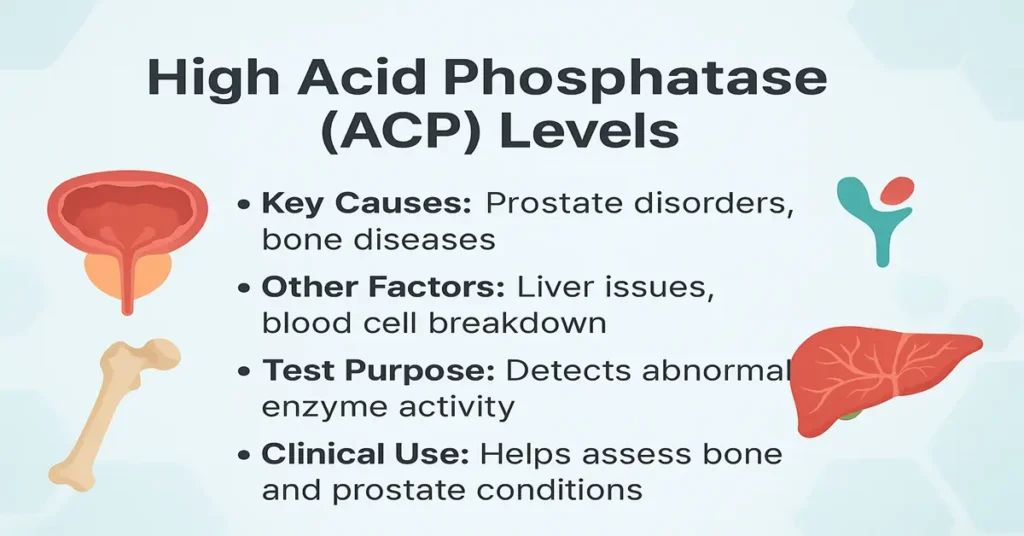
Causes and Symptoms of High Acid Phosphatase Levels
Understanding High Levels
Acid phosphatase is an enzyme present in several tissues, most notably the prostate, bones, liver, spleen, and certain blood cells. Its role is supportive, helping cells handle phosphate-containing compounds during normal metabolic activity. When acid phosphatase levels are higher than expected, it does not automatically mean disease. Clinically, it works more like a signal that prompts doctors to look at which tissue might be under stress or showing increased activity.
In routine laboratory practice, elevated acid phosphatase is often detected while investigating bone pain, prostate-related symptoms, liver concerns, or during general health evaluations. The enzyme is released into the bloodstream when cells from these tissues are damaged, inflamed, or turning over more rapidly than usual. This is why doctors never interpret a high value in isolation but always correlate it with symptoms, examination findings, and other tests.
Major Causes of High Levels
There are several well-recognized situations where acid phosphatase levels can rise. The pattern of elevation often helps clinicians narrow down the possible source.
Prostate disorders
Acid phosphatase has long been associated with prostate tissue. When prostate cells become inflamed, enlarged, or structurally abnormal, enzyme release can increase. In clinical settings, this is one of the classic reasons doctors consider ACP testing, especially when urinary or pelvic symptoms are present.
Bone diseases and high bone turnover
Bone tissue contains its own form of acid phosphatase. When bone remodeling becomes excessive, enzyme levels may rise. This is commonly seen in conditions involving increased bone turnover, healing fractures, or bone involvement from other diseases. In such cases, the elevated value reflects active cellular processes rather than the enzyme being harmful itself.
Liver or spleen conditions
Both the liver and spleen contribute to acid phosphatase production. Infections, inflammation, or metabolic stress affecting these organs can cause mild to moderate increases. In OPD practice, this is usually interpreted alongside liver function tests and imaging findings.
Blood cell breakdown
Red and white blood cells contain small amounts of acid phosphatase. When cell breakdown increases, as seen in some blood-related conditions, the enzyme may appear in higher concentrations in blood tests.
Inflammatory or metastatic conditions
Certain inflammatory states or cancers that involve the bone or liver can raise acid phosphatase levels. The rise reflects tissue stress and cellular turnover rather than serving as a diagnostic marker on its own.
Temporary or non-disease causes
Recent injuries, intense physical stress, or some medications can cause short-term enzyme elevation. These changes are often mild and resolve without intervention, but they must be considered to avoid overinterpretation.
Symptoms That Commonly Appear
High acid phosphatase levels do not produce symptoms by themselves. Any symptoms present are due to the underlying condition causing the rise.
Prostate-related symptoms
Some individuals may notice difficulty or discomfort while urinating, increased urinary frequency, weak urine flow, pelvic heaviness, or lower back discomfort.
Bone-related symptoms
Bone pain, joint stiffness, unexplained fractures, or localized swelling may suggest increased bone activity.
Liver or spleen symptoms
Fatigue, reduced appetite, abdominal discomfort, or mild yellowing of the skin or eyes can occur when liver involvement is present.
Blood cell breakdown symptoms
Pale skin, weakness, dizziness, or easy bruising may be seen in conditions affecting blood cells.
It is also common for people to have no noticeable symptoms at all, with elevated levels detected only through blood testing.
Complications of Long-Term High Levels
Persistently high acid phosphatase levels indicate ongoing tissue activity or damage. The enzyme itself does not cause harm, but ignoring the reason behind its elevation can allow the underlying condition to progress.
Possible concerns include worsening prostate conditions, progression of liver or spleen disorders, reduced bone strength in high-turnover bone states, or delayed recognition of serious illnesses. Clinically, this is why repeated elevation usually prompts further evaluation rather than reassurance alone.
How to Reduce Levels Safely
Acid phosphatase levels cannot be safely reduced through home measures because the enzyme reflects tissue activity. In medical practice, the only effective way levels come down is when the underlying cause is addressed.
When prostate-related issues are responsible, appropriate medical management often leads to gradual normalization. In bone-related conditions, stabilizing abnormal bone activity reduces enzyme release. Liver or spleen conditions improve as inflammation or infection resolves. If medications are influencing results, doctors may review and adjust them.
The key point is that treatment is always directed at the cause, not at the enzyme number itself.
Additional Information
Today, acid phosphatase testing is used less frequently than in the past, but it still has value in selected clinical situations. It is often interpreted alongside other tests such as alkaline phosphatase, prostate-specific antigen, or imaging studies to build a complete picture.
A single elevated value rarely leads to a diagnosis. In routine practice, doctors look for consistent trends, supporting symptoms, and related abnormalities before drawing conclusions.
Test Preparation
No special preparation is usually required for this test. Normal eating and drinking are allowed unless other tests require fasting. Patients should inform the doctor or laboratory staff about ongoing medications, as some drugs can influence enzyme levels. Avoiding intense physical activity just before testing can help prevent misleading results.
When to See a Doctor
Medical consultation is advised if acid phosphatase levels remain high on repeated testing or if symptoms related to the prostate, bones, liver, or blood system appear. Unexplained fatigue, bone pain, urinary changes, or abnormal lab trends should always be discussed with a healthcare professional. Early evaluation helps ensure accurate interpretation and timely management.
Sample Type
The acid phosphatase test is performed on a blood sample drawn from a vein, usually in the arm. The laboratory measures enzyme activity and compares it with the established reference range.
Important Word Explanations
Enzyme: A protein that supports chemical reactions in the body.
Bone turnover: The normal process of old bone being replaced by new bone.
Inflammation: The body’s response to injury, irritation, or infection.
Metastasis: Spread of disease from one tissue to another.
Reference range: The expected normal range used to interpret test results.
People Also Ask
Is a high acid phosphatase level serious?
Not always. It signals the need for evaluation but does not diagnose a disease by itself.
Can high levels be temporary?
Yes. Injury, stress, or certain medications can cause short-term elevation.
Does a high value always mean cancer?
No. Many non-cancerous conditions can raise acid phosphatase levels.
When do doctors usually worry about this result?
Concern increases when levels stay high over time or match concerning symptoms.
Is repeat testing common?
Yes. Doctors often repeat the test to confirm trends before making decisions.
~END~