
Overview
Hepatitis E Virus (HEV) is a virus that causes Hepatitis E, an acute (short-term) infection of the liver. It spreads primarily through contaminated food or drinking water, particularly in regions where sanitation and water quality are poor. Unlike hepatitis B or C, Hepatitis E usually does not become chronic, and most infected individuals recover completely within a few weeks.
That said, HEV is not always harmless. Certain groups are at much higher risk of severe illness, especially pregnant women—particularly during the third trimester, individuals with weakened immune systems, and people who already have liver disease. In these situations, timely testing and medical supervision become especially important.
Understanding how HEV behaves and testing at the appropriate time helps doctors confirm the diagnosis, monitor liver involvement, and reduce the risk of complications.
Where HEV Comes From and How It Behaves in the Body
HEV is not produced within the human body. Infection occurs when a person consumes food or water contaminated with the virus. After ingestion, the virus follows a predictable path:
It first passes through the digestive tract, then enters the bloodstream, and finally reaches the liver. Inside the liver, HEV infects hepatocytes (liver cells), where it multiplies and triggers inflammation. This inflammatory response is what leads to the typical symptoms of hepatitis.
Unlike hepatitis B or C, HEV does not establish long-term dormancy. In most people, the immune system clears the virus once the acute phase resolves.
Why HEV Testing Is Important
HEV itself has no beneficial role in the body. Testing is clinically important because it helps doctors clarify the cause of liver inflammation and manage patients safely.
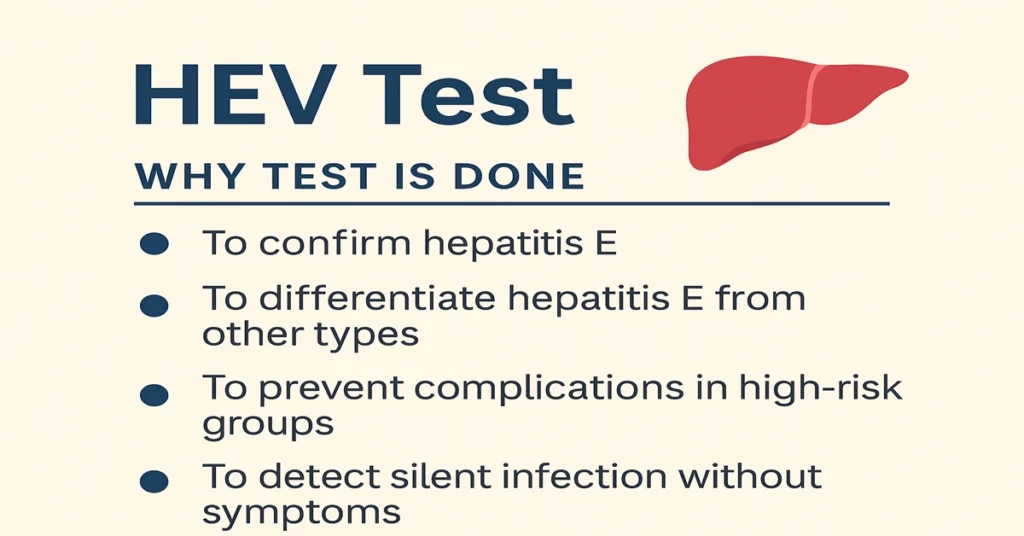
First, HEV testing confirms whether symptoms such as jaundice, dark urine, loss of appetite, fever, or fatigue are due to Hepatitis E rather than another form of hepatitis or liver condition. Since different hepatitis viruses can look very similar clinically, laboratory confirmation is essential.
Second, identifying HEV early is particularly important in high-risk groups, where the infection can progress rapidly and unpredictably. Prompt diagnosis allows for closer monitoring and supportive care.
Finally, confirming HEV infection helps limit further spread by identifying contaminated sources and guiding household or community-level precautions.
When HEV Test Shows Low or Negative Results
A negative HEV test means that neither the virus nor specific antibodies were detected at the time of testing. This may indicate that the person has not been infected, or that a past infection has already resolved.
In some cases, testing may be done very early—before the immune system has produced detectable antibodies or before viral RNA can be identified. In such situations, results may appear negative despite ongoing infection.
Symptoms When Results Are Negative
When HEV testing is negative, there are typically no symptoms related to Hepatitis E itself. If symptoms such as jaundice, fever, or fatigue are still present, they may be due to another cause or reflect a very early stage of infection. Repeat testing or evaluation for other liver conditions may be considered based on clinical judgment.
When HEV Test Shows High or Positive Results
A positive HEV test indicates the presence of the virus or antibodies against it. This usually reflects an active or recent infection, most commonly acquired through contaminated food or water.
Although rare, HEV can persist longer than expected in people with severely weakened immune systems, leading to prolonged infection and ongoing liver injury. In such cases, additional testing may be required to assess viral activity.
Symptoms When Results Are Positive
Symptoms of Hepatitis E vary in intensity. Many patients experience marked fatigue, weakness, nausea, loss of appetite, and discomfort in the upper right abdomen where the liver is located. Dark urine, pale stools, and jaundice are common signs of liver involvement.
In high-risk individuals—particularly pregnant women—symptoms may worsen rapidly and include severe vomiting, swelling, bleeding tendencies, or signs of liver failure. These situations require immediate medical attention.
Reference Ranges for HEV Tests
HEV diagnosis typically relies on a combination of tests rather than a single value.
The HEV IgM antibody test indicates recent or active infection when positive.
The HEV IgG antibody test suggests past exposure when positive.
The HEV RNA (PCR) test directly detects the virus and confirms active infection when present.
Interpretation depends on timing, symptoms, and clinical context.
Sample Types Used for HEV Testing
HEV testing is most commonly performed using a blood sample, which is suitable for antibody testing and viral RNA detection. In selected situations, particularly during the acute phase, HEV RNA may also be detected in stool samples.
How HEV Test Helps Doctors and Patients
HEV testing helps confirm the cause of jaundice and liver inflammation, prevents misdiagnosis with other hepatitis types, and supports early intervention in high-risk individuals. On a broader level, it also assists public health teams in identifying outbreaks and potential sources of contamination.
Test Preparation
No fasting is required for HEV testing. Patients should inform their doctor if they are pregnant or taking medications that affect the immune system, such as steroids or post-transplant drugs. Avoiding alcohol before testing is advisable, as it can worsen liver-related symptoms and complicate interpretation.
When to Consult a Doctor
Medical evaluation is recommended if symptoms such as jaundice, very dark urine, persistent vomiting, severe weakness, or abdominal pain develop. Special attention is needed for pregnant women, individuals with compromised immunity, or those who have recently traveled to areas with poor sanitation.
Early assessment helps prevent liver failure and other serious complications.
Important Word Explanations
- Hepatitis: Inflammation of the liver
- IgM Antibody: Indicates recent or current infection
- IgG Antibody: Indicates past exposure or immunity
- PCR Test: Detects viral genetic material
- Jaundice: Yellowing of the eyes and skin due to liver dysfunction
- Hepatocytes: Liver cells where viruses replicate
- Acute Infection: Sudden, short-term illness
~END~
Related Posts
None found