
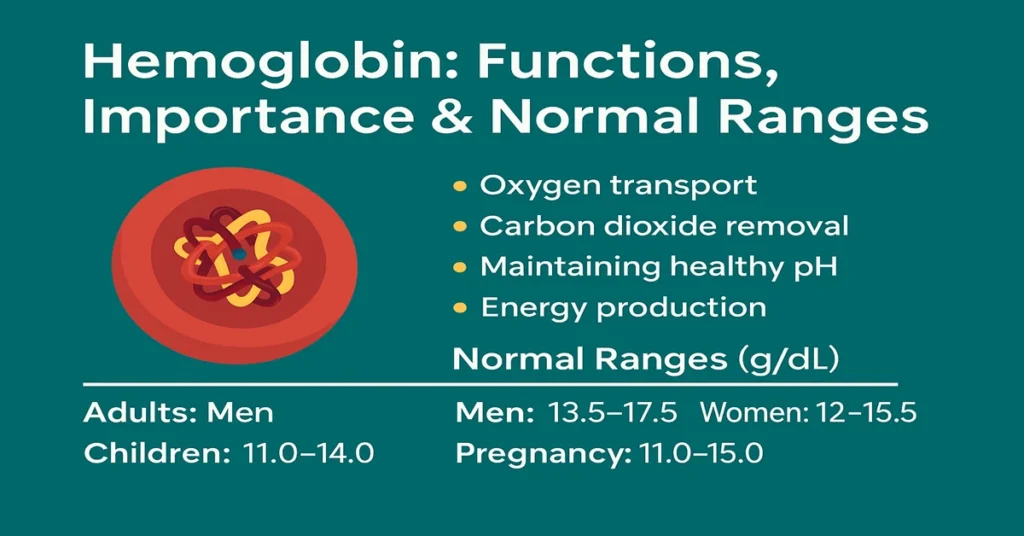
Hemoglobin (Hb) – Functions, Importance, Normal Ranges by Gender, Age, Pregnancy & When It Becomes Risky
Hemoglobin (Hb) is one of the most critical components measured in routine blood tests. It is a protein present inside red blood cells (RBCs) and its main role is to carry oxygen from the lungs to every tissue in the body. At the same time, it helps transport carbon dioxide back to the lungs for removal. From a clinical point of view, hemoglobin levels give doctors a quick and reliable snapshot of how well oxygen delivery is happening inside the body.
Both low and high hemoglobin values matter. In everyday lab practice, abnormal Hb levels are among the most common reasons patients are sent for further evaluation. Understanding what hemoglobin does, what normal levels look like at different ages and stages of life, and when values become risky helps people interpret reports with much more confidence.
What Is Hemoglobin and Why Does It Matter?
Hemoglobin is an iron-containing protein that gives blood its red color. Each red blood cell is packed with hemoglobin molecules, and each of those molecules binds oxygen efficiently. Without hemoglobin, oxygen cannot reach organs like the brain, heart, muscles, or kidneys in the amounts they need.
Clinically, hemoglobin is central to energy levels, physical endurance, mental clarity, and organ function. When doctors see abnormal Hb values, they usually pause and correlate them with symptoms, medical history, and other blood parameters before drawing conclusions.
Hemoglobin also plays a role in maintaining the body’s acid–base balance and supports smooth metabolic activity at the cellular level.
Functions of Hemoglobin
Oxygen Transportation
This is hemoglobin’s primary role. Oxygen picked up in the lungs binds to hemoglobin and is delivered to tissues where it is used to produce energy. Without this process, cells cannot function normally.
Carbon Dioxide Removal
After oxygen delivery, hemoglobin helps carry carbon dioxide—a metabolic waste product—back to the lungs. This keeps waste gases from building up in the bloodstream.
Maintaining Acid–Base Balance
Hemoglobin acts as a buffer in the blood, helping keep pH levels stable. This balance is essential for enzyme function and overall metabolic stability.
Supporting Metabolism and Energy
Efficient oxygen delivery allows cells to generate energy properly. Clinically, patients with healthy hemoglobin levels usually report better stamina and less fatigue.
Supporting Red Blood Cell Structure
Hemoglobin contributes to the flexibility and shape of red blood cells, allowing them to pass smoothly through even very small blood vessels.
Importance of Healthy Hemoglobin Levels
Maintaining hemoglobin within the normal range is essential for:
- Sustained energy and endurance
- Proper brain and heart function
- Normal growth and development in children
- Healthy pregnancy outcomes
- Preventing oxygen deficiency and organ strain
From a medical perspective, both low and high hemoglobin levels can stress the body in different ways, which is why neither should be ignored.
Normal Hemoglobin Ranges (By Age, Gender & Pregnancy)
Hemoglobin values naturally vary based on age, sex, and physiological states like pregnancy. Labs always interpret results using context, not numbers alone.
Normal Hemoglobin Levels by Age
Newborns
14 – 24 g/dL
(Newborns have higher Hb to adapt to life outside the womb.)
Infants (0–1 year)
10 – 14 g/dL
Children (1–12 years)
11 – 14 g/dL
Teenagers (13–18 years)
- Boys: 12 – 16 g/dL
- Girls: 11 – 15 g/dL
Normal Hemoglobin Levels by Gender
Adult Men
13.5 – 17.5 g/dL
Higher levels are influenced by testosterone and muscle mass.
Adult Women
12 – 15.5 g/dL
Slightly lower values are commonly seen due to menstruation and hormonal patterns.
Normal Hemoglobin Levels During Pregnancy
During pregnancy, blood volume increases, which naturally dilutes hemoglobin. This is a normal physiological change.
- First trimester: 11.6 – 13.9 g/dL
- Second trimester: 9.7 – 14.8 g/dL
- Third trimester: 9.5 – 15 g/dL
In routine practice, Hb below 10 g/dL during pregnancy usually prompts closer monitoring.
When Hemoglobin Levels Become Risky
When Hemoglobin Becomes Too Low
Low hemoglobin reduces oxygen delivery and gradually affects organ function.
- Mild: 10–12 g/dL
- Moderate: 8–10 g/dL
- Severe: Below 8 g/dL
- Very critical: Below 6 g/dL
Clinically, very low Hb can strain the heart, cause severe fatigue, dizziness, breathlessness, and limit daily activity. In pregnancy, it may affect both mother and baby.
When Hemoglobin Becomes Too High
High hemoglobin thickens the blood and slows circulation.
- Above 17.5 g/dL (men)
- Above 15.5 g/dL (women)
- Above 18.5–19 g/dL: High risk
- Above 20 g/dL: Medical emergency
Persistently high Hb requires evaluation to rule out dehydration, smoking effects, altitude adaptation, lung or heart disease, kidney-related hormone changes, or bone marrow disorders.
When to See a Doctor
Medical advice is recommended when:
- Fatigue or weakness persists
- Breathing becomes difficult
- Hb values repeatedly fall outside normal limits
- Dizziness or fainting occurs
- Symptoms of high Hb appear (headache, flushing, numbness)
- Pregnancy Hb drops below 10 g/dL
- Hb exceeds 17.5 g/dL (men) or 15.5 g/dL (women)
Early evaluation often prevents long-term complications.
Important Word Explanations
- Hemoglobin: Protein in red blood cells that carries oxygen
- Anemia: Condition with low hemoglobin
- Polycythemia: Condition with high hemoglobin
- RBC: Red blood cells that contain hemoglobin
- Hypoxia: Reduced oxygen supply to tissues
- EPO: Kidney hormone that stimulates RBC production
- Physiological dilution: Natural lowering of Hb during pregnancy
People Also Ask
Is an abnormal hemoglobin result always serious?
Not always. Mild changes can be temporary and need interpretation with symptoms and repeat testing.
Can hemoglobin levels change on their own?
Yes. Hydration status, recent illness, or recovery can temporarily affect Hb values.
Does high hemoglobin always mean a disease?
No. It may reflect lifestyle factors or environmental adaptation, but persistent elevation needs evaluation.
When do doctors usually worry about Hb levels?
When values remain abnormal on repeat tests or are linked with symptoms.
Is repeat testing common for hemoglobin?
Yes. Doctors often repeat Hb tests to confirm trends before making decisions.
~END~