
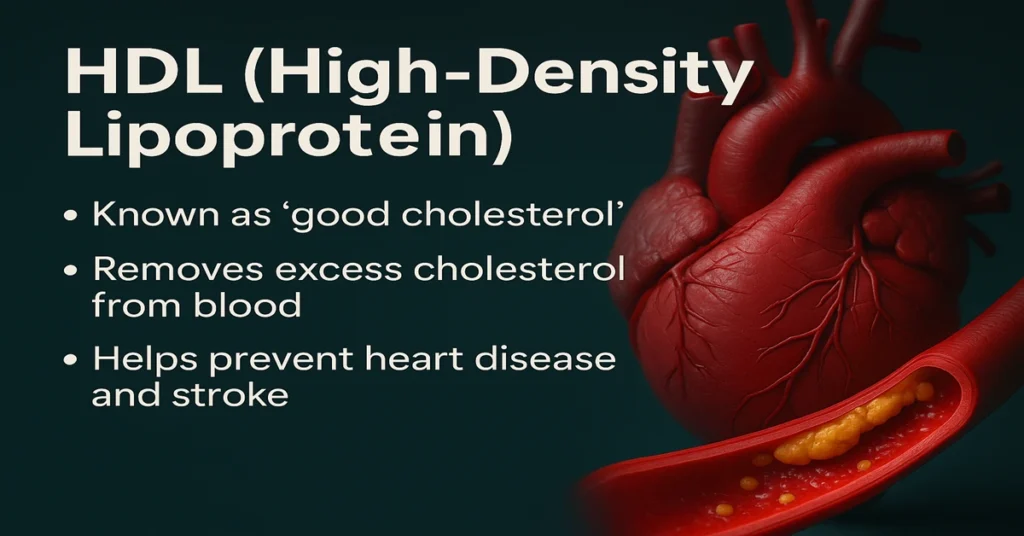
HDL (High-Density Lipoprotein) Test: Meaning, Functions, Normal Range, Causes, Symptoms & Complete Guide
Introduction
HDL, or High-Density Lipoprotein, is commonly referred to as the “good cholesterol,” but clinically, it is better understood as a protective transport system rather than simply a cholesterol number. HDL helps move excess cholesterol away from blood vessels and back to the liver, where it can be processed and cleared. This ongoing cleanup process supports healthier arteries and smoother blood flow over time.
When HDL levels are adequate, the cardiovascular system is generally better protected. When levels are low, cholesterol removal becomes less efficient, allowing deposits to build up gradually inside artery walls. For this reason, HDL measurement is a routine and important part of lipid profile testing, especially in people with diabetes, metabolic concerns, or a family history of heart disease.
What is HDL?
HDL stands for High-Density Lipoprotein, a particle made of both protein and fat that circulates in the blood. Its primary role is to collect excess cholesterol from tissues and blood vessel walls and return it to the liver. This process is known as reverse cholesterol transport.
Unlike other lipoproteins that mainly deliver cholesterol to tissues, HDL works in the opposite direction. In clinical practice, this distinction is important because HDL does not contribute to plaque formation; instead, it helps limit it. HDL particles also carry substances that support vascular health and help stabilize the inner lining of blood vessels.
Where is HDL Produced in the Body?
HDL is produced naturally within the body through coordinated activity of several organs.
The liver is the main source, where HDL particles are assembled and released into circulation. The intestines also contribute, particularly after fat absorption from meals. In addition, HDL particles continue to mature in the bloodstream as they collect cholesterol from cells and tissues.
This continuous production and remodeling ensure that HDL remains available to perform its transport and protective roles.
Main Functions and Importance of HDL
From a laboratory and clinical perspective, HDL is important not because it adds cholesterol, but because it helps manage where cholesterol goes.
Its primary function is to remove excess cholesterol from artery walls and tissues. By doing so, HDL supports arterial flexibility and reduces the tendency for plaque to accumulate. It also contributes to maintaining a stable environment inside blood vessels by limiting inflammatory activity and oxidative stress.
Because of these combined effects, HDL is viewed as a marker of cardiovascular protection rather than a direct indicator of disease. Doctors assess HDL as part of an overall lipid pattern, not in isolation.
Causes of Low HDL (Low “Good Cholesterol”)
Low HDL levels suggest that cholesterol clearance may be less efficient. This does not usually point to a single disease but rather reflects underlying metabolic or lifestyle-related factors.
Clinically, low HDL is often seen alongside other lipid abnormalities, insulin resistance, or chronic metabolic stress. Genetic factors and certain medications may also influence HDL levels. Doctors focus on the overall risk profile rather than treating low HDL as a standalone diagnosis.
Symptoms of Low HDL
Low HDL itself does not cause symptoms. People generally feel normal, and the finding is usually discovered during routine blood testing.
The clinical significance of low HDL lies in its long-term association with cardiovascular risk rather than in immediate physical complaints. This is why lipid testing is used proactively, even when no symptoms are present.
Causes of High HDL Levels
Higher HDL levels are generally considered favorable, as they indicate stronger cholesterol transport capacity. In many individuals, HDL levels are influenced by inherited factors and long-term metabolic patterns.
Occasionally, HDL may be very high due to genetic variations. In such cases, doctors evaluate whether the HDL particles are functioning normally, especially if other lipid markers do not align with the expected protective pattern.
Symptoms of High HDL
High HDL does not produce symptoms. It is almost always an incidental laboratory finding.
Even when HDL levels are very high, people typically feel well. Any further evaluation is guided by the overall lipid profile and clinical context rather than symptoms.
Reference Range (Normal HDL Values)
HDL values are interpreted with attention to sex-specific and risk-related thresholds:
- Men: Below 40 mg/dL is considered low
- Women: Below 50 mg/dL is considered low
- 40–59 mg/dL: Moderate or acceptable range
- 60 mg/dL and above: Generally associated with better cardiovascular protection
Doctors interpret HDL alongside LDL, triglycerides, and total cholesterol to understand overall lipid balance.
Sample Type
Sample Type: Serum
Tube Used: Red-top (plain tube)
HDL testing is typically performed as part of a fasting lipid profile using a standard venous blood sample.
Test Preparation
Fasting for several hours before testing is commonly advised to ensure accurate lipid measurements. Alcohol intake and certain medications can temporarily influence HDL levels, so these factors are reviewed when results are interpreted.
Patients are usually advised to maintain their usual routine before testing rather than making sudden changes.
When to Consult a Doctor
Medical consultation is recommended when HDL levels are persistently low or when they appear alongside other lipid abnormalities. Individuals with diabetes, obesity, hypertension, or a family history of cardiovascular disease often benefit from regular lipid monitoring.
Doctors assess HDL as part of a broader cardiovascular risk evaluation rather than focusing on the number alone.
Important Word Explanations
- Cholesterol: A fat-like substance essential for cell structure and hormone production.
- Atherosclerosis: Gradual narrowing of arteries due to cholesterol plaque buildup.
- Lipoprotein: A particle that carries fats through the bloodstream.
- Antioxidant: A substance that helps limit cellular damage from oxidative stress.
- Lipid Profile Test: A blood test measuring HDL, LDL, triglycerides, and total cholesterol.
~END~
I’m impressed, I need to say. Actually rarely do I encounter a blog that’s both educative and entertaining, and let me inform you, you’ve gotten hit the nail on the head. Your thought is outstanding; the difficulty is one thing that not sufficient persons are speaking intelligently about. I am very pleased that I stumbled across this in my search for something relating to this.