
Overview
The HBeAg Test, also called the Hepatitis B e Antigen Test, is a blood test used to detect the presence of the hepatitis B “e” antigen (HBeAg) in the bloodstream. HBeAg is a viral protein released when the hepatitis B virus (HBV) is actively replicating inside liver cells.
From a clinical standpoint, this test helps assess how active the virus is at the time of testing. A positive result generally reflects ongoing viral replication and a higher level of infectiousness. Because hepatitis B can change behavior over time, the HBeAg test is most useful when interpreted together with other hepatitis B markers such as HBsAg, HBeAb, HBcAb, and HBV DNA viral load.
Where Is HBeAg Produced in the Body?
HBeAg originates from the liver, specifically from liver cells infected with hepatitis B virus.
1. HBV-Infected Hepatocytes
Hepatocytes are the main functional cells of the liver. When these cells are infected with HBV, they produce viral components as part of the replication process, including HBeAg.
2. Released Into the Bloodstream
As viral replication increases within the liver, HBeAg is released into the bloodstream. This allows it to be detected easily through a standard blood test.
Because HBeAg production depends directly on viral activity, its presence serves as a practical indicator of how actively the virus is replicating.
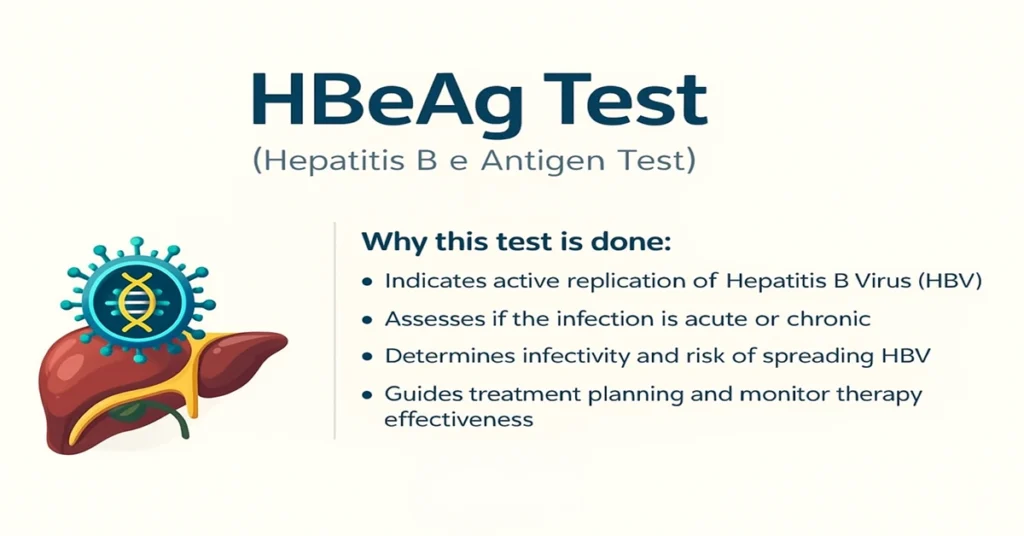
Main Functions and Importance of HBeAg Test
The HBeAg test provides important insight into the behavior and stage of hepatitis B infection.
1. Indicates Active Viral Replication
Detection of HBeAg usually means the virus is multiplying actively. Clinically, this often correlates with higher viral load and increased liver stress, though confirmation requires additional tests.
2. Assesses Infectivity
HBeAg positivity is associated with higher infectivity. Individuals with positive results are generally more likely to transmit HBV through blood exposure, sexual contact, or from mother to child during childbirth.
3. Helps Determine Disease Stage
HBeAg status helps clinicians understand whether a patient is in an acute phase, a chronic active phase, an immune-tolerant phase, or transitioning toward immune control.
4. Guides Treatment Decisions
Treatment considerations often take HBeAg status into account, especially when reviewed alongside HBV DNA levels and liver enzyme values. This helps identify patients who may benefit from closer monitoring or antiviral therapy.
5. Monitors Treatment Effectiveness
During effective antiviral treatment, HBeAg may disappear and be replaced by HBeAb. This shift, known as HBeAg seroconversion, is viewed as a laboratory sign of improved viral control.
Causes of Negative HBeAg Levels
A negative HBeAg result means the antigen is not detected at the time of testing. This can occur in several clinical situations.
1. Past Infection (Recovered Patient)
The virus may have been cleared or suppressed by the immune system, resulting in loss of detectable HBeAg.
2. Inactive Hepatitis B Infection
In some individuals, the virus remains present but replicates at a very low level, leading to a negative HBeAg result.
3. Successful Treatment Response
Antiviral therapy can reduce viral replication enough that HBeAg is no longer detectable.
4. Mutant HBV Variants
Certain HBV strains do not produce HBeAg despite ongoing replication. This pattern is referred to as HBeAg-negative chronic hepatitis B and requires careful interpretation with HBV DNA testing.
Symptoms of Negative HBeAg Levels
A negative HBeAg result does not automatically mean the liver is healthy. Symptoms, if present, usually reflect underlying liver involvement rather than antigen status itself.
Some individuals may experience fatigue, mild abdominal discomfort, reduced appetite, or abnormal liver enzyme levels. Others may have no noticeable symptoms at all. This is why negative HBeAg results are always interpreted in combination with other hepatitis B tests.
Causes of Positive HBeAg Levels
A positive HBeAg result indicates that the virus is actively replicating.
1. Acute Hepatitis B
In the early phase of infection, viral replication is often high, leading to detectable HBeAg.
2. Chronic Hepatitis B With High Replication
In long-standing infection, continued viral activity can maintain HBeAg positivity.
3. Immune-Tolerant Phase
This phase is commonly seen in younger individuals, where viral replication is high but immune-mediated liver damage may be minimal.
4. Highly Infectious Stage
Positive HBeAg is associated with greater potential for transmission, particularly in untreated individuals.
Symptoms of Positive HBeAg Levels
Many people with positive HBeAg results may feel well and have no symptoms. When symptoms do occur, they usually reflect liver inflammation rather than the antigen itself.
These may include fatigue, nausea, abdominal discomfort, jaundice, dark urine, or loss of appetite. In clinical practice, symptom severity does not always match viral activity, making laboratory monitoring essential.
Reference Ranges
| Result | Meaning |
|---|---|
| Negative / Nonreactive | HBeAg not detected; may indicate low replication or mutant virus |
| Positive / Reactive | HBeAg detected; usually reflects active replication and higher infectivity |
Laboratory terminology may vary, but interpretation principles remain the same.
Sample Type
The test is performed using a blood sample (serum) drawn from a vein.
It is often ordered alongside HBV DNA testing to better assess viral activity.
Test Preparation
No fasting is required. Routine meals and medications can usually be continued unless otherwise advised.
Patients should inform their doctor if they are pregnant, receiving antiviral therapy, or have known liver disease. Previous hepatitis B reports are helpful for accurate trend interpretation.
When to Consult a Doctor
Medical evaluation is important if symptoms such as persistent fatigue, jaundice, abdominal pain, dark urine, or nausea develop.
Individuals with known hepatitis B, recent exposure, pregnancy with positive HBsAg, family history of HBV, or abnormal liver tests should remain under regular medical follow-up. Sudden worsening of symptoms may indicate an acute flare and requires prompt attention.
Important Word Explanations
- HBV: Hepatitis B virus
- HBeAg: Viral protein indicating active replication
- HBeAb: Antibody that appears as viral activity decreases
- Seroconversion: Change from HBeAg positive to HBeAb positive
- HBV DNA: Measure of viral load in blood
- Hepatocytes: Liver cells
- Chronic HBV: Infection lasting longer than six months
~END~
Related Posts
None found