
HBeAb Test: Purpose, High & Low Levels, Symptoms, Interpretation & Complete Hepatitis B Guide
Overview
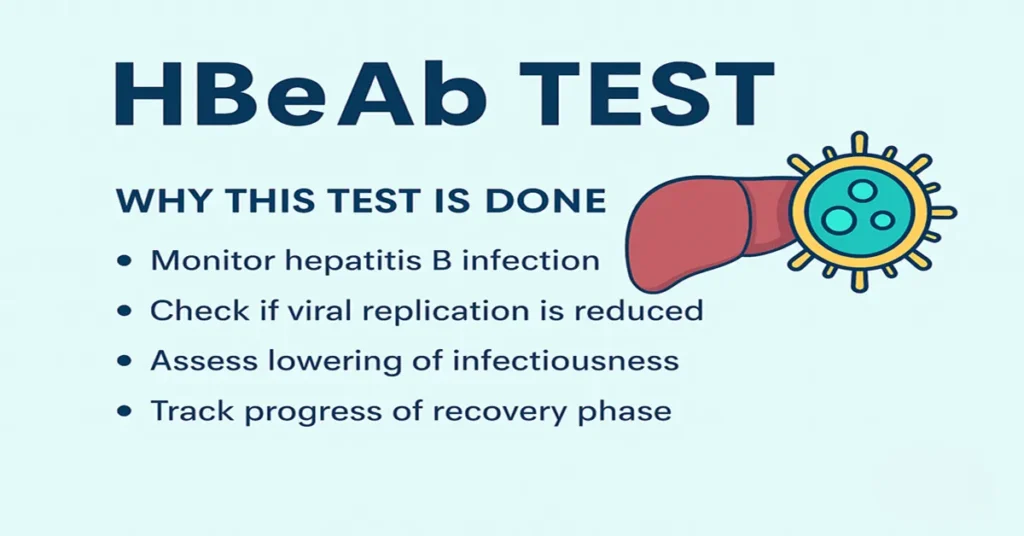
The HBeAb Test, also called the Hepatitis B e Antibody Test, is a blood test used to detect antibodies formed against the hepatitis B “e” antigen (HBeAg). These antibodies typically appear when the immune system begins to control the hepatitis B virus and viral replication slows down.
From a clinical perspective, this test is most valuable for monitoring the activity and phase of hepatitis B infection rather than for initial diagnosis. The presence or absence of HBeAb helps doctors understand whether the virus is becoming less active, whether infectivity is decreasing, and how the infection is evolving over time. For accurate interpretation, the HBeAb result is always reviewed alongside other hepatitis B markers such as HBsAg, HBcAb, HBeAg, and HBV DNA.
Where Is HBeAb Produced in the Body?
HBeAb is produced by the immune system, specifically by B lymphocytes (B cells).
During hepatitis B infection, the virus produces HBeAg, a marker associated with active viral replication. As the immune system recognizes this antigen, B cells begin producing HBeAb. The appearance of these antibodies generally reflects a shift in the immune response, suggesting that viral replication is slowing and immune control is improving.
Clinically, this transition is often interpreted as the infection moving into a less active phase, although continued monitoring remains essential.
Main Functions and Importance of the HBeAb Test
The HBeAb test plays a central role in assessing the stage and behavior of hepatitis B infection.
1. Indicates Immune Control Over the Virus
A positive HBeAb result shows that the immune system has mounted a response against HBeAg, an important sign that viral activity is decreasing.
2. Suggests Reduced Viral Replication
When HBeAb is present, hepatitis B virus replication is usually lower. In many cases, liver inflammation also becomes less active, though this must be confirmed with liver function tests and HBV DNA levels.
3. Helps Monitor Treatment Response
In patients receiving antiviral therapy, conversion from HBeAg positivity to HBeAb positivity—known as seroconversion—is viewed as a favorable laboratory milestone indicating effective viral suppression.
4. Assists in Assessing Infectivity
Patients who are HBeAg positive are generally more infectious. Those who become HBeAb positive are typically less infectious, although transmission risk is never assessed using a single marker alone.
5. Supports Staging of Chronic Hepatitis B
Together with HBV DNA and liver enzymes, HBeAb helps clinicians determine whether a patient is in an immune-active phase, immune-control phase, or a lower-replication phase of chronic infection.
Causes of Low / Negative HBeAb Levels
A negative or nonreactive HBeAb result means antibodies have not yet developed or immune control has not been established.
1. Early Hepatitis B Infection
In early stages, the immune system may not yet have produced detectable HBeAb.
2. Chronic Active Hepatitis B
Ongoing viral replication can prevent the immune system from transitioning into antibody production.
3. Reduced Immune Response
Certain conditions or treatments that suppress immune function may delay or prevent antibody formation.
4. High Viral Replication
When viral load remains high, seroconversion to HBeAb positivity may not occur.
Symptoms of Low / Negative Levels
Low or negative HBeAb levels themselves do not cause symptoms. Any symptoms present usually reflect ongoing active hepatitis B infection rather than the antibody status.
Patients may experience fatigue, low-grade fever, liver discomfort, jaundice, dark urine, nausea, or loss of appetite. From a public health perspective, individuals without HBeAb are often considered more infectious and require closer monitoring.
Causes of High / Positive HBeAb Levels
A positive HBeAb result usually indicates improvement or transition in infection status.
1. Recovery From Acute Hepatitis B
As the body clears active viral replication, HBeAb appears as part of immune recovery.
2. Seroconversion Phase
Loss of HBeAg with development of HBeAb reflects a shift toward lower viral activity.
3. Effective Antiviral Therapy
Successful suppression of viral replication during treatment often leads to HBeAb formation.
4. Low-Replication Chronic Hepatitis B
Some individuals continue to carry hepatitis B virus at low levels while remaining HBeAb positive.
Symptoms of High / Positive Levels
HBeAb positivity does not produce symptoms directly. Instead, it often coincides with clinical improvement.
Patients may notice reduced fatigue, improving appetite, fading jaundice, or better liver test results. Even so, hepatitis B can persist silently, and continued follow-up remains important.
Reference Ranges
| Result | Meaning |
|---|---|
| Negative / Nonreactive | No detectable HBeAb; infection may still be active |
| Positive / Reactive | HBeAb detected; usually indicates reduced viral replication |
Interpretation always depends on correlation with other hepatitis B markers.
Sample Type
The test is performed on a blood sample (serum) collected from a vein.
No special collection requirements are needed.
Test Preparation
No fasting is required. Normal diet and routine activities may be continued.
Patients should inform their doctor about ongoing antiviral therapy and share previous hepatitis B test results, as trends over time are often more informative than a single value.
When to Consult a Doctor
Medical evaluation is important if liver-related symptoms such as persistent fatigue, jaundice, dark urine, or abdominal discomfort develop.
Patients with chronic hepatitis B, abnormal liver function tests, prior HBeAg positivity, or a family history of liver disease should remain under regular medical follow-up. Pregnant individuals who are HBsAg positive should seek specialized care to reduce the risk of transmission to the newborn.
Ongoing monitoring helps reduce long-term complications such as liver cirrhosis and liver cancer.
Important Word Explanations
- Chronic Hepatitis B: Infection lasting longer than six months
- HBeAg: Marker associated with active viral replication
- HBeAb: Antibody indicating reduced viral activity
- Seroconversion: Transition from HBeAg positive to HBeAb positive
- HBV DNA: Measure of viral load in the blood
- Acute Hepatitis B: Short-term infection lasting less than six months
~END~
Related Posts
None found