
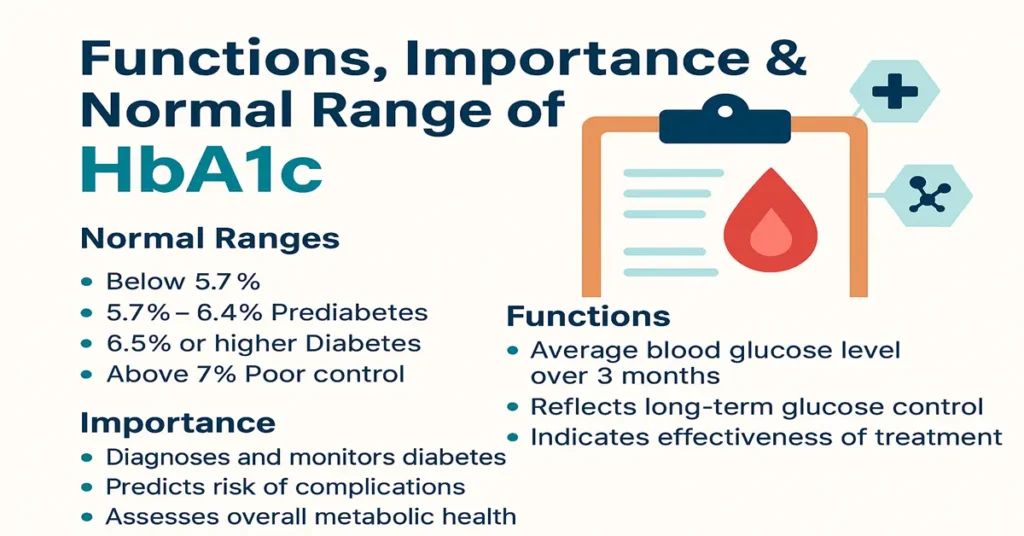
Functions, Importance & Normal Range of HbA1c
What Is HbA1c?
HbA1c, also known as glycated hemoglobin, is a blood test that reflects your average blood sugar levels over the past 2–3 months. Unlike fasting or post-meal glucose tests, which change from hour to hour, HbA1c gives a steadier, long-term view of sugar control.
In simple terms, when glucose stays in the blood, a portion of it attaches to hemoglobin inside red blood cells. Since these cells live for about 120 days, HbA1c becomes a record of how much sugar the blood has been exposed to during that period. Clinically, this is why HbA1c is trusted for diagnosing diabetes and monitoring long-term control rather than short-term fluctuations.
What This Parameter Does
Average blood glucose over three months
HbA1c reflects how blood sugar has behaved over time, not just on the day of testing. In routine lab practice, this helps avoid confusion caused by one unusually high or low reading.
Degree of glycation
The value rises when glucose repeatedly remains high in the bloodstream. It essentially tells us how much sugar has attached to hemoglobin over weeks.
Long-term glucose control
It is common to see patients with normal fasting sugar but raised HbA1c. This usually means sugars are rising after meals or fluctuating through the day, something HbA1c captures clearly.
Response to diabetes management
HbA1c helps doctors judge whether overall control is stable. It reflects consistency, not just best-case days.
Why HbA1c Is Important
Early detection of abnormal glucose control
HbA1c may rise even before fasting glucose crosses the diabetic range. This is why it plays a key role in identifying prediabetes early.
Assessment of complication risk
Higher HbA1c levels are associated with a greater chance of long-term complications involving nerves, kidneys, eyes, heart, and blood vessels. Clinically, doctors watch trends closely rather than reacting to a single value.
Guiding long-term decisions
In follow-up visits, HbA1c helps clinicians understand whether the current approach is working over time, rather than reacting to daily variability.
Revealing hidden sugar patterns
Some people maintain good fasting values but experience frequent post-meal spikes. HbA1c brings these patterns to light.
Useful during periods of stress or illness
Temporary stress or infection may raise daily sugars. HbA1c shows whether these changes were brief or persistent.
Role of HbA1c in the Body
HbA1c itself does not have a biological function. It serves as a marker, giving insight into metabolic health.
Indicator of glucose exposure
It shows how often and how long red blood cells were exposed to higher glucose levels.
Reflection of insulin effectiveness
When insulin does not work efficiently, glucose remains in the bloodstream longer, leading to higher HbA1c.
Overall metabolic burden
Chronic exposure to high glucose affects blood vessels, nerves, eyes, and kidneys. HbA1c helps quantify this long-term burden.
Consistency check
Day-to-day habits may vary. HbA1c reflects the overall pattern rather than occasional good or bad days.
Normal HbA1c Ranges
General population
Normal: below 5.7%
Prediabetes: 5.7% to 6.4%
Diabetes: 6.5% or higher
Poor control in known diabetes: above 7%
Very high levels: around 9% or more
Doctors interpret these values in context, considering symptoms and other tests.
Age-Wise HbA1c Ranges
Children (under 18 years)
Normal values usually fall between 4.0% and 5.6%. In children with diabetes, slightly higher targets are often accepted to reduce the risk of low blood sugar.
Adults (18–60 years)
A value below 5.7% is considered normal. For those with diabetes, targets are commonly kept below 7% if safely achievable.
Older adults (60+ years)
Targets may be slightly relaxed. Healthy seniors often aim for below 7.0–7.5%, while those with other health issues may have higher acceptable targets to avoid hypoglycemia.
Gender-Wise HbA1c Ranges
HbA1c targets are generally the same for men and women. However, certain conditions can influence readings.
Men
Normal: below 5.7%
Common diabetes target: below 7%
Women
Normal: below 5.7%
Common diabetes target: below 7%
Hormonal conditions such as PCOS, thyroid imbalance, or anemia may sometimes affect interpretation.
Pregnancy-Specific HbA1c Ranges
During pregnancy, red blood cells turn over faster, which can slightly lower HbA1c values naturally.
First trimester
An HbA1c below 6.0% is generally preferred. Higher values may suggest previously unrecognized diabetes.
Second and third trimester
Targets often remain around 6.0–6.5%. Clinically, doctors rely more on fasting and post-meal glucose during this period rather than HbA1c alone.
Important pregnancy notes
HbA1c should not be used as the only monitoring tool in pregnancy, as daily glucose patterns matter more for fetal health.
When Abnormal HbA1c Levels Become Risky
High HbA1c (above 7%)
Sustained elevation increases the likelihood of long-term complications such as nerve damage, kidney disease, eye problems, heart disease, and delayed wound healing. Values above 9–10% are considered poorly controlled and need prompt medical review.
Low HbA1c (below 4.0–4.5%)
Low levels are uncommon and may be seen with frequent low blood sugar episodes, anemia, liver disease, or altered red blood cell turnover. A low HbA1c is not automatically a sign of good health.
Test Preparation
HbA1c testing is simple and convenient.
No fasting is required.
Medications are usually continued as prescribed.
The lab should be informed about anemia or known hemoglobin disorders.
Recent blood loss, transfusion, or severe illness can affect results and should be mentioned.
When to Consult a Doctor
Medical advice is recommended if HbA1c reaches diabetic levels, rises unexpectedly, or if symptoms such as fatigue, excessive thirst, blurred vision, or tingling in hands and feet appear. Pregnant individuals with raised HbA1c should seek early evaluation. Persistent abnormal values despite regular care also warrant review.
Important Word Explanations
HbA1c: A measure of average blood sugar over about three months
Glycation: Attachment of glucose to hemoglobin
Insulin resistance: Reduced response of body cells to insulin
Prediabetes: Sugar levels higher than normal but not yet diabetes
Neuropathy: Nerve damage related to prolonged high sugar
People Also Ask
Is HbA1c more reliable than fasting sugar?
It gives a longer-term picture, so doctors often trust it more for overall control.
Can HbA1c be high even if daily sugar looks normal?
Yes. Frequent post-meal spikes can raise HbA1c despite normal fasting values.
Does one abnormal HbA1c confirm diabetes?
Usually no. Doctors often confirm with repeat testing or additional glucose tests.
Can HbA1c change quickly?
Changes are gradual because it reflects several weeks of glucose exposure.
When do doctors worry most about HbA1c?
Concern increases when levels stay high over time or rise despite regular follow-up.
Is repeat HbA1c testing common?
Yes. It is commonly repeated every few months to track long-term trends.
~END~