
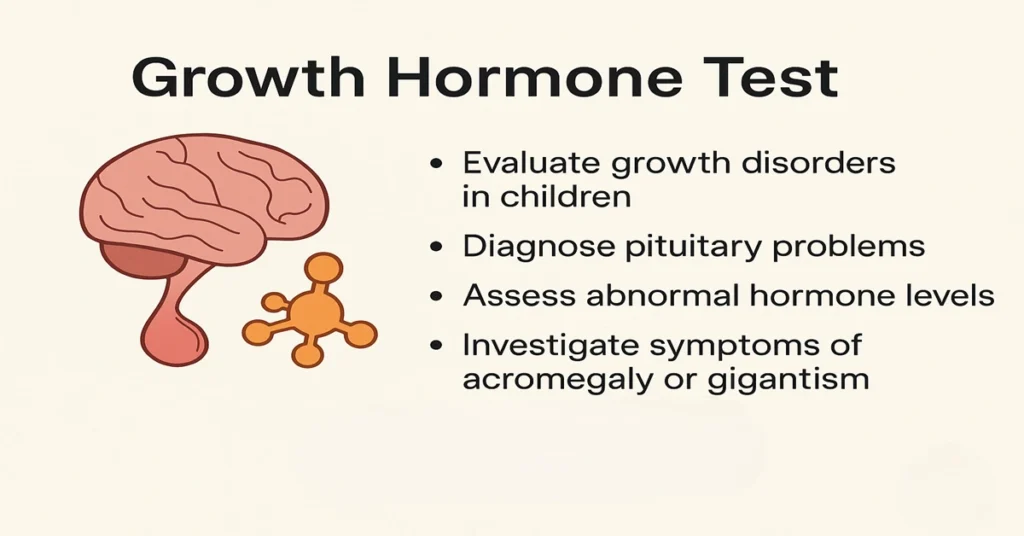
Growth Hormone (GH) Test: Purpose, High/Low Levels, Symptoms, Normal Range & Complete Guide
Overview
The Growth Hormone (GH) Test measures the amount of growth hormone present in the bloodstream at a given time. Growth hormone is produced by the pituitary gland, a small but highly influential gland located at the base of the brain. In children, GH is essential for normal height gain, bone growth, and overall physical development. In adults, it continues to play a supportive role in maintaining muscle mass, bone strength, fat distribution, and metabolic balance.
Doctors usually consider GH testing when growth patterns are unusual in children, or when adults show features that suggest a hormonal imbalance or pituitary-related condition. One important point clinicians keep in mind is that GH is released in pulses rather than at a constant rate. Because of this natural fluctuation, a single blood value rarely tells the full story. In many cases, stimulation or suppression tests are needed to understand how the pituitary gland is functioning over time.
Where Is Growth Hormone Produced?
Growth hormone is produced in the anterior pituitary gland. This gland sits deep within the skull and releases GH in short bursts throughout the day and night. Secretion tends to increase during sleep, physical activity, and periods of physical stress.
GH works closely with Insulin-like Growth Factor-1 (IGF-1), which is produced mainly in the liver. GH signals the liver to make IGF-1, and many of the long-term growth and tissue effects attributed to GH are actually carried out by IGF-1. Because IGF-1 levels remain relatively stable compared to GH, doctors often measure both together to get a clearer clinical picture.
Main Functions and Importance of Growth Hormone
Growth hormone supports different body functions at different stages of life.
1. Stimulates Growth in Children
During childhood and adolescence, GH drives linear growth by supporting bone lengthening and organ development. Adequate GH secretion during these years is essential for achieving normal adult height.
2. Regulates Muscle Mass and Fat Distribution
In adults, GH helps maintain lean muscle mass and limits excessive fat accumulation, particularly around the abdomen. Low levels may subtly alter body composition over time.
3. Aids Tissue Repair
GH contributes to normal cell turnover and tissue repair. This role becomes more noticeable during recovery from illness, injury, or surgery.
4. Improves Bone Density
By supporting bone remodeling and mineral uptake, GH helps maintain bone strength. Reduced activity over long periods may be associated with weaker bones.
5. Regulates Metabolism
GH influences how the body uses fats, proteins, and carbohydrates. It supports fat breakdown for energy and contributes to balanced protein synthesis.
6. Stimulates IGF-1 Production
One of GH’s most important actions is signaling the liver to produce IGF-1, which then promotes bone growth, muscle development, and cellular repair. Because IGF-1 reflects average GH activity, it is often used as a screening marker.
Causes of Low Growth Hormone Levels
Low GH levels usually reflect reduced pituitary function rather than a problem with GH itself.
1. Pituitary Gland Damage
This may result from tumors, surgery, radiation therapy, infections, or reduced blood supply to the gland.
2. Genetic Growth Hormone Deficiency
Some children are born with genetic conditions that limit or prevent GH production.
3. Hypopituitarism
In this condition, the pituitary gland produces insufficient amounts of several hormones, including GH.
4. Brain Injury
Head trauma can disrupt the delicate pituitary–hypothalamic connection and reduce hormone release.
5. Chronic Illness or Malnutrition
Severe or prolonged illness and poor nutritional status can suppress GH secretion in both children and adults.
Symptoms of Low Growth Hormone Levels
In Children
Low GH may present as slow growth, short stature compared to peers, delayed puberty, reduced muscle development, and increased body fat.
In Adults
Adults may notice reduced muscle strength, increased fat mass, persistent fatigue, lower energy levels, reduced bone density, and changes in mood or overall well-being. These changes often develop gradually.
Causes of High Growth Hormone Levels
Excess GH usually results from overactivity within the pituitary gland.
1. Pituitary Tumor
A benign pituitary adenoma is the most common cause of elevated GH production.
2. Genetic or Hormonal Disorders
Rare inherited or endocrine conditions may alter GH regulation.
3. Ectopic GH-Related Secretion
Very rarely, tumors outside the pituitary gland may influence GH pathways.
Symptoms of High Growth Hormone Levels
In Children — Gigantism
Excess GH before growth plates close can lead to unusually rapid growth, very tall stature, and enlarged hands and feet.
In Adults — Acromegaly
In adults, excess GH causes gradual enlargement of bones and soft tissues, especially in the face, hands, and feet. Changes often occur slowly and may go unnoticed initially.
Other Symptoms (Both Children & Adults)
Headaches, joint pain, vision changes from pituitary pressure, high blood pressure, altered blood sugar levels, and heart enlargement may be seen depending on severity and duration.
Reference Ranges
Because GH is released in pulses, reference values must be interpreted carefully.
Children
GH values depend on age and pubertal stage. Higher levels are typically seen during stimulation testing.
Adults
Baseline fasting GH is usually low. Dynamic testing is often required:
- Stimulation tests help assess deficiency
- Suppression tests help confirm excess GH
Single random values are rarely diagnostic on their own.
Sample Type
The test uses a blood (serum) sample. Depending on the clinical question, samples may be collected once or multiple times during stimulation or suppression protocols.
Test Preparation
Preparation varies depending on the type of GH test.
General Preparation
Fasting may be required. Strenuous exercise is usually avoided before testing. Doctors should be informed about medications, recent illness, pregnancy, or hormone use.
For Stimulation or Suppression Tests
These tests are time-based and may require staying at the testing center for several hours. Substances are given to stimulate or suppress GH release, and blood samples are collected at set intervals.
When to Consult a Doctor
Medical evaluation is advised if growth patterns in children appear delayed or abnormal, or if adults experience persistent fatigue, muscle loss, increasing body fat, bone problems, or physical changes suggestive of hormonal imbalance. Headaches or vision changes should also prompt assessment, as they may indicate pituitary involvement.
Early recognition of GH-related disorders allows appropriate investigation and long-term monitoring.
Important Word Explanations
- Suppression Test: A test used to assess excess GH by observing whether levels decrease appropriately
- Pituitary Gland: A small gland at the base of the brain that controls many hormones
- IGF-1: A hormone produced mainly by the liver that reflects long-term GH activity
- Acromegaly: A condition caused by excess GH in adults
- Gigantism: Excessive growth due to high GH levels in children
- Hypopituitarism: Reduced hormone production by the pituitary gland
- Stimulation Test: A test that evaluates GH deficiency by provoking hormone release
~END~
Related Posts
None found