
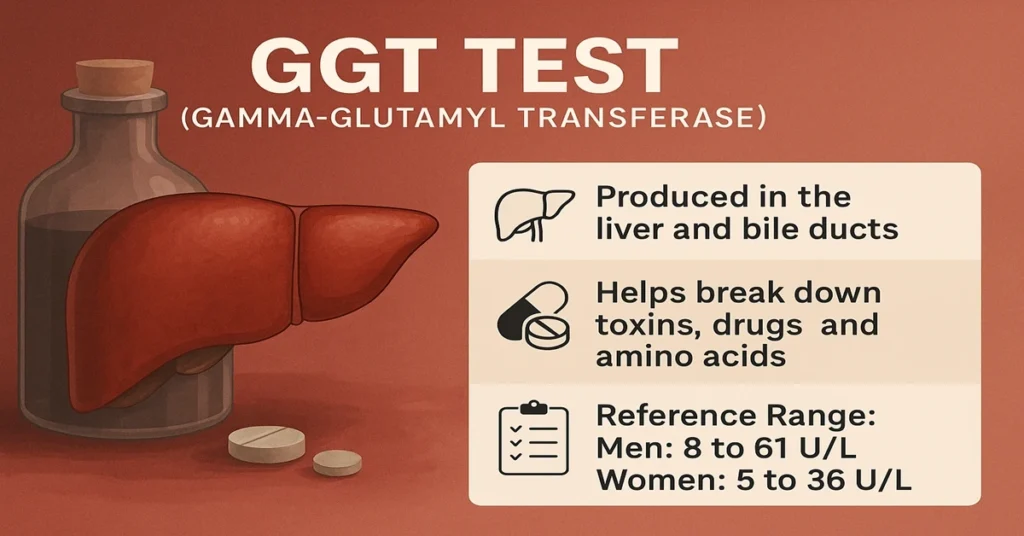
GGT Test: Meaning, Normal Range, High & Low Levels, Causes, Symptoms, and Complete Guide
Introduction
The GGT test, short for Gamma-Glutamyl Transferase, is a commonly used blood test that helps doctors assess liver health and bile duct function. In day-to-day clinical practice, GGT is especially useful because it reacts early when the liver is under stress. Even before clear symptoms develop, changes in GGT can alert doctors to alcohol effects, bile flow problems, or liver cell irritation.
Because of this sensitivity, GGT is often reviewed alongside other liver tests rather than on its own. This guide explains the test in a clear, practical way, similar to how it is discussed during routine hospital consultations.
What Is GGT?
GGT is an enzyme involved in the handling of amino acids and in the body’s detoxification pathways. It plays a supportive role in liver cells by helping process substances that need to be broken down and cleared from the body.
The GGT blood test measures how much of this enzyme is present in circulation. When liver cells or bile ducts are stressed or inflamed, GGT levels tend to rise. When levels are low, it usually reflects stable liver and bile duct function.
Clinically, GGT is valued because it responds quickly to liver strain, making it one of the earliest indicators of liver-related changes.
Where Is GGT Produced in the Body?
GGT is present in several organs, but not all sources influence blood test results equally.
The highest and most clinically relevant production occurs in the liver and bile ducts. Changes in these structures are the main reason GGT appears elevated in blood tests.
Smaller amounts of GGT are found in organs such as the kidneys, pancreas, intestines, and spleen. However, GGT from the kidneys does not significantly enter the bloodstream, which is why blood GGT levels mainly reflect liver and bile duct activity.
Functions and Importance of GGT
GGT has several biological roles, but its importance in medicine lies mainly in what it signals rather than what it does directly.
It supports amino acid movement across cell membranes and contributes to the recycling of glutathione, an important antioxidant that protects cells from toxins and oxidative stress.
From a clinical perspective, GGT is used as a marker rather than a functional measurement. Doctors rely on it to detect early liver irritation, evaluate alcohol-related liver stress, and confirm whether raised alkaline phosphatase is coming from the liver or another source such as bone.
Because of this, GGT is often interpreted together with ALT, AST, ALP, and bilirubin to form a clearer picture.
Causes of Low GGT
Low GGT levels are usually considered normal and reassuring. They commonly reflect stable liver cells and healthy bile flow.
In routine practice, low GGT rarely triggers concern and does not usually require further investigation unless other test results suggest a broader issue.
Symptoms of Low GGT
Low GGT does not produce symptoms. It is generally viewed as a neutral or favorable laboratory finding and is often mentioned only briefly during report review.
Causes of High GGT
Raised GGT is more clinically meaningful and usually indicates liver or bile duct stress rather than a specific disease on its own.
It may rise when liver cells are irritated, when bile flow is reduced, or when the liver is exposed to alcohol, medications, or toxins. Bile duct obstruction, fatty liver changes, chronic liver inflammation, and long-standing alcohol exposure are frequent contributors seen in clinical settings.
GGT may also increase alongside other conditions that indirectly affect liver circulation or metabolism. Because of its sensitivity, doctors focus on patterns rather than a single value.
Symptoms of High GGT
GGT itself does not cause symptoms. Any physical signs come from the underlying condition affecting the liver or bile ducts.
Patients may report fatigue, abdominal discomfort, changes in urine or stool color, or yellowing of the eyes and skin when liver involvement is more pronounced. These symptoms guide further testing rather than the GGT value alone.
Reference Range (Normal Values)
Normal GGT ranges vary slightly depending on laboratory methods, age, and sex.
Typical reference ranges include:
- Men: approximately 8–61 U/L
- Women: approximately 5–36 U/L
Men often have slightly higher values. Mild elevations are sometimes seen without serious disease, which is why results are always interpreted in context.
Sample Type and Collection
Sample Type: Serum
Tube Used: Red-top (plain) tube
A routine venous blood sample is collected. GGT testing is commonly included as part of a liver function panel.
Test Preparation
Special preparation is usually minimal. Doctors often advise avoiding alcohol before testing, as even short-term intake can temporarily raise GGT levels.
It is important to inform the healthcare provider about ongoing medications, particularly those known to affect liver enzymes. Fasting is not always required unless the test is combined with other investigations.
When to Consult a Doctor
Medical review is recommended if GGT remains elevated on repeated tests or if it is accompanied by symptoms such as persistent fatigue, jaundice, abdominal discomfort, or changes in urine or stool color. A history of long-term alcohol use or liver disease also warrants closer evaluation.
Doctors focus on trends, associated test results, and clinical findings rather than a single GGT number.
Important Word Explanations
- GGT: An enzyme mainly linked to liver and bile duct activity.
- Bile ducts: Channels that carry bile from the liver and gallbladder to the intestine.
- Cirrhosis: Long-term scarring of the liver due to chronic damage.
- Ascites: Fluid accumulation in the abdomen, often related to liver disease.
- Glutathione: A protective antioxidant involved in detoxification.
~END~