
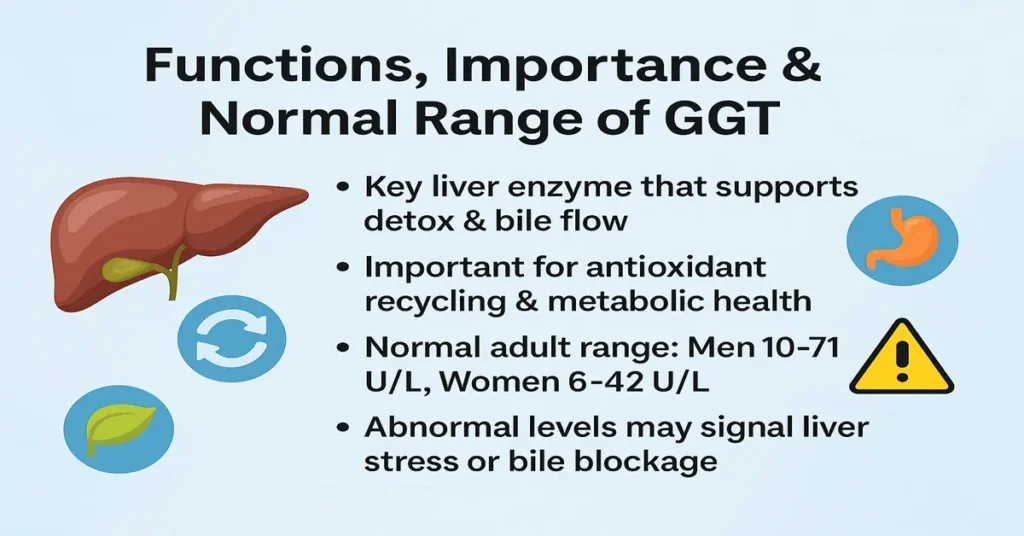
Functions, Importance & Normal Range of GGT
Overview
Gamma-Glutamyl Transferase (GGT) is an important enzyme found mainly in the liver and bile ducts. In routine laboratory practice, GGT is one of the most sensitive indicators of liver stress. It reacts early when the liver is exposed to alcohol, certain medicines, metabolic strain, inflammation, or bile flow problems.
Clinically, doctors often use GGT as an early warning marker. Even when other liver enzymes are still within range, a rising GGT may suggest that the liver is being overworked and needs attention. That is why GGT is commonly included in liver function tests and health check-ups.
This article explains what GGT does, why it matters, its role in the body, normal reference ranges, and when abnormal values need medical evaluation.
What Does GGT Do?
GGT supports several key liver-related functions. Its role is mostly behind the scenes, but it is critical for maintaining internal balance.
Supports detoxification
GGT helps the liver break down toxins, alcohol, medications, and harmful chemicals. It is closely involved in recycling glutathione, one of the body’s strongest antioxidants.
Assists amino acid transport
GGT helps move amino acids across cell membranes, which supports protein metabolism and healthy cell function.
Supports bile flow
Bile helps digest fats and remove waste. When bile flow is reduced or blocked, GGT usually rises early, often before symptoms appear.
Reflects oxidative stress
When the body is under oxidative or inflammatory stress, GGT activity increases. This makes it a sensitive marker of metabolic strain.
Because of these roles, GGT often rises before other liver enzymes, giving doctors an early clue that something is affecting the liver.
Why Is GGT Important?
GGT is not just a liver enzyme; it reflects lifestyle, metabolic health, and long-term risk.
Early detection of liver stress
GGT may increase before ALT or AST, allowing early identification of liver irritation.
Alcohol-related monitoring
Even moderate alcohol intake can raise GGT in some individuals. Clinically, doctors use it to monitor alcohol-related liver stress.
Identifies bile duct issues
Blocked or inflamed bile ducts often cause a marked rise in GGT.
Metabolic health indicator
High GGT is commonly seen with fatty liver, obesity, diabetes, and insulin resistance due to chronic inflammation.
Medication monitoring
Many long-term medicines affect the liver. GGT helps assess how well the liver is tolerating them.
Because it responds quickly to internal and external stressors, GGT is valuable for both diagnosis and follow-up.
Role of GGT in the Body
GGT contributes to multiple systems indirectly through liver health.
Antioxidant defence
By recycling glutathione, GGT helps protect cells from free-radical damage.
Immune balance
A healthy liver supports immune regulation. Persistent liver stress can disturb immune responses.
Fat digestion and vitamin absorption
Normal bile flow supports digestion of fats and absorption of vitamins A, D, E, and K.
Toxin clearance
GGT supports removal of toxins absorbed from food, alcohol, and medicines.
Chronic disease signalling
Persistently high GGT may act as a marker for long-term metabolic or cardiovascular risk.
These roles explain why doctors do not ignore even mild but persistent GGT abnormalities.
Normal GGT Levels (Age-Wise)
GGT levels vary naturally with age, especially in infancy.
Newborns
45 – 250 U/L
Newborns normally have higher GGT due to immature liver enzyme regulation.
Children
10 – 40 U/L
Levels fall significantly as liver function matures.
Adults
Men: 10 – 71 U/L
Women: 6 – 42 U/L
Older adults
GGT may rise slightly due to metabolic changes or chronic low-grade inflammation.
Reference ranges may vary slightly between laboratories.
Normal GGT Levels (Gender-Wise)
Gender differences are commonly seen in GGT interpretation.
Men
10 – 71 U/L
Men often show higher values, partly due to metabolic rate and alcohol exposure patterns.
Women
6 – 42 U/L
Values are usually lower unless influenced by medicines, fatty liver, or hormonal changes.
Gender alone rarely explains a significant abnormal result; clinical context is always important.
GGT Levels During Pregnancy
Pregnancy alters liver metabolism, but GGT usually remains normal or slightly lower.
First trimester
3 – 26 U/L
Second trimester
2 – 20 U/L
Third trimester
2 – 22 U/L
A clear rise in GGT during pregnancy is not typical and may suggest bile flow problems or liver stress, requiring evaluation.
When Abnormal GGT Levels Become Risky
Abnormal GGT values are interpreted based on pattern, persistence, and associated findings.
Low GGT becomes relevant when
Overall liver enzyme activity is low
There is poor nutritional or mineral status
Detox capacity appears reduced
Low GGT is uncommon and usually not dangerous on its own.
High GGT becomes concerning when
It stays elevated on repeat tests
Alcohol intake is ongoing
Other liver enzymes (ALT, AST, ALP) are also raised
There are symptoms like fatigue, nausea, jaundice, or abdominal discomfort
Fatty liver or bile duct disease is suspected
Very high or rising GGT should always be evaluated further.
Test Preparation
For accurate GGT results:
Avoid alcohol for 24–72 hours
Drink water normally
Avoid heavy exercise before testing
Inform the doctor about medicines and supplements
Follow routine meals unless advised otherwise
Proper preparation helps avoid misleading elevations.
When to Consult a Doctor
Consult a doctor if:
GGT continues to rise
You feel persistent fatigue or abdominal discomfort
You consume alcohol regularly
Other liver tests are abnormal
You have diabetes, obesity, or fatty liver
You are on long-term liver-affecting medications
Early review helps prevent long-term liver complications.
Important Word Explanations
GGT (Gamma-Glutamyl Transferase): A liver enzyme reflecting detox and bile activity
Oxidative stress: Cellular damage caused by free radicals
Cholestasis: Reduced or blocked bile flow
Fatty liver: Excess fat accumulation in liver cells
Antioxidants: Substances that protect cells from damage
People Also Ask
Is high GGT always a sign of liver disease?
No. It often reflects liver stress rather than permanent damage, especially in early stages.
Can GGT levels change quickly?
Yes. Alcohol intake, medications, or lifestyle changes can affect GGT within weeks.
Does a normal GGT mean the liver is healthy?
Usually yes, but doctors still correlate with other tests and symptoms.
When do doctors worry about GGT levels?
When values remain high over time or rise along with other liver enzymes.
Is repeat testing of GGT common?
Yes. Doctors often repeat it after lifestyle changes or medication review.
Can GGT return to normal naturally?
In many cases, yes—especially when alcohol use, weight, and metabolic health improve.
~END~
Related Posts
None found