
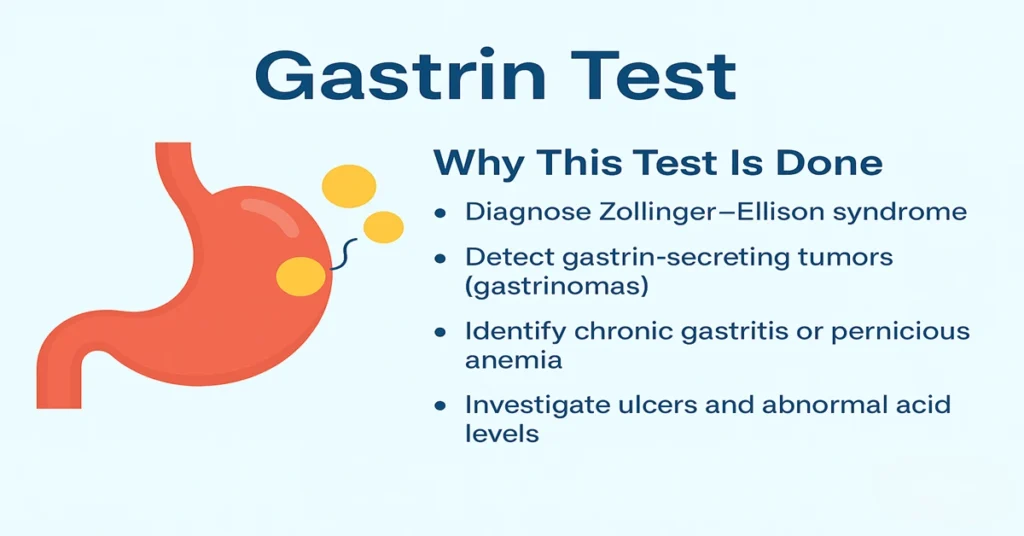
Overview
The Gastrin Test is a blood test used to measure the level of the hormone gastrin in the bloodstream. Gastrin is produced by the stomach and plays a central role in digestion by stimulating the release of stomach acid, also known as hydrochloric acid (HCl).
Clinically, this test is requested when doctors need to evaluate disorders related to abnormal acid production or conditions affecting the stomach lining. It is commonly used while assessing suspected gastrin-secreting tumors, chronic inflammatory stomach conditions, and unexplained or recurrent ulcer disease. Because food intake naturally increases gastrin release, the test is typically performed after fasting to ensure accurate interpretation.
Where Is Gastrin Produced in the Body?
Gastrin is produced by specialized hormone-secreting cells known as G-cells.
1. The Stomach
Most gastrin is produced in the antrum, the lower part of the stomach. Gastrin released from this region directly influences acid secretion by the stomach lining.
2. The Duodenum
Smaller amounts of gastrin are produced in the upper part of the small intestine, where it supports coordinated digestive activity.
G-cells release gastrin in response to food intake, stomach stretching, certain nutrients (especially proteins), and changes in stomach acidity. Once released into the bloodstream, gastrin signals the stomach to adjust acid production as needed for digestion.
Main Functions and Importance of Gastrin
Gastrin is one of the key regulatory hormones of the digestive system.
1. Stimulates Gastric Acid Production
Gastrin promotes the release of hydrochloric acid, which helps break down food, activate digestive enzymes, and protect against ingested microbes.
2. Promotes Protein Digestion
Adequate acid levels are necessary for activating pepsin, an enzyme essential for protein digestion.
3. Helps Maintain an Acidic Gastric Environment
A stable acidic environment supports efficient digestion and helps prevent excessive bacterial growth in the stomach.
4. Supports Normal Stomach Motility
Gastrin also contributes to coordinated stomach contractions, helping move food smoothly from the stomach into the intestine.
Causes of Low / Negative Gastrin Levels
Low gastrin levels are less commonly encountered but may be seen in certain clinical situations.
1. Stomach Surgery (Gastrectomy)
Removal of part or all of the stomach reduces the number of gastrin-producing cells.
2. Atrophic Gastritis
Long-standing damage to the stomach lining may reduce functional G-cells.
3. Altered Acid Regulation
In some conditions with reduced stomach acid, gastrin regulation may become blunted rather than elevated.
4. Long-Term Acid-Suppressing Medication Use
Prolonged use of medications that suppress acid production can interfere with normal gastrin feedback mechanisms.
Symptoms of Low / Negative Gastrin Levels
Symptoms are usually related to reduced digestive efficiency rather than low gastrin itself. Patients may notice indigestion, bloating, early fullness after meals, or nutritional deficiencies related to impaired absorption, such as vitamin B12 or iron deficiency. Fatigue and nonspecific gastrointestinal discomfort may also occur.
Causes of High / Positive Gastrin Levels
Elevated gastrin levels suggest increased hormone production or reduced clearance.
1. Zollinger–Ellison Syndrome
This condition involves a gastrin-secreting tumor, leading to markedly elevated gastrin levels and excessive acid production.
2. Chronic Atrophic Gastritis
Damage to acid-producing stomach cells lowers acid output, prompting the body to compensate by increasing gastrin release.
3. Pernicious Anemia
Autoimmune injury to stomach cells results in low acid levels, vitamin B12 deficiency, and secondary elevation of gastrin.
4. Helicobacter pylori Infection
This infection can disrupt acid regulation and stimulate increased gastrin secretion.
5. Kidney Disease
Impaired kidney function may reduce gastrin clearance, allowing levels to rise in the bloodstream.
6. Long-Term Acid Suppression
Sustained acid suppression can lead to compensatory increases in gastrin production.
Symptoms of High / Positive Gastrin Levels
Symptoms depend on the underlying condition. Patients may experience recurrent or difficult-to-heal ulcers, persistent abdominal discomfort, acid reflux symptoms, diarrhea, or unintended weight loss. In more severe cases, symptoms may reflect ongoing acid-related injury to the stomach or intestine.
Reference Ranges
Gastrin levels are typically interpreted as follows (values may vary by laboratory):
- Normal: < 100 pg/mL
- Borderline: 100–400 pg/mL
- Markedly High: > 1000 pg/mL, which is strongly suggestive of a gastrinoma or Zollinger–Ellison syndrome
Results must always be interpreted alongside fasting status, medication use, and clinical findings.
Sample Type
The test requires a blood (serum) sample, usually collected after an overnight fast of 8–12 hours to avoid food-related elevation of gastrin levels.
Test Preparation
Patients are typically advised to fast for 8–12 hours before testing. Certain acid-suppressing medications may need to be temporarily withheld if clinically appropriate. Smoking before the test should be avoided. It is important to inform the doctor about prior stomach surgery, ulcer history, medication use, or recent endoscopic procedures.
When to Consult a Doctor
Medical evaluation is recommended for persistent or recurrent ulcer symptoms, ongoing abdominal pain, unexplained weight loss, chronic acid reflux, diarrhea, or features suggestive of vitamin B12 deficiency.
Urgent medical attention is required if there are signs of gastrointestinal bleeding, such as black stools or vomiting blood, or if symptoms suddenly worsen.
Important Word Explanations
- Gastrin: A hormone that stimulates stomach acid production
- G-cells: Specialized stomach cells that produce gastrin
- Zollinger–Ellison Syndrome: A condition caused by gastrin-secreting tumors
- Gastrinoma: A tumor that overproduces gastrin
- PPI: Medication that suppresses stomach acid production
- Atrophic Gastritis: Long-term damage to the stomach lining
- Pernicious Anemia: An autoimmune condition affecting vitamin B12 absorption
~END~
Related Posts
None found