
GAD-65 Antibodies Test: Purpose, High/Low Levels, Symptoms, Normal Range & Complete Guide
Overview
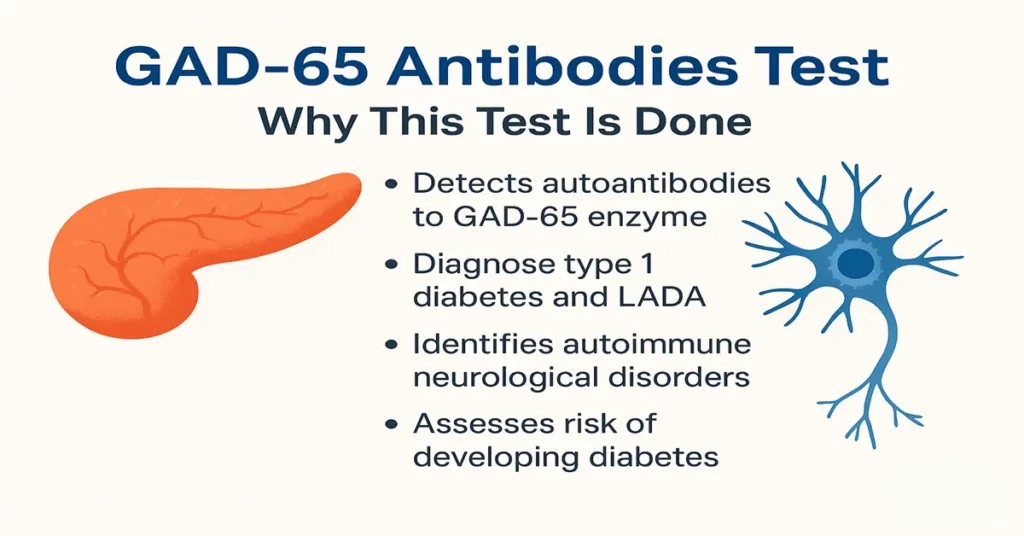
The GAD-65 Antibodies Test—also known as the GAD Antibodies Test or Glutamic Acid Decarboxylase Antibodies Test—is a blood test used to detect autoantibodies directed against the GAD-65 enzyme. This enzyme has an important role in producing GABA, a major inhibitory (calming) neurotransmitter in the brain, and it is also involved in the normal function of insulin-producing cells in the pancreas.
When the immune system mistakenly targets the GAD-65 enzyme, GAD antibodies appear in the bloodstream. Their presence is closely associated with autoimmune conditions affecting the pancreas and nervous system, most commonly Type 1 Diabetes, Latent Autoimmune Diabetes in Adults (LADA), and certain autoimmune neurological disorders. Because of this overlap between endocrinology and neurology, the test is often used to clarify the underlying cause of diabetes or unexplained neurological symptoms.
Where Is GAD-65 Produced in the Body?
The GAD-65 enzyme is mainly found in two key areas of the body.
1. Pancreas
GAD-65 is present in the beta cells of the pancreas, where insulin is produced. When autoimmune antibodies target this enzyme, beta cell function gradually declines, leading to reduced insulin production. This mechanism is central to Type 1 Diabetes and LADA.
2. Central Nervous System
GAD-65 is also located in nerve cells within the brain and spinal cord, particularly in regions involved in movement control, coordination, and muscle tone.
Where Are GAD Antibodies Produced?
GAD antibodies are produced by the immune system itself when immune tolerance is lost. This autoimmune response leads to gradual damage of pancreatic or neurological tissues, depending on where the immune attack is most active.
Main Functions and Importance of the GAD-65 Enzyme
1. Converts Glutamate to GABA
GAD-65 helps convert glutamate into GABA, one of the most important inhibitory neurotransmitters in the nervous system. GABA plays a key role in calming nerve activity, maintaining muscle relaxation, and preventing excessive electrical activity in the brain.
2. Helps Regulate Insulin Release
In the pancreas, GAD-65 supports the normal functioning of beta cells. Damage to these cells interferes with insulin release, leading to rising blood glucose levels.
3. Marker of Autoimmune Diabetes
Elevated GAD antibody levels are a strong marker of autoimmune diabetes, particularly Type 1 Diabetes and LADA. These forms of diabetes may initially resemble Type 2 Diabetes, especially in adults, making antibody testing important for accurate classification.
4. Marker for Autoimmune Brain Disorders
GAD antibodies can also target nerve cells, contributing to autoimmune neurological conditions such as stiff-person syndrome, autoimmune encephalitis, and cerebellar ataxia. This dual relevance explains why the test is commonly requested by both endocrinologists and neurologists.
Causes of Low or Negative GAD-65 Antibody Levels
Low or negative GAD-65 antibody levels are generally considered normal. Common situations include:
1. Healthy Individuals
Most people do not have detectable GAD antibodies.
2. Type 2 Diabetes
Type 2 Diabetes is not autoimmune in origin, so GAD antibodies are usually absent.
3. Reduced Autoimmune Activity
In some autoimmune neurological conditions, antibody levels may fall over time or after immune-modulating treatment.
4. Non-Autoimmune Conditions
When the immune system is not targeting pancreatic or nervous tissue, GAD antibody levels remain low.
Symptoms When GAD-65 Levels Are Low or Negative
Low or negative GAD antibody levels do not cause symptoms on their own. In a person with diabetes, a negative result often supports a non-autoimmune cause, such as Type 2 Diabetes, rather than Type 1 Diabetes or LADA.
Causes of High or Positive GAD-65 Antibody Levels
High GAD antibody levels indicate ongoing autoimmune activity. The most common associations include:
1. Type 1 Diabetes
Many newly diagnosed patients show elevated GAD antibodies as the immune system attacks insulin-producing cells.
2. LADA (Latent Autoimmune Diabetes in Adults)
This is a slowly progressive autoimmune form of diabetes that appears in adulthood and is frequently identified through GAD antibody testing.
3. Autoimmune Neurological Disorders
High GAD antibody levels are seen in conditions such as stiff-person syndrome, autoimmune encephalitis, and cerebellar ataxia, where nerve cells are affected.
4. Other Autoimmune Diseases
GAD antibodies may also be detected in individuals with other autoimmune conditions, including autoimmune thyroid disease, pernicious anemia, and certain rheumatologic disorders.
Symptoms of High or Positive GAD-65 Levels
Symptoms depend on which system is primarily affected.
1. If Related to Type 1 Diabetes or LADA
Patients may experience excessive thirst, frequent urination, unexplained weight loss, fatigue, blurred vision, and increased hunger. These symptoms reflect reduced insulin availability.
2. If Related to Neurological Disorders
Neurological involvement may lead to muscle stiffness, painful spasms, tremors, balance difficulties, walking problems, or seizures in severe cases.
3. General Autoimmune Features
Some individuals report persistent fatigue, muscle weakness, or unexplained body pain, reflecting systemic autoimmune activity.
Reference Ranges
Reference ranges may vary slightly by laboratory, but commonly reported values are:
- Negative: < 5 IU/mL
- Positive: ≥ 5 IU/mL (suggestive of autoimmune activity)
Higher values generally correlate with stronger autoimmune involvement, though results are always interpreted in clinical context.
Sample Type
The test requires a blood (serum) sample, collected through routine venipuncture. Fasting is not required unless other tests are performed at the same time.
Test Preparation
No special preparation is needed. Patients can continue their usual diet and medications unless advised otherwise. Bringing previous diabetes-related or neurological test reports can help with interpretation. A personal or family history of autoimmune disease should be shared with the doctor.
When to Consult a Doctor
Medical evaluation is recommended if symptoms suggest autoimmune diabetes or neurological involvement.
Diabetes-Related Symptoms
Excessive urination, intense thirst, sudden weight loss, constant fatigue, or blurred vision.
Neurological Symptoms
Muscle stiffness, repeated spasms, tremors, coordination problems, difficulty walking, or seizures.
Other Important Reasons
Unexplained blood sugar fluctuations, suspicion of LADA rather than Type 2 Diabetes, or a strong family history of autoimmune disease.
Early identification helps ensure correct diagnosis and appropriate long-term management.
Important Word Explanations
- Cerebellar Ataxia: A disorder affecting balance and coordination.
- Autoantibodies: Antibodies that mistakenly attack the body’s own tissues.
- GAD-65: An enzyme involved in GABA production and pancreatic beta-cell function.
- GABA: A calming neurotransmitter in the brain.
- Type 1 Diabetes: Autoimmune destruction of insulin-producing cells.
- LADA: Slowly progressive autoimmune diabetes in adults.
- Stiff-Person Syndrome: A rare neurological disorder characterized by severe muscle stiffness.
~END~
Related Posts
None found