
Ferritin Test: Meaning, Low & High Levels, Symptoms, Normal Range, and Complete Guide
Overview
The Ferritin Test is a blood test used to assess the amount of ferritin present in the body. Ferritin is a storage protein that holds iron safely inside cells and releases it gradually when the body needs it. In practical terms, ferritin reflects how much iron reserve the body has available.
Because ferritin changes early when iron balance shifts, this test is one of the most reliable indicators of iron deficiency and iron overload. It is also influenced by inflammation and liver health, which is why doctors often interpret ferritin alongside serum iron, transferrin, TIBC, and transferrin saturation rather than in isolation.
What is Ferritin?
Ferritin is a protein complex that stores iron in a controlled and non-toxic form. Most ferritin remains inside cells, but a small amount circulates in the blood. This circulating ferritin level closely mirrors the body’s total iron stores.
From a laboratory perspective, ferritin acts as an early signal. When iron stores begin to fall, ferritin drops before hemoglobin changes. When iron stores rise or inflammation is present, ferritin increases. This makes ferritin a sensitive but context-dependent marker that must be interpreted carefully.
Where is Ferritin Produced in the Body?
Ferritin is produced and stored mainly within cells of organs that handle iron regularly. The largest concentrations are found in the liver, spleen, bone marrow, and skeletal muscles.
Only a small fraction enters the bloodstream. That small circulating portion is what laboratories measure, and it provides a useful window into the body’s overall iron reserve rather than daily iron intake.
Main Functions and Importance of Ferritin
Stores Iron Safely
Ferritin binds iron tightly and keeps it in a stable, non-reactive form. This prevents free iron from damaging tissues through oxidative processes.
Releases Iron When Required
When the body needs iron for red blood cell production or other metabolic functions, ferritin releases stored iron in a controlled manner.
Prevents Iron Toxicity
Unbound iron can be harmful to cells. Ferritin acts as a protective buffer, limiting iron-related tissue injury.
Supports Red Blood Cell Formation
Bone marrow depends on stored iron to produce hemoglobin. Adequate ferritin ensures that iron supply remains steady even when intake fluctuates.
Maintains Total Iron Balance
Ferritin reflects the long-term balance between iron absorption, storage, and utilization. Changes in ferritin often precede changes in other iron parameters.
Overall, ferritin functions as the body’s iron reserve system, protecting against both depletion and excess.
Causes of Low Ferritin Levels
Low ferritin indicates reduced iron stores and is often the earliest laboratory sign of iron deficiency.
Common Causes
Low ferritin is commonly associated with insufficient iron intake, chronic or repeated blood loss, increased physiological demand, or impaired absorption. It may also be seen in conditions where iron requirements exceed intake over time.
From a clinical viewpoint, low ferritin means the body has little reserve left, even if hemoglobin is still within range.
Symptoms of Low Ferritin
Symptoms related to low ferritin develop gradually as iron reserves decline. They are often subtle at first and may precede measurable anemia.
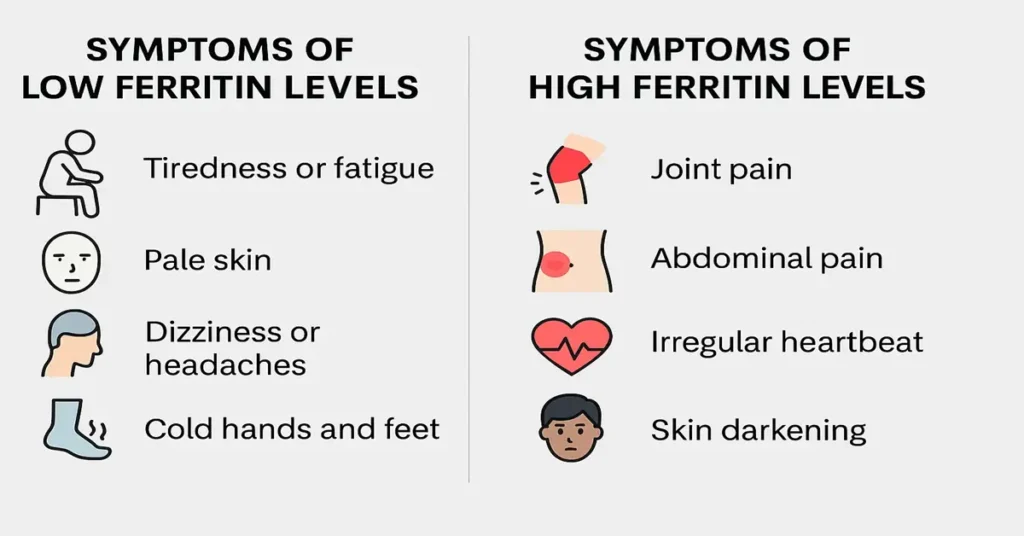
Patients may notice reduced energy, poor exercise tolerance, lightheadedness, breathlessness on exertion, or changes in skin, hair, or nails. Neuromuscular symptoms such as restless sensations in the legs may also occur. These features reflect reduced oxygen delivery and impaired cellular metabolism rather than an acute illness.
Causes of High Ferritin Levels
High ferritin does not always mean excess iron. It is also an acute-phase reactant and may rise in response to inflammation or tissue injury.
Common Causes
Ferritin may be elevated in iron overload states, chronic liver conditions, inflammatory or autoimmune disorders, malignancy, metabolic conditions, or frequent transfusions. Alcohol use and liver stress can also raise ferritin independently of iron stores.
Because of this, high ferritin always requires correlation with other tests before conclusions are drawn.
Symptoms of High Ferritin
When high ferritin reflects true iron overload, symptoms tend to develop slowly and involve organs where iron accumulates.
Patients may report ongoing fatigue, joint discomfort, abdominal fullness, skin darkening, or changes related to liver or metabolic stress. In inflammatory states, symptoms may instead reflect the underlying illness rather than iron excess itself.
Reference Ranges for Ferritin
Ferritin reference ranges vary by sex and laboratory, but commonly used values include:
- Men: 24 – 336 ng/mL
- Women: 11 – 307 ng/mL
Women typically have lower ferritin values due to menstrual blood loss and pregnancy-related iron demands. Interpretation should always consider age, clinical context, and accompanying laboratory findings.
Sample Type and Test Information
- Sample Type: Serum (blood sample)
- Tube Used: Red Top (Plain Tube)
- Fasting: Not usually required
Ferritin testing is commonly included as part of a broader iron profile. A routine venous blood sample is sufficient, and results are usually available the same day.
Test Preparation
Ferritin testing generally requires minimal preparation. Temporary avoidance of iron-containing supplements may be advised. Recent infections, inflammation, or liver stress should be communicated to the clinician, as these can influence ferritin levels.
Fasting is optional unless ferritin is being measured alongside other iron studies that require it.
When to Consult a Doctor
Medical review is appropriate if ferritin levels are persistently low or high, or if symptoms such as ongoing fatigue, weakness, breathlessness, joint discomfort, hair loss, or abdominal symptoms are present.
Abnormal ferritin results often prompt further evaluation with additional iron studies, inflammatory markers, or liver tests to clarify the underlying cause and guide follow-up.
Important Word Explanations
Ferritin
A protein that stores iron inside cells and releases it when the body requires it.
Iron Deficiency Anemia
A condition in which low iron leads to reduced hemoglobin and impaired oxygen transport.
Hemochromatosis
A genetic disorder characterized by excessive absorption and storage of iron.
Cirrhosis
Long-term scarring of the liver that affects its structure and function.
Metabolic Syndrome
A cluster of metabolic abnormalities that increase cardiovascular and liver risk.
Serum
The clear liquid portion of blood used for most biochemical laboratory tests.
~END~
Related Posts
None found