
Overview
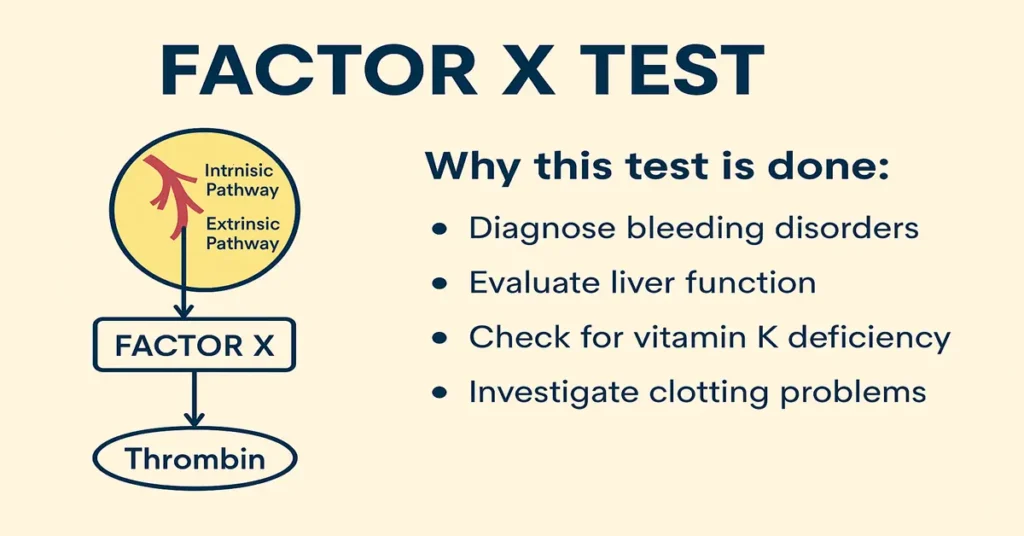
Factor X, also known as the Stuart-Prower Factor, is a key blood-clotting protein with a central position in the coagulation system. It sits at the point where the intrinsic and extrinsic pathways meet, making it essential for effective clot formation. When Factor X is activated to Factor Xa, it initiates the final major phase of coagulation, leading to the generation of thrombin and fibrin. These steps are necessary to produce a stable and durable blood clot.
The Factor X Activity Test evaluates how much Factor X is present and how well it functions in the blood. Clinically, this test is used to investigate bleeding tendencies, assess liver-related clotting abnormalities, evaluate vitamin K–dependent changes, and explore unusual clotting risks. Results are usually interpreted alongside other coagulation tests rather than in isolation.
What is Factor X?
Factor X is a protein that normally circulates in the bloodstream in an inactive form. During bleeding or tissue injury, upstream clotting reactions activate it to Factor Xa. Once activated, Factor Xa becomes one of the most important enzymes in coagulation.
Factor Xa works together with Factor V to form the prothrombinase complex, which converts prothrombin into thrombin. This step represents a major control point in clot formation. When Factor X activity is reduced, the clotting process weakens. When activity is increased, the balance may shift toward excessive clot formation.
Where is Factor X Produced in the Body?
Factor X is produced in the liver, similar to most other clotting factors. Two requirements are especially important for normal production.
First, vitamin K is essential for proper activation of Factor X. Second, healthy liver cells are required to synthesize the protein. Conditions that interfere with vitamin K availability or liver function can therefore influence Factor X levels, a fact clinicians routinely consider during interpretation.
Main Functions and Importance of Factor X
Factor X plays a central coordinating role in the coagulation cascade.
1. Convergence Point of Both Clotting Pathways
Both the intrinsic and extrinsic pathways lead to activation of Factor X, making it the gateway to the final phase of clot formation.
2. Formation of the Prothrombinase Complex
Activated Factor X combines with Factor V, calcium, and phospholipids to form the prothrombinase complex.
3. Converts Prothrombin into Thrombin
This complex converts prothrombin into thrombin, allowing the clotting cascade to progress efficiently.
4. Formation of Fibrin
Thrombin converts fibrinogen into fibrin strands, which form the mesh-like structure of a stable clot.
5. Prevents Excessive Bleeding
Adequate Factor X activity supports strong clot formation and helps protect the body from ongoing blood loss.
Causes of Low Factor X Levels
Low Factor X activity may be inherited or acquired and is usually interpreted in the context of overall coagulation findings.
1. Inherited Factor X Deficiency
This is a rare genetic condition resulting in reduced or dysfunctional Factor X. Symptoms may appear early in life depending on severity.
2. Severe Liver Disease
Because Factor X is synthesized in the liver, conditions such as cirrhosis or hepatitis commonly reduce its levels.
3. Vitamin K Deficiency
Insufficient vitamin K affects activation of Factor X. This may be seen with malabsorption, liver disorders, prolonged antibiotic use, or inadequate intake.
4. Warfarin or Vitamin K Antagonists
These medications interfere with vitamin K–dependent clotting factors, including Factor X.
5. Disseminated Intravascular Coagulation (DIC)
In DIC, clotting factors are consumed rapidly during widespread activation of coagulation.
6. Massive Blood Transfusions
Large transfusions can dilute clotting factors, leading to temporarily reduced activity.
Symptoms of Low Factor X Levels
Reduced Factor X activity is associated with bleeding tendencies. Patients may experience easy bruising, frequent or prolonged nosebleeds, gum bleeding, heavy menstrual bleeding, blood in urine or stool, or prolonged bleeding after injury, surgery, or dental procedures.
In more severe deficiency, bleeding into joints or muscles and internal bleeding can occur. Rarely, intracranial bleeding may be seen. The clinical picture generally reflects the degree of activity reduction rather than a single laboratory value.
Causes of High Factor X Levels
Elevated Factor X levels are less frequently evaluated but may be seen in certain physiological or metabolic states. These include inflammation, pregnancy, use of estrogen-containing medications, obesity, metabolic syndrome, and some cardiovascular conditions. In practice, higher levels are viewed as markers of a pro-clotting tendency rather than a disease on their own.
Symptoms of High Factor X Levels
High Factor X levels usually do not cause direct symptoms. However, increased activity may contribute to thrombotic events.
Warning signs include leg pain, swelling, redness, or warmth suggestive of deep vein thrombosis, sudden chest pain or shortness of breath, neurological symptoms such as weakness or speech difficulty, or severe chest discomfort. These situations require urgent medical attention.
Reference Ranges
Factor X activity is typically reported as a percentage of normal activity.
- Approximate reference range: 50%–150%
Reference limits may vary slightly by laboratory method. Lower activity levels are associated with bleeding risk.
Sample Type
The test is performed on a venous blood sample drawn from an arm vein.
- Tube: Light blue top
- Additive: Sodium citrate
Sodium citrate prevents clotting inside the tube, allowing accurate measurement of Factor X activity in plasma.
Test Preparation
Fasting is not required. Patients are usually advised to avoid strenuous physical activity before testing.
It is important to inform the doctor about the use of anticoagulants, vitamin K supplements, oral contraceptives, hormone therapy, or known liver or malabsorption conditions. Any instructions regarding blood-thinner adjustment should be followed carefully.
When to Consult a Doctor
Bleeding Symptoms
Medical advice should be sought for frequent nosebleeds, excessive bleeding after injuries, blood in urine or stool, easy bruising, heavy menstrual bleeding, or prolonged bleeding after dental or surgical procedures.
Signs of Possible Clots
Urgent evaluation is needed for leg swelling or pain, sudden chest discomfort, shortness of breath, severe headache, or sudden weakness or numbness. Sudden onset of these symptoms warrants emergency care.
Important Word Explanations
- Factor X: A clotting protein where the intrinsic and extrinsic pathways converge
- Stuart-Prower Factor: Another name for Factor X
- Prothrombinase Complex: The Factor Xa–Factor V complex that generates thrombin
- Thrombin: A key enzyme that drives fibrin clot formation
- DIC: A condition involving widespread consumption of clotting factors
- Vitamin K: Required for activation of several clotting factors
- Sodium Citrate Tube: A blood collection tube used for coagulation testing
~END~
Related Posts
None found