
Overview
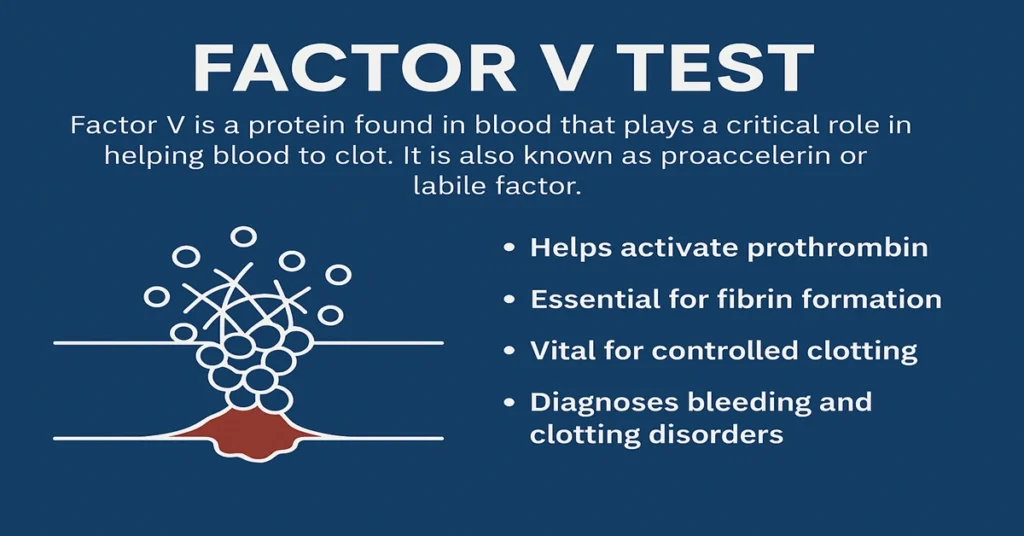
Factor V is an essential blood-clotting protein that plays a supporting but critical role in normal coagulation. It is also known as Proaccelerin or Labile Factor. When Factor V levels or activity are reduced, the clotting process becomes inefficient, and bleeding may last longer than expected. On the other hand, increased or abnormally functioning Factor V—most notably due to certain inherited mutations—can raise the tendency for unwanted blood clots to form inside blood vessels.
The Factor V test measures either how much Factor V is present or how well it is functioning in the blood. In day-to-day clinical practice, this test is used to evaluate unexplained bleeding, investigate clotting tendencies, assess liver-related clotting problems, and identify inherited conditions such as the Factor V Leiden mutation.
What is Factor V?
Factor V is one of the key proteins involved in the coagulation cascade, the step-by-step system the body uses to stop bleeding after injury. It does not act alone. Instead, it works as a helper, accelerating important reactions that lead to clot formation.
During clotting, Factor V supports the conversion of prothrombin into thrombin. Thrombin then drives the formation of fibrin, which creates the firm mesh that stabilizes a blood clot. If Factor V is missing or not working properly, this sequence slows down, and bleeding control becomes less reliable. Conversely, when Factor V activity is excessive or resistant to normal regulation, clot formation may occur more easily than it should.
Where is Factor V Produced in the Body?
Factor V is produced mainly in the liver, similar to many other clotting factors. The liver releases it into the bloodstream, where it remains available for clot formation when needed.
In addition, a smaller amount of Factor V is produced by megakaryocytes in the bone marrow. This portion is stored inside platelets and released locally at sites of vessel injury, helping strengthen clot formation. Because the liver plays such a central role, liver disorders often have a direct impact on Factor V levels.
Main Functions and Importance of Factor V
Factor V is vital for balanced clotting. Its most important role is to assist in the formation of thrombin, a key enzyme in coagulation. By working together with Factor X, it forms the prothrombinase complex, which significantly speeds up clot formation.
Clinically, Factor V helps ensure that bleeding stops efficiently without allowing excessive clotting. Measuring Factor V activity is useful when doctors need to understand why bleeding is prolonged or why clotting seems excessive. Maintaining the right balance is crucial, as both deficiency and excess can have clinical consequences.
Causes of Low Factor V Levels
Low Factor V levels are relatively uncommon but clinically important when present. They may be inherited, as in rare genetic Factor V deficiency, or acquired later in life.
In practice, reduced levels are often seen in liver disease, where clotting factor production is impaired. They may also appear in severe systemic conditions where clotting factors are consumed rapidly, such as disseminated intravascular coagulation, or after massive blood loss and dilution. Certain medications and serious infections can also contribute to reduced activity.
Symptoms of Low Factor V Levels
Low Factor V itself does not cause symptoms, but the resulting clotting defect does. Patients may notice easy bruising, prolonged bleeding from minor cuts, frequent nosebleeds, or excessive bleeding after surgery or dental procedures. In more pronounced deficiency, bleeding may occur internally or last longer than expected. The severity of symptoms usually reflects how low the Factor V activity is.
Causes of High Factor V Levels
High Factor V activity may occur for several reasons. One of the most clinically important is the Factor V Leiden mutation, in which Factor V becomes resistant to normal inactivation, increasing clotting risk.
Levels can also rise during pregnancy, inflammatory states, or with estrogen exposure from oral contraceptives or hormone therapy. Lifestyle and physiological factors, such as obesity or smoking, may further contribute to a pro-clotting environment. In these cases, elevated Factor V acts as a marker of increased clotting tendency rather than a disease by itself.
Symptoms of High Factor V Levels
Elevated Factor V levels usually do not produce direct symptoms. Concerns arise when increased activity contributes to clot formation. Symptoms, when they occur, relate to thrombosis and may include leg swelling or pain, sudden chest discomfort, or unexplained shortness of breath. Neurological symptoms can occur in rare, severe cases. Any such symptoms require prompt medical assessment.
Reference Ranges
Typical laboratory reference values for Factor V activity fall between 50% and 200% of normal, depending on the testing method and laboratory standards. Results are always interpreted in combination with clinical findings and other coagulation tests such as PT, aPTT, and platelet count.
Sample Type
The test requires a venous blood sample collected into a light blue–top tube containing sodium citrate. This prevents clotting before analysis. Plasma separated from the sample is used to measure Factor V activity or antigen levels.
Test Preparation
No fasting is required. Patients are usually advised to avoid strenuous exercise before testing. It is important to inform the doctor about blood-thinning medications, hormone use, pregnancy, recent surgery, or a family history of clotting disorders, as these factors help guide interpretation.
When to Consult a Doctor
Medical advice should be sought if there are repeated or unexplained bleeding episodes, easy bruising, or excessive bleeding after minor procedures. Consultation is also important if symptoms suggest clot formation, such as leg pain with swelling, sudden chest pain, breathing difficulty, or sudden weakness or numbness.
Urgent care is necessary whenever symptoms point toward serious bleeding or thrombosis.
Important Word Explanations
- Factor V: A protein that supports normal blood clot formation.
- Proaccelerin: Another name for Factor V.
- Factor V Leiden: A genetic mutation that increases the risk of blood clots.
- Thrombin: An enzyme essential for forming fibrin clots.
- DIC: A severe condition where clotting factors are consumed throughout the body.
- Sodium citrate tube: A blood collection tube used for coagulation testing.
~END~
Related Posts
None found