
Overview
Factor II, commonly known as Prothrombin, is one of the central proteins in the blood-clotting system. When bleeding occurs, prothrombin is converted into thrombin, an active enzyme that drives the formation of a stable blood clot. This step sits at the heart of the coagulation cascade. If Factor II activity is reduced, clot formation becomes inefficient and bleeding may last longer than expected. When activity is higher than normal, the balance may shift toward excessive clot formation.
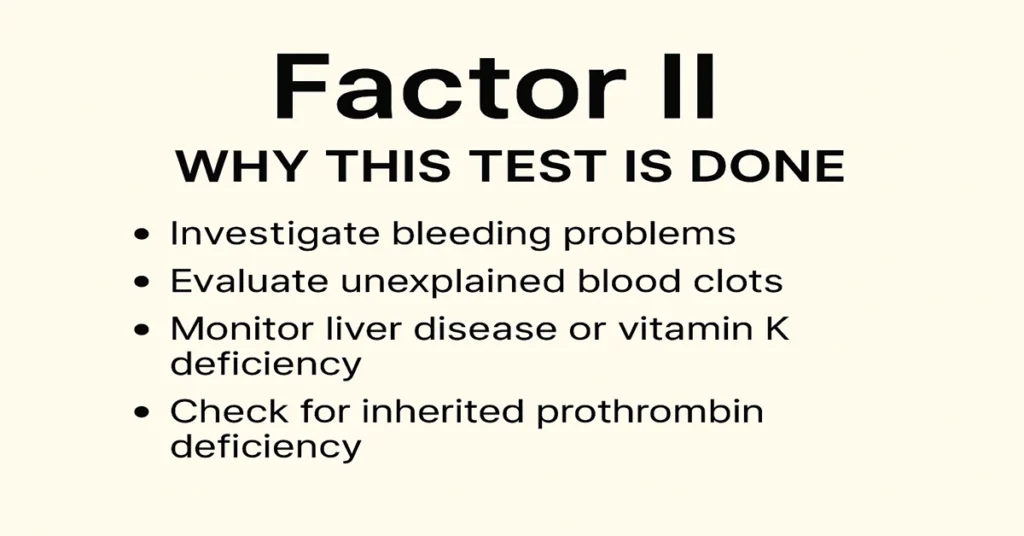
The Factor II – Prothrombin Activity Test evaluates both the presence and functional performance of prothrombin in the blood. Clinicians use this test to assess unexplained bleeding or clotting tendencies, liver-related clotting changes, vitamin K–dependent abnormalities, and the effects of anticoagulant therapy such as warfarin. In practice, results are interpreted alongside other coagulation tests rather than on their own.
What is Factor II – Prothrombin Activity Test?
This test assesses either the functional activity of prothrombin or the amount of prothrombin present in circulation. Together, these measurements help determine whether the liver is producing adequate prothrombin and whether it is functioning properly within the clotting system.
Doctors typically request this test when there is a clinical mismatch between symptoms and routine coagulation results. It is commonly considered in patients with repeated or prolonged bleeding, unexpected clot formation, or abnormal screening tests—particularly a prolonged prothrombin time (PT). It is also useful when liver disease or vitamin K–related issues are suspected, and for monitoring the anticoagulant effect of warfarin.
From a clinical standpoint, the test helps clarify whether a coagulation abnormality reflects reduced production, impaired function, or medication effect.
Where is Factor II Produced in the Body?
Factor II is produced in the liver, which is responsible for synthesizing most clotting proteins. Its production depends on two key requirements.
First, vitamin K is essential for activating prothrombin. Without adequate vitamin K, the liver may produce Factor II that is present but not fully functional. Second, healthy liver cells are required to maintain normal production. Any condition affecting liver function can therefore influence Factor II levels, often alongside changes in other coagulation factors.
Laboratory professionals often view Factor II as a useful marker when assessing liver-related clotting disturbances.
Main Functions and Importance of Factor II
Factor II has a central role in coordinating clot formation.
1. Converts Prothrombin to Thrombin
During coagulation, Factor II is converted into thrombin, a key turning point in the clotting cascade. This conversion allows the clotting process to progress efficiently.
2. Thrombin Creates Fibrin
Thrombin transforms fibrinogen into fibrin strands, forming the structural framework that stabilizes the clot.
3. Activates Other Clotting Factors
Thrombin amplifies coagulation by activating several additional clotting factors, including Factors V, VII, VIII, and XIII. This amplification strengthens and stabilizes the clot.
4. Activates Platelets
Thrombin also stimulates platelets to aggregate at the injury site, improving clot integrity.
5. Essential for Effective Hemostasis
Adequate Factor II activity supports timely clot formation and normal wound sealing. Reduced activity can lead to prolonged bleeding, particularly during surgery or trauma.
Causes of Low Factor II Levels
Reduced prothrombin activity interferes with normal clot formation. In clinical practice, low levels usually reflect an underlying systemic issue rather than an isolated disorder.
1. Inherited Prothrombin Deficiency
This is a rare genetic condition in which the body produces insufficient or dysfunctional Factor II.
2. Liver Disease
Because prothrombin is synthesized in the liver, conditions such as hepatitis, cirrhosis, or liver failure commonly reduce its levels.
3. Vitamin K Deficiency
Insufficient vitamin K impairs the activation of prothrombin. This may be seen in malabsorption states, prolonged antibiotic use, or during the newborn period.
4. Warfarin Use
Warfarin interferes with vitamin K–dependent clotting factors, and Factor II activity may fall as part of its expected effect.
5. Disseminated Intravascular Coagulation (DIC)
In DIC, clotting factors are consumed rapidly during widespread activation of coagulation.
6. Massive Blood Transfusion
Large transfusions can dilute clotting factors, including prothrombin.
Symptoms of Low Factor II Levels
Low Factor II activity is associated with bleeding tendencies. Patients may experience easy bruising, frequent nosebleeds, gum bleeding, heavy menstrual bleeding, or prolonged bleeding after cuts, dental work, or surgery. Blood may also appear in urine or stool.
In more severe cases, internal bleeding can occur, including bleeding within the brain or abdomen. The clinical severity generally reflects how low the activity level is, rather than the laboratory number alone.
Causes of High Factor II Levels
Elevated Factor II activity is usually associated with an increased tendency toward clot formation rather than direct symptoms.
1. Prothrombin G20210A Mutation
This inherited mutation leads to increased prothrombin production.
2. Pregnancy
Clotting factors naturally rise during pregnancy as part of the body’s protective response to childbirth.
3. Hormonal Therapy
Estrogen-containing oral contraceptives or hormone treatments can increase clotting factor activity.
4. Obesity and Metabolic Conditions
Certain metabolic states are associated with a more pro-clotting balance.
5. Inflammation and Cardiovascular Disease
Some inflammatory or cardiovascular conditions may be accompanied by elevated Factor II levels.
Symptoms of High Factor II Levels
High Factor II levels themselves usually do not cause symptoms. However, increased activity may contribute to thrombotic events.
Clinical warning signs include leg swelling or pain suggestive of deep vein thrombosis, sudden chest pain or breathlessness, neurological symptoms such as weakness or speech difficulty, and chest discomfort. These situations require urgent medical evaluation.
Reference Ranges
Factor II activity is typically reported as a percentage of normal activity.
- Approximate reference range: 50% – 150%
Reference limits may vary depending on laboratory technique and reagents. Levels below the lower limit are commonly associated with bleeding risk.
Sample Type
Testing is performed on a venous blood sample drawn from the arm.
- Tube: Light blue top
- Additive: Sodium citrate
Sodium citrate prevents clotting inside the tube, allowing accurate assessment of clotting factor activity.
Test Preparation
Fasting is not required for this test. Patients are usually advised to avoid alcohol before testing and to inform the doctor about all current medications, especially anticoagulants, vitamin K supplements, or hormonal therapies.
A history of liver disease, malabsorption, or recent infection should also be shared, as these factors influence result interpretation. Any instructions regarding blood-thinner adjustment should be followed strictly.
When to Consult a Doctor
Bleeding Symptoms
Medical advice should be sought for heavy or prolonged bleeding, frequent nosebleeds, blood in urine or stool, easy bruising, or excessive bleeding after dental or surgical procedures.
Clotting Symptoms
Urgent evaluation is required for leg swelling or pain, sudden breathlessness, chest pain, severe headache, vision changes, or stroke-like symptoms. Sudden onset of these signs warrants emergency care.
Important Word Explanations
- Prothrombin (Factor II): A clotting protein that is converted into thrombin
- Thrombin: An enzyme that drives fibrin clot formation
- Vitamin K: Required for activation of several clotting factors
- DIC: A condition involving widespread clotting and consumption of clotting factors
- Warfarin: An anticoagulant that reduces vitamin K–dependent clotting factors
- Antigen vs Activity: Protein quantity versus functional performance
Related Posts
None found