
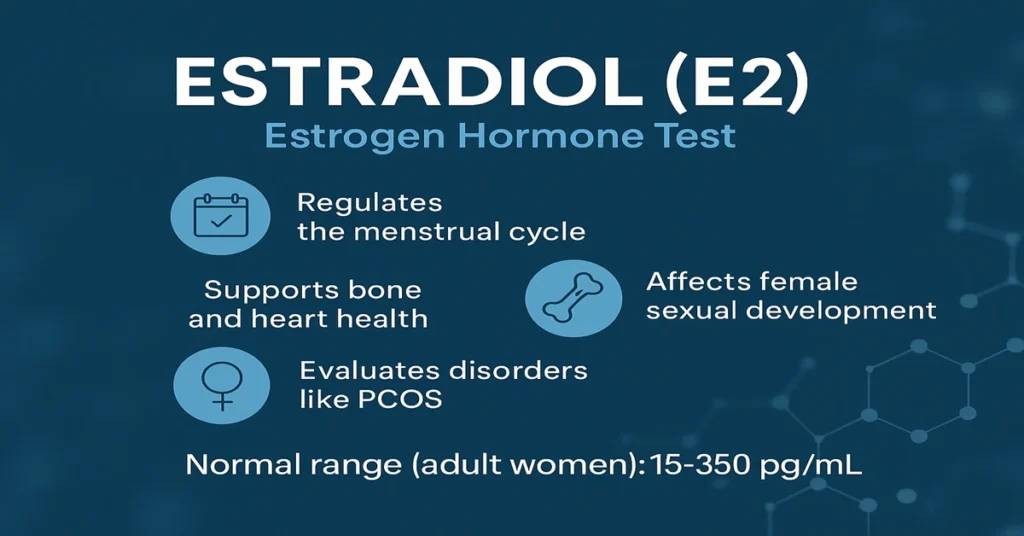
Estradiol (E2) Test – Complete, Clear, and Patient-Friendly Guide
Introduction
The Estradiol (E2) blood test is commonly used to measure the level of estradiol, the most biologically active form of estrogen, circulating in the blood. In routine clinical practice, this test helps doctors understand how well the body’s estrogen system is functioning and whether hormone levels align with a person’s age, sex, and reproductive stage.
Estradiol plays a central role in menstrual cycle regulation, fertility, and sexual development in women. At the same time, it also has important functions in men, particularly in maintaining bone strength, supporting libido, and balancing other reproductive hormones. Because estradiol influences multiple body systems, testing is often requested when hormonal symptoms appear unclear or inconsistent.
What is Estradiol (E2)?
Estradiol (E2) is one of the three main estrogen hormones, alongside estrone (E1) and estriol (E3). Among these, estradiol is the most potent and active form. It interacts with estrogen receptors throughout the body and has widespread effects on reproductive organs, bones, the cardiovascular system, and the brain.
In women, estradiol supports ovulation, prepares the uterus for possible pregnancy, and contributes to secondary sexual characteristics. In men, smaller amounts of estradiol help maintain skeletal health and assist in hormonal balance. Measuring estradiol levels provides clinicians with a useful snapshot of estrogen activity at a given point in time.
Where is Estradiol Produced in the Body?
Estradiol production varies depending on gender, age, and reproductive status.
In Females
The ovaries are the primary source of estradiol, particularly the developing follicles during the menstrual cycle. Levels naturally rise and fall as part of the normal hormonal rhythm that controls ovulation and menstruation.
In Males
Men produce estradiol in smaller amounts, mainly in the testes and through conversion of testosterone in fat tissue.
Additional Sources
Both men and women also generate limited estradiol through the adrenal glands and fat tissue. During pregnancy, the placenta becomes a major source, leading to markedly higher levels.
Overall regulation occurs through the hypothalamic–pituitary–gonadal axis, which allows the brain and reproductive organs to communicate and maintain hormonal stability.
Main Functions and Importance of Estradiol
Estradiol affects many systems in the body, which explains why abnormal levels can produce varied and sometimes subtle symptoms.
In Females
Estradiol guides the menstrual cycle by supporting uterine lining development and coordinating hormonal signals required for ovulation. It also contributes to long-term bone strength and plays a role in cardiovascular health. Many women notice its influence on skin quality, hair health, and emotional balance, particularly when levels fluctuate.
In Males
In men, estradiol works alongside testosterone to support sperm production, sexual function, and bone density. Even though levels are lower than in women, balanced estradiol remains important for overall hormonal health.
In Both Genders
Across all individuals, estradiol contributes to energy regulation, fat distribution, sleep patterns, and cognitive function. Because of its broad role, clinicians usually interpret estradiol results in relation to symptoms and other hormone tests rather than in isolation.
Causes of Low Estradiol Levels
Lower-than-expected estradiol levels may occur as part of normal life stages or due to conditions affecting hormone production.
Common Causes
Natural menopause is the most frequent reason for reduced estradiol in women. Other situations include reduced ovarian function, certain genetic conditions affecting ovarian development, or disorders involving the pituitary or hypothalamus. Low levels may also be seen in individuals with very low body weight, chronic illness, or as an effect of specific medications.
From a laboratory perspective, low estradiol values are assessed alongside other reproductive hormones to determine whether the finding reflects a broader hormonal pattern.
Symptoms of Low Estradiol Levels
When estradiol levels are low, symptoms usually reflect reduced estrogen activity.
In Females
Changes in menstrual regularity, hot flashes, vaginal dryness, sleep disturbances, or mood changes may be reported. Over time, reduced estrogen can also affect bone strength and sexual interest.
In Males
Men may notice reduced libido, lower energy levels, or gradual changes in bone density.
Clinically, these symptoms are interpreted carefully, as similar complaints can arise from multiple non-hormonal causes.
Causes of High Estradiol Levels
Elevated estradiol levels may be physiological or related to conditions that increase estrogen production or reduce its metabolism.
Common Causes
Pregnancy is a natural cause of high estradiol. Other situations include ovarian cysts, hormonal disorders such as PCOS, thyroid overactivity, liver conditions affecting hormone breakdown, or use of estrogen-containing medications. Increased body fat can also contribute, as fat tissue converts other hormones into estrogen.
Laboratory results are always reviewed in context, since temporary elevations may occur without underlying disease.
Symptoms of High Estradiol Levels
Higher estradiol levels can alter hormonal balance.
In Females
Women may experience changes in menstrual flow, breast discomfort, bloating, or mood fluctuations. These findings often prompt further evaluation rather than immediate conclusions.
In Males
Men may notice breast tissue changes, reduced libido, or reproductive concerns related to hormonal imbalance.
Persistently elevated values are typically assessed further to understand the source rather than treated based on a single result.
Reference (Normal) Ranges
Estradiol reference ranges vary depending on age, sex, and reproductive phase.
Adult Women
Follicular phase: 20 – 350 pg/mL
Mid-cycle: 150 – 750 pg/mL
Luteal phase: 30 – 450 pg/mL
Postmenopausal: Up to 20 – 40 pg/mL
Adult Men
10 – 50 pg/mL
Doctors interpret these values together with FSH, LH, and clinical history to form a complete hormonal assessment.
Sample Type
Sample Type: Serum (blood sample)
Tube Used: Red top (plain) or SST
Fasting: Not required unless specifically advised by the clinician
Test Preparation
The Estradiol test generally requires minimal preparation. Women may be asked to provide the sample on a specific day of the menstrual cycle, depending on the clinical question. Patients should inform their doctor about any hormonal medications or supplements they are using, as these can influence results.
Blood is collected from a vein, and reports are typically available within 24–48 hours.
When to Consult a Doctor
Medical consultation is advised when symptoms such as irregular periods, early menopausal changes, fertility concerns, unexplained mood shifts, or reduced libido occur. Bone discomfort or a history of fractures may also prompt evaluation.
Based on estradiol results, doctors may request additional hormone tests to better understand overall endocrine function.
Important Word Explanations
- Estradiol (E2): The most active and potent form of estrogen in the body.
- Estrogen: A group of hormones involved in reproductive and systemic health.
- FSH: A hormone that stimulates ovarian follicle development.
- LH: A hormone that triggers ovulation and supports reproductive function.
- Ovarian Insufficiency: Reduced hormone production by the ovaries.
- PCOS: A hormonal condition associated with irregular cycles and altered androgen levels.
~END~
Related Posts
None found