
Overview
The Epstein–Barr Virus (EBV) Test is used to identify infection caused by the Epstein–Barr virus, a very common member of the herpesvirus family. EBV is best known as the cause of infectious mononucleosis, often called “mono.” The test looks for antibodies made by the immune system in response to the virus, or in specific situations, it may detect the virus’s genetic material using PCR.
Most people are exposed to EBV at some point in life—often during childhood or adolescence—and many never realize it. In others, the infection can cause prolonged fatigue, fever, sore throat, and swollen lymph nodes. In people with weakened immune systems, the virus can reactivate and occasionally contribute to more serious complications. The EBV test helps doctors understand whether symptoms are related to a recent infection, a past exposure, or a reactivation.
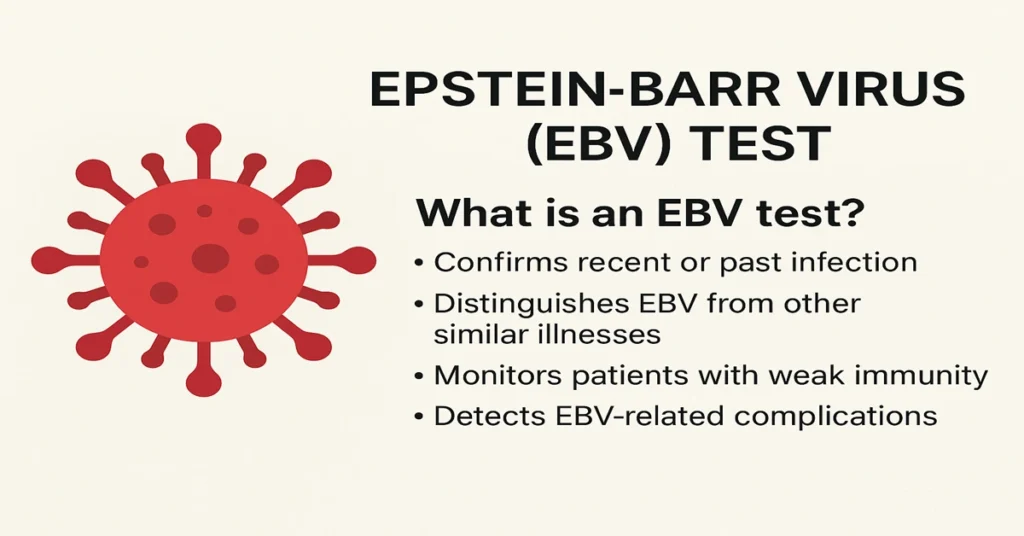
What Is an EBV Test?
An EBV test is a group of blood tests that help determine the stage of EBV infection. It commonly includes measurements of different antibodies, each of which appears at a specific time during or after infection:
- EBV VCA IgM suggests a recent or ongoing infection
- EBV VCA IgG indicates past exposure and usually remains detectable for life
- EBNA IgG confirms that infection occurred in the past and has moved beyond the acute stage
- EBV DNA PCR is used in selected cases to look for active viral replication
Doctors order these tests when symptoms such as fever, sore throat, swollen glands, or unexplained fatigue raise the question of EBV, especially when other common infections have been ruled out.
Where Is EBV Produced or Detected in the Body?
EBV is not produced by the body; it is an external virus acquired through close contact, most often via saliva.
After entering the body, EBV primarily infects B-lymphocytes, a type of immune cell, where it can remain dormant for long periods. It also infects epithelial cells in the throat and salivary glands, which explains how it spreads easily between people.
As the immune system responds, it produces antibodies that circulate in the blood. These antibodies—rather than the virus itself—are what most routine EBV tests detect. In situations where the virus is actively replicating, EBV DNA may be identified in blood or tissue samples.
Main Functions and Importance of EBV Test
The EBV test plays an important role in clinical decision-making.
It helps confirm whether current symptoms are due to a recent EBV infection or reflect a past exposure that is no longer active. This is particularly helpful because EBV symptoms often resemble those of other viral illnesses.
The test also assists in distinguishing EBV from conditions such as cytomegalovirus infection, bacterial throat infections, or other causes of prolonged fever and fatigue. In individuals with weakened immune systems—such as transplant recipients or patients undergoing chemotherapy—EBV testing can help monitor for reactivation.
In selected cases, EBV markers are also used as part of the evaluation for EBV-associated conditions, including certain lymphomas and nasopharyngeal carcinoma, always in combination with clinical findings and other investigations.
Causes of Low / Negative EBV Levels
A low or negative EBV result generally means that there is no evidence of current or past infection based on the markers tested.
This can be seen in people who have never been exposed to EBV, or in very early infection before antibodies have had time to develop. In some individuals, antibody levels may decline over many years and fall below detectable limits. Rarely, an impaired immune response may result in low antibody production despite infection.
Symptoms of Low / Negative Levels
When EBV tests are negative, there are usually no symptoms attributable to EBV itself.
If testing is done very early in the course of illness, a person may still have symptoms such as sore throat, fever, or fatigue even though antibodies are not yet detectable. In these situations, doctors may repeat testing later if EBV remains a concern.
Causes of High / Positive EBV Levels
Positive results depend on which EBV marker is elevated.
A positive VCA IgM typically reflects a recent or active infection. Positivity for VCA IgG and EBNA IgG usually indicates a past infection that has already resolved. Detection of EBV DNA by PCR suggests active viral replication, which may be seen in reactivation or in people with reduced immunity.
Rarely, persistently abnormal EBV markers may be associated with chronic active EBV infection or EBV-related malignancies, always interpreted in the broader clinical context.
Symptoms of High / Positive EBV Levels
Symptoms associated with positive EBV results usually reflect the underlying infection rather than the test result itself.
Common features include fever, marked fatigue, headache, and a sore throat that can be quite severe. Swollen lymph nodes in the neck or underarms are frequent. Some people develop enlargement of the spleen or liver, occasionally accompanied by mild jaundice.
In cases of reactivation or chronic infection, fatigue may persist for longer periods, and symptoms can be less dramatic but more prolonged.
Reference Ranges
Reference interpretation depends on the specific EBV marker tested rather than a single numeric range.
- VCA IgM positive suggests recent infection
- VCA IgG positive indicates past exposure
- EBNA IgG positive confirms prior infection
- EBV DNA PCR positive points toward active viral replication
Doctors always interpret these results alongside symptoms, physical findings, and other laboratory tests to determine the stage and significance of infection.
Sample Type
Most EBV tests use a blood sample, collected as serum or plasma. PCR testing may use blood or, in certain cases, tissue or other body fluids. Fasting is generally not required.
Test Preparation
No special preparation is usually needed before an EBV test. Patients should inform their doctor about current medications and recent illnesses. For PCR-based tests, careful sample handling is important to ensure accurate results.
When to Consult a Doctor
Medical advice should be sought if symptoms such as high fever, severe sore throat, pronounced fatigue, or swollen lymph nodes persist or worsen. Pain in the upper left abdomen may suggest an enlarged spleen and should be assessed promptly.
People with weakened immunity should consult a doctor if they develop symptoms suggestive of EBV, even if mild. Sudden severe abdominal pain, difficulty breathing, or profound weakness requires urgent medical evaluation.
Important Word Explanations
- EBV: Epstein–Barr virus, a common virus causing infectious mononucleosis.
- IgM: An antibody that appears early in infection.
- IgG: An antibody that usually indicates past exposure and long-term immunity.
- EBNA: An antibody that develops after the acute phase of EBV infection.
- PCR: A laboratory method used to detect viral DNA.
- B-lymphocytes: Immune cells that EBV commonly infects and resides in.
~END~
Related Posts
None found