
Overview
The EPO (Erythropoietin) Test is a blood test that measures the level of erythropoietin, a hormone that regulates red blood cell production in the bone marrow. Erythropoietin plays a quiet but essential role in keeping the blood’s oxygen-carrying capacity stable. When oxygen levels in the body fall, erythropoietin production increases, signaling the bone marrow to release more red blood cells.
In daily clinical practice, this test is most useful when doctors are trying to understand why a red blood cell count is low or high. It is commonly requested in the evaluation of anemia, polycythemia, and conditions affecting the kidneys or bone marrow. The result helps place laboratory findings into a clearer physiological context.
What is the EPO Test?
The EPO test measures the concentration of erythropoietin circulating in the blood. Because this hormone directly influences red blood cell production, its level often explains patterns seen in hemoglobin, hematocrit, and RBC counts.
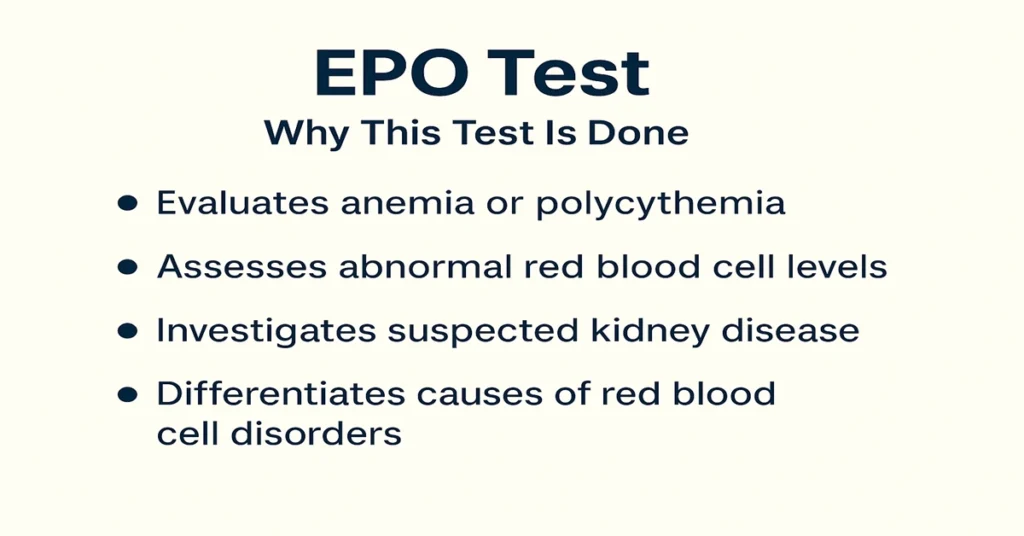
Clinicians typically consider this test when anemia has no obvious cause, when red blood cell levels are unexpectedly high, or when kidney-related disease is suspected. From a laboratory perspective, EPO levels help clarify whether the body is responding appropriately to oxygen needs or whether that response is impaired or excessive.
Where is EPO Produced in the Body?
Erythropoietin is produced mainly in the kidneys. Specialized cells in the kidney tissue continuously sense oxygen levels in the blood. When oxygen delivery drops, these cells release erythropoietin into circulation.
A smaller amount of erythropoietin is produced by the liver, particularly during fetal life and early childhood. In adults, however, the kidneys remain the primary regulators. This is why chronic kidney disease so often affects red blood cell production.
Importance and Functions of the EPO Hormone
Erythropoietin’s main role is to support steady red blood cell production in the bone marrow. By doing so, it helps maintain adequate oxygen delivery to tissues.
From a clinical standpoint, EPO levels provide insight into how the body is responding to anemia or oxygen stress. They also help distinguish whether a blood disorder is driven by kidney signaling, bone marrow response, or another underlying process. In some long-term conditions, understanding EPO behavior helps guide further evaluation and follow-up.
Causes of Low EPO Levels
Low erythropoietin levels usually suggest reduced hormonal signaling rather than a primary blood loss problem. This is commonly seen when kidney function is impaired, as damaged kidneys cannot produce enough erythropoietin.
In some bone marrow disorders or chronic inflammatory states, the marrow’s response to erythropoietin may also be blunted, even if some hormone is present. In these situations, EPO results are interpreted together with kidney tests and blood counts.
Symptoms of Low EPO Levels
Low EPO itself does not cause symptoms, but the resulting anemia often does. Patients may experience tiredness, reduced stamina, shortness of breath on exertion, or paleness. The severity of symptoms usually reflects how low the hemoglobin level has fallen and how quickly the change occurred.
Causes of High EPO Levels
High erythropoietin levels usually reflect the body’s attempt to compensate for reduced oxygen delivery. This can happen in chronic lung or heart conditions, at high altitude, or after blood loss.
In some cases, elevated levels may come from inappropriate hormone production rather than a normal physiological response. Interpreting a high EPO level always requires looking closely at oxygen status, red blood cell counts, and overall clinical findings.
Symptoms of High EPO Levels
Elevated EPO itself is not felt directly. Symptoms arise when red blood cell levels become excessively high, increasing blood thickness. People may report headaches, dizziness, facial flushing, or visual discomfort. These findings prompt further evaluation to reduce the risk of circulation-related complications.
Reference Ranges
Typical erythropoietin levels fall within a laboratory-defined reference range, often around 4–24 mU/mL, though this can vary slightly between laboratories.
Doctors never interpret this number alone. It is always considered alongside hemoglobin, hematocrit, kidney function tests, and the patient’s symptoms.
Sample Type
The EPO test requires a venous blood sample. The hormone is measured in serum using standardized laboratory methods. A urine sample is not needed for this test.
How the EPO Test is Performed
Blood is drawn from a vein and processed in the laboratory to separate serum. The erythropoietin concentration is then measured using immunoassay techniques. Results are reported numerically and reviewed in combination with other blood indices.
Test Preparation
No fasting is required for an EPO test. Patients are usually advised to inform their doctor about smoking habits, recent blood loss, or medications that may influence red blood cell production. Normal hydration before the blood draw is helpful.
When to Consult a Doctor
Medical advice is recommended if blood counts are persistently abnormal or if symptoms such as fatigue, breathlessness, dizziness, or frequent headaches continue without explanation. Abnormal EPO results are best discussed with a doctor who can relate them to kidney health, oxygen status, and overall blood findings.
Urgent evaluation is needed if symptoms suggest circulation problems, such as chest pain, sudden breathlessness, or signs of clot formation.
Important Word Explanations
- Erythropoietin: A hormone that signals the bone marrow to make red blood cells.
- Anemia: A condition with reduced red blood cells or hemoglobin.
- Polycythemia: A condition with increased red blood cell mass.
- Hypoxia: Lower-than-normal oxygen levels in the body.
- Bone marrow: The tissue inside bones that produces blood cells.
- Hematocrit: The percentage of blood made up of red blood cells.
- Synthetic EPO: Laboratory-made erythropoietin used in specific medical settings.
~END~
Related Posts
None found