
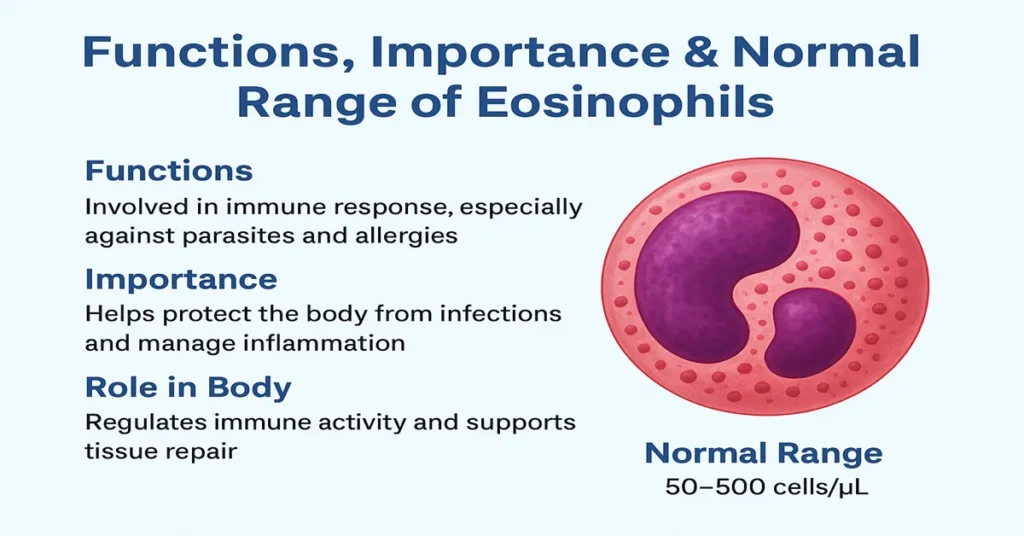
Functions, Importance and Normal Range of Eosinophils
Eosinophils are a specific type of white blood cell that play a quiet but important role in immune balance. In routine OPD and diagnostic lab practice, eosinophil values are most often discussed in the context of allergies, asthma, parasitic infections, and chronic inflammatory conditions. Although eosinophils form only a small fraction of total white blood cells, their presence—or absence—can offer useful clinical clues.
When eosinophil levels are too low or too high, it does not automatically mean disease. Clinically, doctors interpret these values alongside symptoms, history, and other blood parameters. This article explains what eosinophils do, why they matter, their normal ranges across age, gender, and pregnancy, and when abnormal levels deserve attention.
What Eosinophils Do in the Body
Eosinophils are produced in the bone marrow and circulate briefly in the blood before moving into tissues such as the lungs, skin, and gastrointestinal tract. These are areas where allergies, parasites, and inflammatory reactions commonly occur.
Their core functions include fighting parasites, participating in allergic responses, regulating inflammation, supporting tissue healing, and releasing enzymes that help control harmful organisms. In day-to-day practice, eosinophils are best understood as immune “modulators” rather than simple infection fighters.
Why Eosinophils Are Important
Eosinophils help keep immune responses balanced. They are especially important in controlling allergic inflammation and defending against parasitic infections. Without proper eosinophil activity, allergic reactions may become poorly regulated, and certain infections may be harder for the body to control.
From a clinical perspective, normal eosinophil levels suggest that the immune system is responding appropriately—neither underreacting nor overreacting. Abnormal levels act as signals that prompt doctors to look deeper rather than jump to conclusions.
Role of Eosinophils in the Body
Eosinophils play multiple roles, particularly in tissues exposed to environmental triggers.
They move to irritated or infected tissues such as the lungs, intestines, and skin to provide localized protection. They release substances that can increase inflammation when needed, but they also help limit inflammation once the immune response should settle. In allergic conditions, eosinophils help shape how strongly the body reacts to allergens like dust, pollen, or food triggers. Against parasites, they surround the organism and release toxic proteins that help destroy it. They also interact with other white blood cells to maintain overall immune balance.
Normal Range of Eosinophils
Eosinophils are reported in two ways: as a percentage of total white blood cells and as the Absolute Eosinophil Count (AEC). Clinically, the absolute count is more useful.
General adult range
In most laboratories, a normal eosinophil count is about 50 to 500 cells/µL, or roughly 1–4% of total WBCs. Minor variations between labs are common.
Age-wise normal ranges
Newborns and infants may show slightly higher eosinophil values, which usually settle as the immune system matures. Young children often show mild fluctuations due to frequent infections or allergies. Teenagers gradually approach adult values. In older adults, eosinophil counts may be slightly lower, reflecting slower immune activity rather than illness.
Gender-wise normal ranges
Men and women generally share the same reference ranges. Small hormonal variations may cause minor differences, but these are rarely clinically significant.
Pregnancy eosinophil ranges
Pregnancy naturally alters immune responses. Eosinophil levels may decrease slightly, particularly in early pregnancy, as the body adapts to protect the fetus. These changes are usually mild and temporary unless accompanied by symptoms.
When Abnormal Eosinophil Levels Become Risky
Abnormal eosinophil levels need context.
Low eosinophils (eosinopenia)
Low values are commonly seen during stress, acute infections, or steroid use. In routine practice, eosinopenia is usually temporary and rarely dangerous by itself.
High eosinophils (eosinophilia)
High levels are most often linked to allergies, asthma, skin conditions, or parasitic infections. Persistent elevations may indicate chronic inflammation or, rarely, blood-related disorders. Doctors usually focus on duration, severity, and symptoms rather than a single report.
If eosinophil levels remain abnormal for more than 4–6 weeks or are associated with breathing difficulty, persistent rashes, gastrointestinal symptoms, or unexplained weight loss, further evaluation is advised.
Test Preparation for Eosinophil Test
Eosinophils are measured as part of a CBC test. Fasting is not required. Normal hydration is advised. Avoid smoking and alcohol before testing, and inform the doctor about medications—especially steroids. Recent allergies, fever, or infections should be mentioned, as they can influence results.
When to Consult a Doctor
Medical advice is important if eosinophil levels stay abnormal on repeated tests, if allergies or asthma symptoms persist, if skin rashes recur frequently, or if there are symptoms like chronic cough, wheezing, abdominal pain, fatigue, or unexplained weight loss. Early assessment helps identify the cause and avoid unnecessary worry.
Important Word Explanations
| Term | Simple Explanation |
|---|---|
| Eosinophils | White blood cells involved in allergy control, parasite defense, and immune regulation. |
| Eosinophilia | A condition where eosinophil levels are higher than normal. |
| Eosinopenia | A condition where eosinophil levels are lower than normal. |
| Inflammation | The body’s natural response to irritation or infection. |
| Parasites | Organisms that live in the body and can trigger immune reactions. |
| Immune system | The body’s defense network against infections and disease. |
People Also Ask
Is an abnormal eosinophil count always serious?
No. Mild changes are common and often temporary.
Can eosinophils increase during allergies?
Yes. Allergic reactions are the most common reason for high eosinophils.
Do eosinophils always rise in parasitic infections?
Often, but not always. The rise depends on the type of parasite and the stage of infection.
When do doctors usually worry about eosinophils?
Concern increases when levels are high or persistent and linked with symptoms.
Is repeat testing common for eosinophil abnormalities?
Yes. Trends over time are more helpful than a single result.
Can someone feel normal with abnormal eosinophil levels?
Yes. Many people have no symptoms, especially when changes are mild.
~END~