
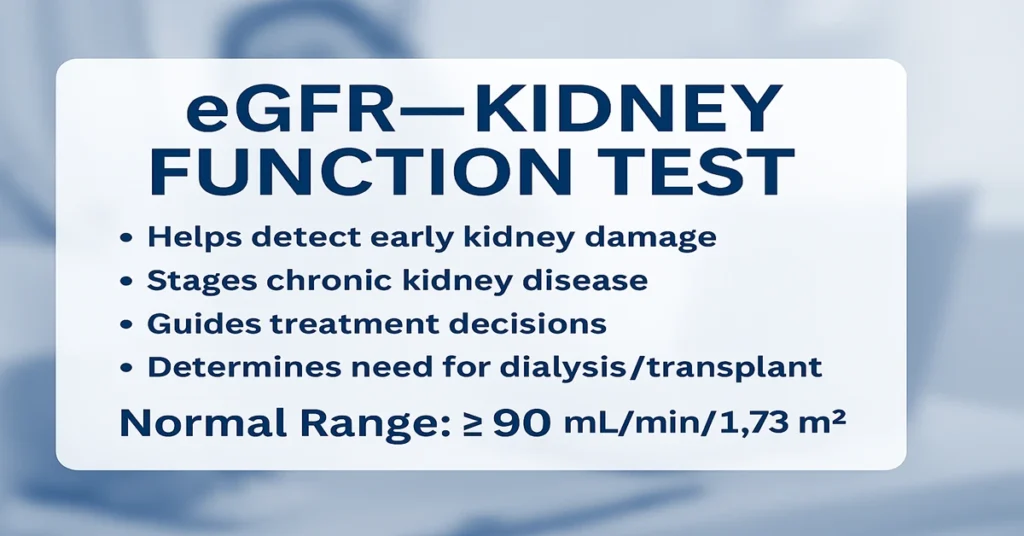
eGFR Test: Meaning, Importance, Causes, Symptoms, Normal Range, and Complete Guide
Introduction
The eGFR test, short for Estimated Glomerular Filtration Rate, is one of the most reliable ways doctors assess overall kidney function. It reflects how efficiently the kidneys are filtering waste products, excess fluid, and toxins from the blood. Unlike many laboratory tests that directly measure a substance, eGFR is a calculated value derived from blood creatinine along with personal factors such as age and gender.
Kidney disease often develops quietly, without early warning signs. Because of this, eGFR plays a key role in identifying kidney problems at an early stage, long before symptoms appear. Doctors also rely on this test to stage chronic kidney disease (CKD), monitor progression over time, and guide clinical decisions when kidney function begins to decline.
What is eGFR?
eGFR stands for Estimated Glomerular Filtration Rate. It represents the estimated volume of blood filtered by the kidneys each minute, adjusted to a standard body surface area of 1.73 m². In simple terms, it provides a numerical estimate of how well the kidneys are doing their filtering job.
Direct measurement of kidney filtration is complex and not practical for routine care. eGFR offers a reliable alternative by using blood creatinine levels and applying validated formulas. While it is an estimate rather than a direct measurement, it is accurate enough to guide most clinical decisions related to kidney health.
How is eGFR Calculated?
eGFR is not produced by the body. It is calculated using mathematical equations that interpret laboratory and demographic information together.
The main inputs include:
- Serum creatinine level, measured through a blood test
- Age, as kidney function naturally declines over time
- Gender, which helps adjust for differences in average muscle mass
- Race, used only in older equations and no longer recommended in newer models
The two most commonly used equations are:
CKD-EPI Equation
This is the current preferred method. It provides more accurate estimates across a wide range of kidney function levels and is now standard in many laboratories.
MDRD Equation
An older formula that is still used in some settings but may underestimate kidney function in people with near-normal results.
By accounting for muscle-related differences, these formulas make eGFR more informative than creatinine alone.
Main Functions and Importance of eGFR
The clinical value of eGFR lies in how effectively it summarizes kidney performance in a single number.
Early identification of kidney damage
A falling eGFR may reveal kidney stress or injury before symptoms develop, allowing timely evaluation.
Staging chronic kidney disease
eGFR is the basis for classifying CKD into stages, helping doctors understand severity and progression.
Monitoring known kidney conditions
In people with diabetes, high blood pressure, or established kidney disease, eGFR trends are often more important than single values.
Medication safety and dosing decisions
Many drugs are cleared by the kidneys. eGFR helps determine whether dose adjustments or alternatives are needed.
Assessing advanced kidney failure
Very low eGFR values signal severely reduced filtration and help doctors plan long-term kidney support strategies.
Causes of Low eGFR (Reduced Kidney Function)
A reduced eGFR indicates that the kidneys are filtering blood less efficiently than expected. This may occur temporarily or reflect a long-standing condition.
Common clinical associations include chronic kidney disease, diabetes-related kidney damage, long-standing high blood pressure, inflammatory conditions affecting the kidney filters, inherited kidney disorders, and urinary tract blockages. Dehydration and certain medications can also lower eGFR transiently.
Because many factors can influence eGFR, doctors usually interpret results alongside creatinine trends, urine findings, imaging, and the overall clinical picture.
Symptoms of Low eGFR (Usually Below 60)
In the early stages, reduced kidney function often causes no symptoms. As eGFR declines further, symptoms may gradually appear and usually reflect fluid retention or buildup of waste products.
People may notice swelling, fatigue, reduced appetite, changes in urination, or difficulty concentrating. Shortness of breath can occur when excess fluid accumulates. More advanced decline may affect blood pressure and overall energy levels.
Symptoms tend to become more noticeable as kidney function worsens, which is why laboratory monitoring is so important.
Causes of High eGFR
A high eGFR is less common and is usually not a sign of disease. It may be seen in situations where creatinine levels are naturally lower or temporarily diluted.
Examples include pregnancy, low muscle mass, overhydration, or short-term physiological changes. Occasionally, laboratory variation or calculation factors may contribute to an unexpectedly high value.
When results do not match the clinical picture, doctors may repeat the test or use additional markers for confirmation.
Symptoms of High eGFR
High eGFR itself does not cause symptoms. It is generally considered a benign finding unless linked to a specific physiological or clinical condition. Most individuals with elevated eGFR values feel entirely normal.
If there is uncertainty, further evaluation may include repeat testing or alternative kidney markers to ensure accurate interpretation.
Reference (Normal) Range
eGFR values are interpreted using established clinical ranges:
- ≥ 90 mL/min/1.73 m² – Normal kidney function
- 60–89 – Mild reduction; may be age-related or early kidney change
- 30–59 – Moderate reduction (Stage 3 CKD)
- 15–29 – Severe reduction (Stage 4 CKD)
- < 15 – Kidney failure (Stage 5 CKD)
Values may vary slightly depending on laboratory methods and population factors. Trends over time are often more meaningful than a single result.
Sample Type
Sample Type: Serum (blood sample)
Tube Used: Red Top (Plain Tube)
The eGFR calculation is based on serum creatinine and is commonly reported alongside kidney panels and routine blood tests.
Test Preparation
No fasting is required for eGFR testing. For consistent results:
- Maintain normal hydration
- Avoid unusually heavy exercise the day before testing
- Inform your doctor about medications or supplements that may affect creatinine
- Avoid abrupt dietary changes before the test
Following routine habits helps ensure results reflect true kidney function.
When to Consult a Doctor
Medical advice is recommended if eGFR values remain below normal or show a downward trend over time.
People with diabetes, high blood pressure, family history of kidney disease, or abnormal urine findings should have regular monitoring. New symptoms such as swelling, fatigue, or changes in urination also warrant evaluation.
Further testing may be advised to clarify the cause and assess kidney health more completely.
Important Word Explanations
eGFR
Estimated Glomerular Filtration Rate — a calculated indicator of kidney filtering ability.
Creatinine
A waste product from muscle metabolism used to estimate kidney function.
CKD
Chronic Kidney Disease — long-term impairment of kidney function.
Dialysis
A process that removes waste and excess fluid when kidneys can no longer do so adequately.
Polycystic Kidney Disease (PKD)
A genetic condition causing multiple cysts in the kidneys.
Glomerulonephritis
Inflammation of the kidney’s filtering units.
~END~