
Overview
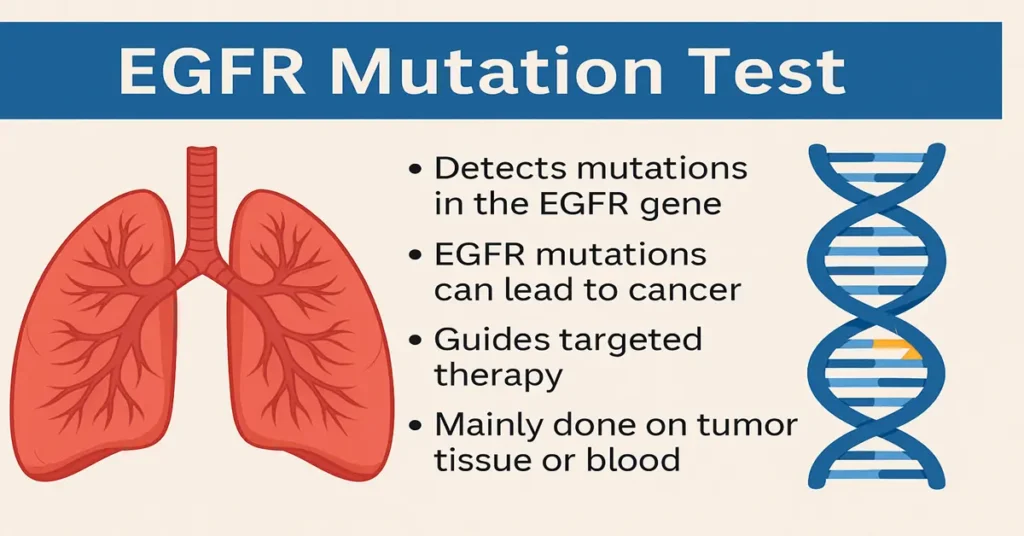
The EGFR Mutation Test is a specialized genetic test used to look for changes (mutations) in the EGFR gene. This gene controls signals that tell cells when to grow and divide. When an EGFR mutation is present, these signals can become overactive, allowing cancer cells to grow and spread more easily. This is most commonly seen in non-small cell lung cancer (NSCLC).
From a clinical point of view, this test helps doctors understand what is driving the cancer. That information is crucial. Certain EGFR mutations are known to respond well to targeted medicines, which often work more precisely than traditional chemotherapy. For this reason, EGFR mutation testing has become a routine and essential step in modern, personalized cancer care.
This overview explains the test in clear, practical language, similar to how it is discussed in hospital settings.
What is the EGFR Mutation Test?
The EGFR Mutation Test examines cancer cells for specific genetic changes in the Epidermal Growth Factor Receptor (EGFR) gene. Depending on the clinical situation, the test may be performed on:
- Tumor tissue obtained during a biopsy
- A blood sample (liquid biopsy) that detects circulating tumor DNA
- Body fluids such as pleural fluid in selected cases
EGFR mutations are more frequently seen in people with adenocarcinoma-type lung cancer and are relatively common in non-smokers, women, and certain ethnic populations. Identifying these mutations allows doctors to select therapies that are more likely to be effective for that individual tumor.
Where is EGFR Produced in the Body?
EGFR is a normal protein found on the surface of many healthy cells, particularly in tissues such as the skin, lungs, and digestive tract. Under normal conditions, it helps regulate controlled cell growth and repair.
The key clinical point is that EGFR mutations are not present in healthy cells. These changes occur within tumor cells as part of the cancer process. The test specifically looks for these abnormal signals within cancer tissue, not in normal body cells.
Why is the EGFR Mutation Test Important?
From a treatment-planning perspective, this test plays several important roles:
1. Identifies Cancer-Driving Changes
Certain EGFR mutations act as the main engine behind tumor growth. Detecting them helps explain why the cancer is behaving the way it is.
2. Guides Targeted Therapy Selection
Some cancers with EGFR mutations respond well to medications known as tyrosine kinase inhibitors (TKIs). Knowing the mutation status helps doctors choose the most appropriate drug.
3. Helps Predict Treatment Response
Different EGFR mutations behave differently. Some are linked with a strong response to targeted therapy, while others may respond less predictably.
4. Avoids Ineffective Treatment
If a suitable targeted option is available, doctors may avoid or delay treatments that are less likely to help at that stage.
5. Supports Personalized Cancer Care
Overall, the test allows treatment decisions to be based on the biology of the tumor rather than a one-size-fits-all approach.
Common EGFR Mutations Detected by the Test
The test commonly looks for mutations known to influence treatment decisions, including changes in exon 19, exon 21, exon 20, and certain resistance-related alterations. Each mutation pattern provides different clinical information, which is why detailed reporting is important.
Causes of Low / Negative EGFR Mutation Levels
A negative result means that no EGFR mutation was detected in the tested sample. Clinically, this may occur when:
- The cancer is driven by other genetic pathways
- The tumor does not rely on EGFR signaling
- The sample contains too few tumor cells for detection
- Technical limitations affect testing accuracy
A negative result does not change the diagnosis of cancer; it simply guides doctors toward alternative treatment strategies.
Symptoms Associated With Negative EGFR Results
The test result itself does not cause symptoms. Any symptoms present are related to the underlying cancer and depend on its location and stage. These may include cough, breathlessness, fatigue, or weight loss, but they are not specific to EGFR status.
Causes of High / Positive EGFR Mutation Levels
A positive EGFR mutation result reflects genetic changes that have occurred within the cancer cells. These changes arise as part of the cancer development process and are influenced by multiple biological and environmental factors. Importantly, they are acquired mutations, not something a patient is born with in most cases.
Symptoms Associated With Positive EGFR Mutation
EGFR mutations themselves do not produce symptoms. The symptoms seen are those of the cancer and vary depending on how advanced the disease is and which organs are involved. The mutation status mainly influences treatment planning rather than symptom type.
Reference Ranges for EGFR Mutation Test
Unlike routine blood tests, the EGFR Mutation Test does not report numerical ranges. Results are described as:
- Negative: No EGFR mutation detected
- Positive: A specific EGFR mutation identified
The clinical significance depends on the exact mutation detected and the overall cancer context.
Sample Type for the EGFR Mutation Test
The test may be performed using:
- Tumor tissue from a biopsy
- Blood samples for liquid biopsy analysis
- Selected body fluids containing tumor cells
The choice of sample depends on availability, safety, and clinical need.
How the Test is Performed
In simple terms, the process involves collecting a suitable sample, extracting DNA from cancer cells, and analyzing it using molecular techniques such as PCR or next-generation sequencing. The laboratory then reports whether specific EGFR mutations are present.
Test Preparation
No fasting is required. Patients are usually advised to inform their doctor about prior cancer treatments, as this helps with interpretation. For tissue testing, ensuring adequate sample collection during biopsy is important.
When to Consult a Doctor
Discussion with a doctor is recommended if lung cancer has been diagnosed, if treatment decisions are being planned, or if a previously effective therapy stops working. Urgent medical attention is needed for severe breathing difficulty, coughing up blood, or sudden neurological symptoms.
Important Word Explanations
- EGFR: A protein involved in regulating cell growth.
- Mutation: A change in the DNA sequence of a gene.
- NSCLC: Non-small cell lung cancer.
- TKI: A drug that blocks growth signals in cancer cells.
- Liquid Biopsy: A blood test that detects tumor-related DNA.
- Exon: A segment of a gene where mutations may occur.
- Metastasis: Spread of cancer to other parts of the body.
~END~
Related Posts
None found