
Overview
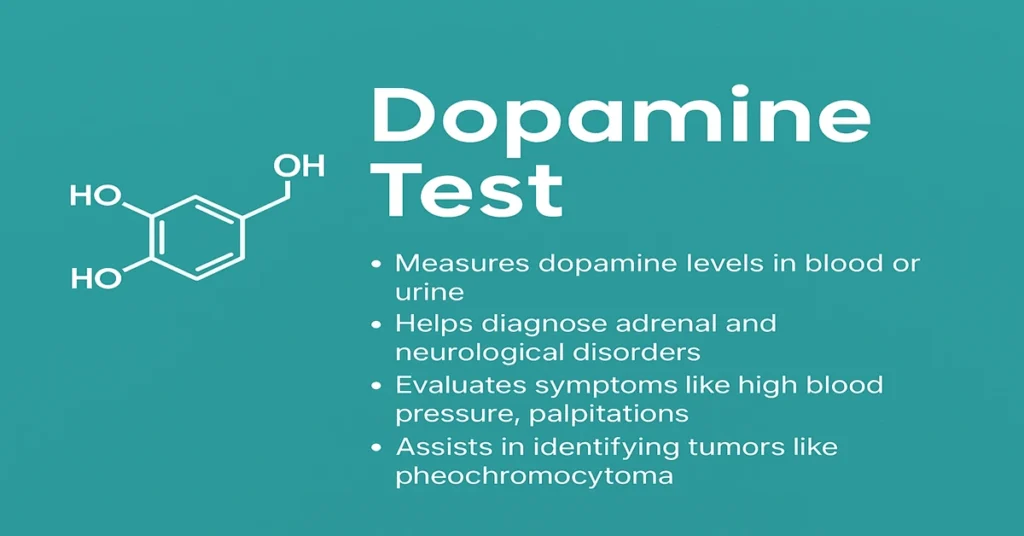
The Dopamine Test measures the level of dopamine in blood or urine. Dopamine is a naturally occurring chemical that functions both as a neurotransmitter in the brain and as a hormone in the circulation. It plays an essential role in movement control, emotional regulation, motivation, and the body’s stress response, while also influencing heart rate and blood pressure.
In clinical practice, this test is not used for routine screening. It is ordered when doctors are evaluating specific conditions, particularly disorders of the adrenal glands, certain neurological diseases, or rare tumors such as pheochromocytoma and neuroblastoma. Because dopamine affects several body systems at once, abnormal levels can provide useful diagnostic clues when interpreted carefully alongside symptoms and other test results.
What Is a Dopamine Test?
A Dopamine Test measures dopamine levels in either:
- Blood (plasma)
- Urine, usually collected over 24 hours
Dopamine helps transmit signals within the brain and also acts as a precursor for other important hormones, including norepinephrine and epinephrine. Measuring its level can therefore reflect activity within both the nervous system and the adrenal glands.
Doctors may request this test when assessing unexplained blood pressure fluctuations, suspected adrenal tumors, neurological symptoms, or complex psychiatric or metabolic presentations. The result is never viewed in isolation but as part of a broader clinical picture.
Where Is Dopamine Produced in the Body?
Dopamine is produced in several key areas of the body.
In the brain, it is synthesized mainly in regions involved in movement, mood, and hormonal regulation. Reduced dopamine activity in specific brain areas is closely linked with movement disorders.
The adrenal glands also produce dopamine, particularly in their inner portion. Here, dopamine serves as an intermediate step in the formation of other stress-related hormones.
Smaller amounts of dopamine activity occur in peripheral tissues, where it supports local regulation of blood flow and kidney function.
Main Functions and Importance of Dopamine
Dopamine has wide-ranging effects that explain why its imbalance can present in different ways.
Within the brain, it acts as a neurotransmitter that supports movement, focus, motivation, and emotional balance. It is also involved in reward and pleasure pathways, which influence behavior and mood.
Outside the brain, dopamine affects the cardiovascular system by influencing heart rate and blood pressure. It also plays a role in kidney function, particularly in regulating sodium balance and urine production.
From a diagnostic standpoint, dopamine is important because it sits at the beginning of the catecholamine pathway. Changes in its level can signal broader disturbances in stress hormone production or neurological function.
Causes of Low Dopamine Levels
Low dopamine levels usually reflect reduced production or impaired signaling rather than a single disease.
This may occur in conditions where dopamine-producing nerve cells are damaged, in disorders affecting hormonal control centers, or as a result of medications that block dopamine activity. Chronic physical or psychological stress can also alter dopamine balance over time.
Clinically, low levels are considered mainly in the context of neurological or psychiatric symptoms.
Symptoms of Low Dopamine Levels
Symptoms associated with low dopamine vary depending on the underlying cause and the body system involved.
Neurological features may include slowed movement, stiffness, or tremors. Changes in mood, motivation, and concentration are also common, with some individuals reporting low energy or reduced interest in daily activities. Because these symptoms overlap with many other conditions, testing helps support—but does not alone confirm—a diagnosis.
Causes of High Dopamine Levels
High dopamine levels are uncommon and usually point toward excessive production or release.
This is most often seen in certain adrenal or nerve-related tumors that increase catecholamine output. Marked physical or emotional stress, stimulant medications or substances, and specific psychiatric conditions may also influence dopamine levels.
In such cases, dopamine is usually measured along with related hormones to better understand the source of the imbalance.
Symptoms of High Dopamine Levels
Symptoms depend largely on the cause and the degree of elevation.
Some people develop cardiovascular signs such as episodes of high blood pressure or a rapid heartbeat. Others may experience anxiety, restlessness, sleep disturbance, or behavioral changes. In more pronounced cases, neurological or psychological symptoms may be noticeable.
Again, these findings are interpreted in combination with clinical history and additional tests.
Reference Ranges
Reference ranges vary by laboratory and testing method. Typical values include:
- Plasma dopamine (fasting): less than 30 pg/mL
- 24-hour urine dopamine: approximately 65–400 µg/day
Results outside these ranges do not automatically indicate disease and must be correlated with symptoms and other investigations.
Sample Type
Dopamine can be measured using:
- A blood (plasma) sample, which requires careful handling
- A 24-hour urine collection, which often provides a more stable assessment of dopamine and related hormones
The choice depends on the clinical question being asked.
Test Preparation
Preparation is important because dopamine levels can be influenced by diet, stress, and medications.
For blood testing, fasting may be required, and patients are often advised to avoid certain foods and stimulants beforehand. For urine testing, all urine passed over 24 hours must be collected according to instructions, with dietary and activity restrictions during the collection period.
Following laboratory guidance closely helps ensure accurate results.
When to Consult a Doctor
Medical advice should be sought if symptoms suggest a dopamine imbalance.
Low-level concerns may include movement difficulties, persistent low mood, or loss of motivation. High-level concerns may involve unexplained blood pressure spikes, palpitations, anxiety, or severe headaches.
Urgent care is needed for sudden severe hypertension, chest pain, marked agitation, or symptoms suggestive of an adrenal crisis. As with all hormone tests, results are most useful when discussed directly with a doctor who understands the full clinical context.
Important Word Explanations
- Dopamine: A chemical messenger that acts as both a neurotransmitter and a hormone.
- Neurotransmitter: A substance that transmits signals between nerve cells.
- Catecholamines: A group of related hormones including dopamine, norepinephrine, and epinephrine.
- Pheochromocytoma: A rare adrenal tumor that can increase catecholamine levels.
- L-DOPA: A precursor substance that is converted into dopamine.
- Adrenal medulla: The inner part of the adrenal gland that produces catecholamines.
~END~
Related Posts
None found