
Direct Bilirubin Test: Purpose, Procedure, Normal Range & When It Becomes Risky
What Is the Direct Bilirubin Test?
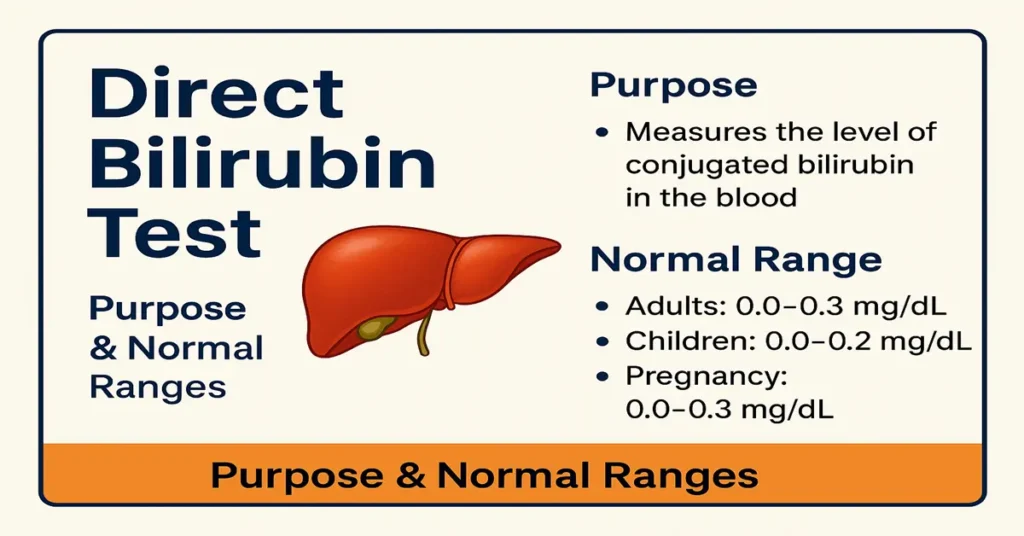
The Direct Bilirubin Test measures the amount of conjugated (direct) bilirubin present in the blood. This is the form of bilirubin that has already been processed by the liver and made water-soluble. Under normal circumstances, it should pass through the bile ducts into the intestine and leave the body.
When this pathway is disturbed—either because liver cells are inflamed or because bile ducts are blocked—direct bilirubin cannot move forward as it should. Instead, it leaks back into the bloodstream. Clinically, this pattern helps doctors focus on bile flow and liver drainage rather than red blood cell breakdown.
Why Is This Test Done?
Doctors order the direct bilirubin test to clarify where the problem lies when bilirubin is high.
To identify the cause of jaundice
In practice, this test helps distinguish jaundice caused by liver inflammation or bile obstruction from other causes. Direct bilirubin rising usually points toward a drainage issue.
To check for bile duct obstruction
Elevated direct bilirubin often suggests something is blocking bile flow. Gallstones are common, but pancreatitis, tumors, or duct narrowing can also be responsible.
To evaluate liver diseases
Conditions such as hepatitis, fatty liver, cirrhosis, and alcohol-related liver injury frequently raise direct bilirubin. Doctors correlate this value with other liver enzymes and symptoms.
To monitor response to treatment
Falling direct bilirubin levels often indicate improving bile flow or recovery of liver function after treatment or procedures.
For newborn jaundice when indicated
Most newborn jaundice involves indirect bilirubin, but checking direct bilirubin helps rule out rare yet serious causes related to bile drainage.
How the Test Is Performed
The test is simple and routine.
A small blood sample is drawn from a vein
Fasting is usually not required
The sample is analyzed in the laboratory
Results are typically available the same day
It is a safe test with minimal discomfort and no special risks.
Normal Range of Direct Bilirubin
Reference ranges can vary slightly between laboratories, but commonly accepted values are:
Adults
0.0 to 0.3 mg/dL
Children
Similar to adults, usually 0.0 to 0.2 mg/dL
Newborns
May show slightly higher values, often up to about 0.5 mg/dL. Persistent elevation requires evaluation.
Gender-Wise Ranges
There is no meaningful difference between males and females. The same adult reference range applies to both.
Pregnancy Ranges
Pregnancy does not significantly alter direct bilirubin levels. A mild rise may be seen late in pregnancy due to cholestasis, but persistent elevation needs evaluation, as doctors remain cautious about bile flow issues during pregnancy.
What High Direct Bilirubin Means
When direct bilirubin is elevated, doctors usually think about impaired bile movement. Common considerations include bile duct obstruction, liver inflammation, cholestasis, fatty liver, alcohol-related injury, medication effects, or compression of bile ducts by cysts or masses.
A rising trend over time carries more clinical weight than a single mildly abnormal value.
Symptoms Associated With High Direct Bilirubin
Patients may notice:
Yellowing of the skin or eyes
Very dark urine
Pale or clay-colored stools
Generalized itching
Nausea or vomiting
Right-sided upper abdominal discomfort
Unintentional weight loss in more serious cases
Pale stools and itching are particularly suggestive of bile flow disturbance.
When Direct Bilirubin Becomes Risky
Doctors become concerned when:
Direct bilirubin remains above about 1.0 mg/dL on repeat tests
Stools turn completely pale or white
Severe abdominal pain occurs, suggesting a bile duct stone
Fever appears along with jaundice, raising concern for infection
There is sudden, unexplained weight loss
Mental confusion or drowsiness develops, indicating possible liver failure
These situations require prompt medical evaluation.
What to Expect After Abnormal Results
Depending on the clinical picture, doctors may recommend additional tests such as liver function tests, abdominal ultrasound, MRCP or CT scan, ERCP when obstruction is suspected, viral hepatitis screening, and a careful medication review. The goal is to identify the cause and assess the severity.
Test Preparation
No fasting is required for the direct bilirubin test. Alcohol should be avoided for at least 24 hours before testing. Inform your doctor about all medications you are taking, and stay well hydrated. If imaging studies are advised, follow their specific preparation instructions.
When to Consult a Doctor
Seek medical attention if jaundice worsens, urine becomes very dark, stools turn pale, fever or abdominal pain develops, itching becomes severe, or you have a known history of gallstones or liver disease with changing values.
Important Word Explanations
Conjugated (direct) bilirubin: Bilirubin processed by the liver and mixed with bile
Bile ducts: Tubes that carry bile from the liver to the intestine
Cholestasis: Reduced or blocked bile flow
Jaundice: Yellowing of the skin and eyes due to bilirubin buildup
MRCP: MRI-based scan to visualize bile ducts
ERCP: Procedure used to diagnose and treat bile duct blockages
People Also Ask
Is a high direct bilirubin result always serious?
Not always. Mild elevations can be temporary, but persistent or rising levels need evaluation.
Can direct bilirubin increase temporarily?
Yes. Infections, dehydration, or certain medications can cause short-term increases.
Does high direct bilirubin always mean liver disease?
No. It can also indicate a bile duct blockage even if liver cells are functioning.
When do doctors usually worry about direct bilirubin?
Concern increases when levels rise steadily or are associated with pale stools, dark urine, pain, or fever.
Is repeat testing common for direct bilirubin?
Yes. Repeat tests help confirm trends and assess improvement or progression.
Can direct bilirubin return to normal on its own?
It can, if the underlying cause is temporary and resolves naturally.
~END~