
Overview
The Digoxin Test, also called the serum digoxin level or Lanoxin level, measures how much digoxin is present in the blood. Digoxin is a well-established heart medication used mainly in heart failure and certain rhythm disorders such as atrial fibrillation and atrial flutter.
From a clinical point of view, digoxin requires careful monitoring. The difference between a helpful dose and a harmful one is small. Levels that are too low may not control symptoms, while slightly higher levels can lead to toxicity. Regular testing helps doctors maintain the right balance so the medicine remains effective without becoming unsafe.
What Is Digoxin?
Digoxin is a medication derived from the foxglove plant (Digitalis lanata). It is not made by the human body. After being taken by mouth or given through a vein, it enters the bloodstream and concentrates mainly in heart tissue. The kidneys are responsible for removing it from the body.
Because digoxin directly affects heart muscle contraction and electrical activity, even modest changes in blood levels can have noticeable effects. This is why monitoring is an essential part of therapy, especially in older adults and people with kidney problems.
What Is the Digoxin Test?
The digoxin test checks whether the amount of drug in the blood is within the desired range.
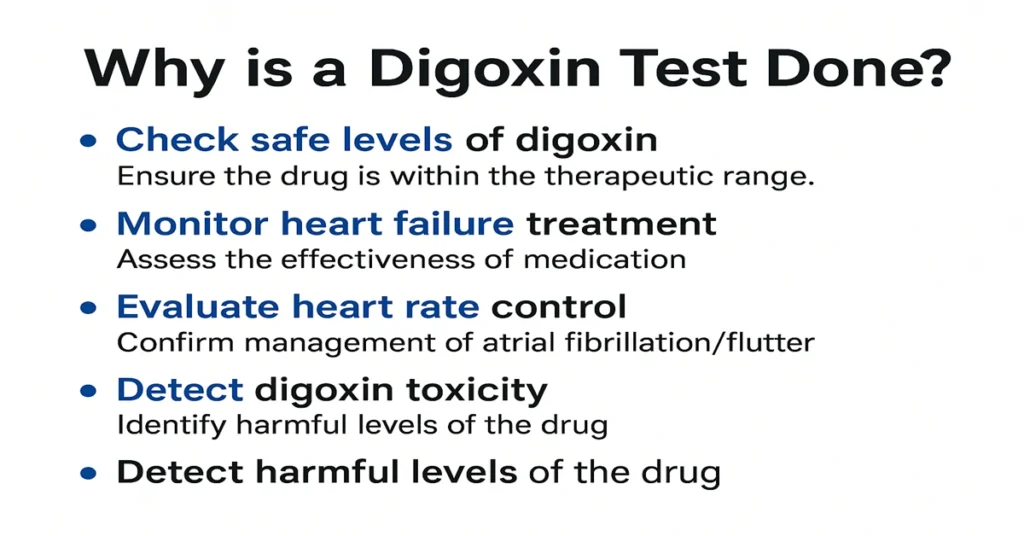
Doctors use this test to confirm that the dose is appropriate, to adjust treatment when needed, and to investigate symptoms that may suggest either under-dosing or toxicity. It is commonly ordered when digoxin is first started, when doses are changed, if kidney function alters, or when other medications that may interact with digoxin are added.
In practice, the test helps answer a simple but important question: is the digoxin level safe and useful for this patient right now?
Where Is Digoxin Produced in the Body?
Digoxin is not produced naturally in the body.
It originates from the Digitalis plant and enters the body as a medication. Once absorbed, it circulates in the bloodstream, binds to heart muscle, and is cleared mainly through the kidneys. Because of this renal clearance, reduced kidney function can allow digoxin to accumulate, increasing the risk of toxicity even at usual doses.
Main Functions and Importance of Digoxin
Digoxin has two key effects on the heart.
First, it increases the strength of heart muscle contraction. This can help the heart pump blood more efficiently, easing symptoms such as fatigue, breathlessness, and fluid retention in some people with heart failure.
Second, it slows electrical conduction through the atrioventricular (AV) node. This helps control heart rate in rhythm disorders like atrial fibrillation and atrial flutter.
Although digoxin does not cure heart failure or rhythm problems, it can improve symptom control and reduce hospital visits when used carefully. Monitoring blood levels is central to ensuring these benefits are achieved safely.
Causes of Low Digoxin Levels
Low digoxin levels usually suggest that the medication is not reaching an effective concentration.
This may happen if doses are missed, if absorption is reduced due to stomach or intestinal problems, or if other medicines interfere with how digoxin is absorbed or processed. In some individuals, the drug may be cleared more quickly by the kidneys, resulting in lower levels.
From a clinical perspective, low levels raise concern mainly when symptoms are no longer well controlled.
Symptoms of Low Digoxin Levels
When digoxin levels are lower than intended, symptoms of the underlying heart condition may reappear or worsen.
In heart failure, this can include increasing breathlessness, swelling of the legs, fatigue, or reduced exercise tolerance. In rhythm disorders such as atrial fibrillation, patients may notice a faster or more irregular heartbeat, palpitations, or dizziness. These changes often prompt reassessment of the dose and repeat testing.
Causes of High Digoxin Levels (Toxicity)
High digoxin levels are potentially dangerous and require prompt attention.
They may occur with accidental overdose, reduced kidney function, or dehydration. Certain medications can also raise digoxin levels by altering its metabolism or clearance. In addition, electrolyte imbalances—especially low potassium or magnesium, or high calcium—can make the heart more sensitive to digoxin, increasing the risk of toxicity even when blood levels are not markedly elevated.
This is why digoxin testing is often interpreted alongside kidney function and electrolyte results.
Symptoms of High Digoxin Levels (Toxicity)
Symptoms of digoxin toxicity can develop gradually or appear suddenly.
Early signs often involve the digestive system, such as nausea, vomiting, or loss of appetite. Neurological symptoms may include confusion, dizziness, or unusual tiredness. Visual changes—classically blurred vision or seeing yellow-green halos around lights—are particularly suggestive.
Cardiac effects are the most serious. These may include slow heart rate, irregular rhythms, or dangerous arrhythmias. Because of these risks, suspected toxicity is treated as a medical emergency.
Reference Ranges
Digoxin has one of the narrowest therapeutic ranges among commonly used medications.
In general, therapeutic levels fall between 0.5 and 2.0 ng/mL, while levels above this range increase the risk of toxicity. Importantly, blood sampling must be timed correctly. For accurate interpretation, the sample should be taken 6–8 hours after the last dose, once the drug has distributed evenly in the body.
Sample Type
The test requires a blood (serum) sample, drawn from a vein. Fasting is not required, but timing of the sample in relation to the last dose is critical for meaningful results.
Test Preparation
Patients are usually advised not to take digoxin immediately before the blood draw. Informing the doctor about kidney problems, recent dehydration, and all current medications is important, as these factors influence interpretation.
Following the recommended timing for sample collection helps avoid misleading results.
When to Consult a Doctor
Medical advice should be sought if symptoms suggest either inadequate effect or toxicity.
Worsening breathlessness, swelling, or fast irregular heartbeat may indicate low levels. Nausea, vomiting, confusion, vision changes, or new rhythm disturbances raise concern for toxicity. Emergency care is needed for fainting, severe arrhythmias, chest pain, or marked visual disturbances.
Regular monitoring and early reporting of symptoms help keep digoxin therapy both safe and effective.
Important Word Explanations
- Cardiac glycoside: A group of medicines that increase the strength of heart contractions.
- Positive inotrope: A substance that improves the force of heart muscle contraction.
- AV node: The electrical connection between the upper and lower chambers of the heart.
- Therapeutic range: The blood concentration at which a drug is effective and safe.
- Toxicity: Harmful effects caused by excessive drug levels.
- Digitalis: The plant family from which digoxin is derived.
~END~
Related Posts
None found