
DHT Test: Purpose, High/Low Levels, Symptoms, Normal Range & Complete Guide
Overview
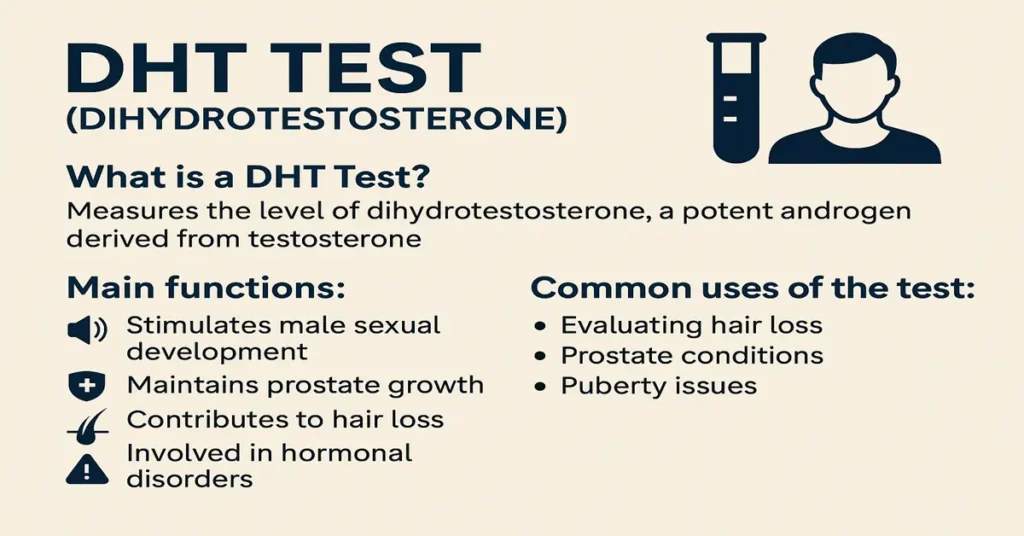
The DHT (Dihydrotestosterone) Test is a blood test used to measure the level of DHT in the body. DHT is a powerful androgen formed when testosterone is converted by the enzyme 5-alpha reductase. Although present in smaller amounts than testosterone, DHT has a much stronger biological effect because it binds more tightly to androgen receptors.
From a clinical perspective, DHT plays a central role in male sexual development, prostate growth, and hair pattern changes. Even modest changes in its level can influence hair loss, puberty, fertility, and prostate health. For this reason, doctors often request a DHT test when evaluating hair loss patterns, prostate-related concerns, disorders of puberty, or unexplained hormonal imbalance in both men and women.
What Is a DHT Test?
A DHT test measures the amount of dihydrotestosterone circulating in the blood. Since DHT is derived from testosterone, this test helps clarify how actively testosterone is being converted into its more potent form.
DHT mainly affects tissues that are highly sensitive to androgens, such as hair follicles, the prostate, and reproductive organs. Measuring its level allows clinicians to better understand whether symptoms like hair thinning, early puberty, fertility issues, or prostate enlargement may be linked to androgen activity rather than testosterone alone.
Where Is DHT Produced in the Body?
DHT is not released directly from a single gland. Instead, it is produced locally in tissues where the enzyme 5-alpha reductase is active.
In the skin and hair follicles, this conversion influences facial and body hair growth as well as scalp hair thinning. In the prostate, DHT supports normal development and maintenance of prostate tissue. Smaller amounts of conversion also occur in the liver. Because testosterone serves as the starting material, organs that produce testosterone—such as the testes in men, ovaries in women, and adrenal glands—indirectly contribute to overall DHT levels.
Main Functions and Importance of DHT
DHT is especially important during male development. During puberty, it drives the development of external genitalia, deepening of the voice, and growth of facial and body hair. It also contributes to muscle development and other masculine physical traits.
In adulthood, DHT continues to influence prostate health and hair follicle behavior. Clinically, this explains why elevated DHT is associated with conditions such as male pattern baldness and prostate enlargement, while reduced DHT activity can affect sexual development and fertility.
Because of these effects, the DHT test helps doctors assess androgen-related disorders and understand how strongly testosterone is acting within target tissues.
Causes of Low DHT Levels
Low DHT levels usually reflect reduced testosterone availability or impaired conversion of testosterone to DHT.
This can occur when the enzyme 5-alpha reductase is deficient, when testosterone production is low, or when medications are used to block DHT formation. Disorders affecting the pituitary gland or testes can also indirectly reduce DHT levels by lowering testosterone output.
Symptoms of Low DHT Levels
Symptoms associated with low DHT tend to develop gradually. In males, they may include reduced facial or body hair, delayed pubertal changes, low sexual desire, or erectile difficulties. In more pronounced cases, fertility may be affected. Energy levels and general vitality may also feel reduced.
Because these features overlap with other hormonal conditions, laboratory testing is often needed to confirm whether DHT is contributing.
Causes of High DHT Levels
High DHT levels are usually linked to increased testosterone production or increased conversion of testosterone to DHT.
This may be seen in conditions where androgen production is elevated, such as adrenal or testicular disorders, congenital adrenal hyperplasia, or polycystic ovary syndrome in women. Use of anabolic steroids can also raise DHT levels by increasing available testosterone.
Symptoms of High DHT Levels
Symptoms depend on age and sex.
In men, excess DHT is commonly associated with scalp hair thinning, acne, oily skin, and prostate enlargement. Some may notice changes in mood or fertility. In women, elevated DHT may lead to increased facial or body hair, acne, irregular menstrual cycles, scalp hair thinning, or voice changes. In boys, high levels can contribute to early pubertal development and rapid physical changes.
These effects reflect heightened androgen action rather than the blood level alone.
Reference Ranges
Reference ranges vary by laboratory and age.
Typical adult ranges are approximately:
- Adult males: 30–85 ng/dL
- Adult females: 3–30 ng/dL
Men naturally have higher DHT levels due to greater testosterone production. Results are always interpreted in the context of symptoms and other hormone measurements.
Sample Type
The DHT test requires a blood (serum) sample, collected from a vein using standard venipuncture. Samples are often drawn in the morning, when hormone levels are more consistent.
Test Preparation
No fasting is usually required. Patients should inform their doctor about medications that affect androgen levels, such as finasteride, dutasteride, testosterone, or steroids, as these can significantly influence results. Avoiding intense physical activity before testing may also help reduce variability.
When to Consult a Doctor
Medical advice should be sought if symptoms suggest abnormal androgen activity, such as unexplained hair loss, excess hair growth, fertility issues, delayed or early puberty, or prostate-related urinary symptoms.
Prompt evaluation is especially important when rapid physical changes occur, such as sudden hair loss, virilization in women, or early pubertal signs in children. A doctor will interpret DHT levels alongside clinical findings and other hormone tests to guide further evaluation.
Important Word Explanations
- Precursor: A substance that is converted into another hormone.
- DHT (Dihydrotestosterone): A potent androgen formed from testosterone.
- Androgen: A group of hormones responsible for male sexual characteristics.
- 5-Alpha Reductase: The enzyme that converts testosterone into DHT.
- Hypogonadism: A condition involving reduced testosterone production.
- Hirsutism: Excessive facial or body hair growth in women.
- BPH (Benign Prostatic Hyperplasia): Non-cancerous enlargement of the prostate gland.
~END~
Related Posts
None found