
DHEA-S Test: Purpose, High/Low Levels, Symptoms, Normal Range & Complete Guide
Overview
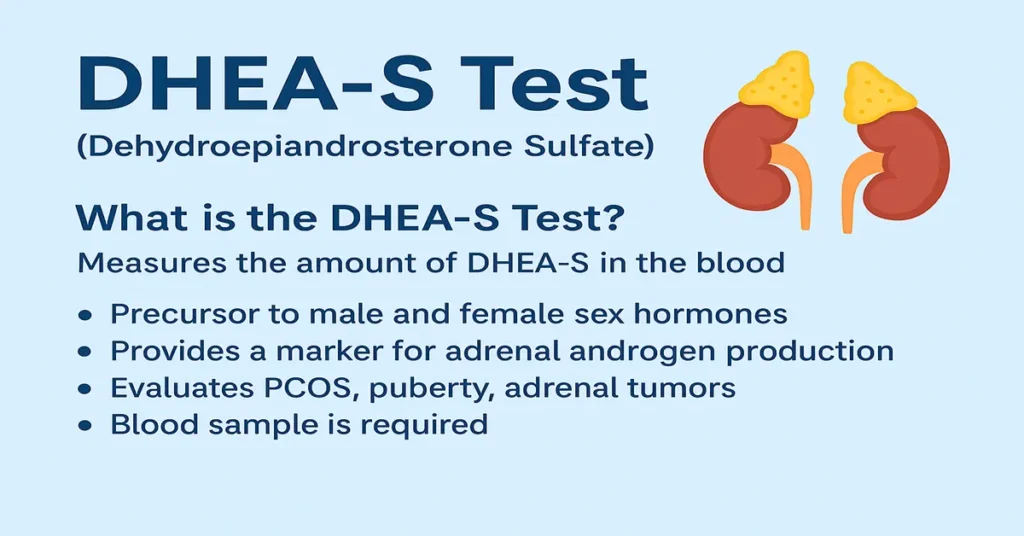
The DHEA-S (Dehydroepiandrosterone Sulfate) Test is a blood test that measures the level of DHEA-S in the body. DHEA-S is the sulfated and more stable form of DHEA, a hormone produced predominantly by the adrenal glands. Because DHEA-S circulates in higher amounts and remains stable throughout the day, it is considered one of the most reliable indicators of adrenal androgen production.
In routine clinical practice, doctors use this test to assess adrenal gland function and to investigate conditions linked with hormonal imbalance. It is commonly ordered in cases of unexplained hair growth, acne, irregular menstrual cycles, fertility concerns, early or delayed puberty, and when adrenal disorders such as congenital adrenal hyperplasia or adrenal tumors are suspected. Overall, the test offers a clear snapshot of adrenal hormonal activity.
What Is the DHEA-S Test?
The DHEA-S test measures the concentration of dehydroepiandrosterone sulfate in the blood. DHEA-S itself has limited direct activity, but it serves as an important precursor hormone.
Inside the body, DHEA-S can be converted into other sex hormones, including testosterone and estrogens. Because nearly all circulating DHEA-S comes from the adrenal glands, abnormal levels provide strong clinical clues about adrenal hormone production rather than ovarian or testicular function. This distinction is especially helpful when evaluating androgen-related symptoms.
Where Is DHEA-S Produced in the Body?
Adrenal cortex (primary source)
The outer layer of the adrenal glands, located above each kidney, produces most of the body’s DHEA. Within the adrenal glands, DHEA is converted into DHEA-S, which makes it more stable and longer-lasting in the bloodstream.
Gonads (minor contribution)
Very small amounts of DHEA-S are produced by the ovaries in women and the testes in men. However, this contribution is minimal, and adrenal production overwhelmingly determines blood levels.
Because of this, DHEA-S is widely regarded as a direct marker of adrenal androgen activity.
Main Functions and Importance of DHEA-S
DHEA-S does not act in isolation but supports several interconnected hormonal processes.
It serves as a building block for androgens and estrogens, indirectly influencing reproductive health, energy levels, and mood. Clinically, its greatest value lies in reflecting adrenal gland activity. Persistent deviations from expected levels often prompt doctors to evaluate for adrenal causes of hormonal imbalance.
The test is also useful across different age groups, helping assess pubertal development in children and hormonal health in adults.
Causes of Low DHEA-S Levels
Low DHEA-S levels generally suggest reduced adrenal hormone output.
This may be seen in adrenal insufficiency, where the adrenal glands are unable to produce adequate hormones, or in pituitary disorders that fail to stimulate the adrenals properly. A gradual decline is also a normal part of aging, as DHEA-S levels peak in early adulthood and slowly decrease over time. Long-term use of corticosteroid medications and chronic illnesses can further suppress production.
Symptoms of Low DHEA-S Levels
Symptoms associated with low DHEA-S tend to be subtle and nonspecific. Individuals may experience persistent tiredness, reduced stamina, low mood, or decreased sexual interest. Over time, some may notice muscle weakness or reduced bone strength.
Because these features overlap with many other medical conditions, laboratory testing is often required to clarify whether adrenal hormone levels are contributing.
Causes of High DHEA-S Levels
High DHEA-S levels usually reflect increased androgen production by the adrenal glands.
This can occur in conditions such as congenital adrenal hyperplasia or adrenal tumors, both benign and malignant. In women, elevated DHEA-S is also commonly seen in polycystic ovary syndrome. In children, higher levels may be associated with early activation of adrenal hormone pathways and early pubertal changes. Rarely, androgen-secreting tumors outside the adrenal glands may contribute.
Symptoms of High DHEA-S Levels
Clinical features depend on age and sex.
In women, excess DHEA-S often presents with increased facial or body hair, acne, scalp hair thinning, or irregular menstrual cycles. Fertility issues may also be noted. Children may show early development of pubic or underarm hair, rapid growth, or other early pubertal signs. Men typically have fewer noticeable symptoms, though acne or mood changes may occur.
These symptoms reflect androgen effects rather than the test result itself and always need clinical correlation.
Reference Ranges
Reference ranges vary by age, sex, and laboratory method.
Typical adult ranges are approximately:
- Men (20–50 years): 125–619 µg/dL
- Women (20–50 years): 45–270 µg/dL
Levels are naturally highest in early adulthood and decline gradually with age. Interpretation should always consider age, symptoms, and other hormone test results.
Sample Type
The DHEA-S test requires a blood (serum) sample, collected through routine venipuncture. Testing is often performed in the morning, although DHEA-S shows minimal day-to-day variation compared with many other hormones.
Test Preparation
No fasting is required for this test.
Patients should inform their doctor about any steroid or hormone-based medications, as these can influence results. Women may be asked about menstrual cycle timing to assist with interpretation. Avoiding strenuous exercise before the test can also help reduce variability.
When to Consult a Doctor
Medical consultation is advised when symptoms suggest hormonal imbalance, such as ongoing fatigue, fertility problems, menstrual irregularities, or signs of androgen excess.
Prompt evaluation is particularly important if features such as rapid hair growth, severe acne, voice changes, or early pubertal signs in children appear. A doctor will interpret DHEA-S results alongside clinical findings and other investigations to decide on further assessment.
Important Word Explanations
- ACTH: A pituitary hormone that stimulates the adrenal glands.
- DHEA-S: The stable, sulfated form of DHEA and a marker of adrenal androgen production.
- Precursor hormone: A hormone that is converted into other active hormones.
- Adrenal glands: Hormone-producing glands located above the kidneys.
- CAH (Congenital Adrenal Hyperplasia): A genetic condition causing excess adrenal hormone production.
- Hirsutism: Excessive facial or body hair growth in women.
~END~
Related Posts
None found