
DHEA Test: Purpose, High/Low Levels, Symptoms, Normal Range & Complete Guide
Overview
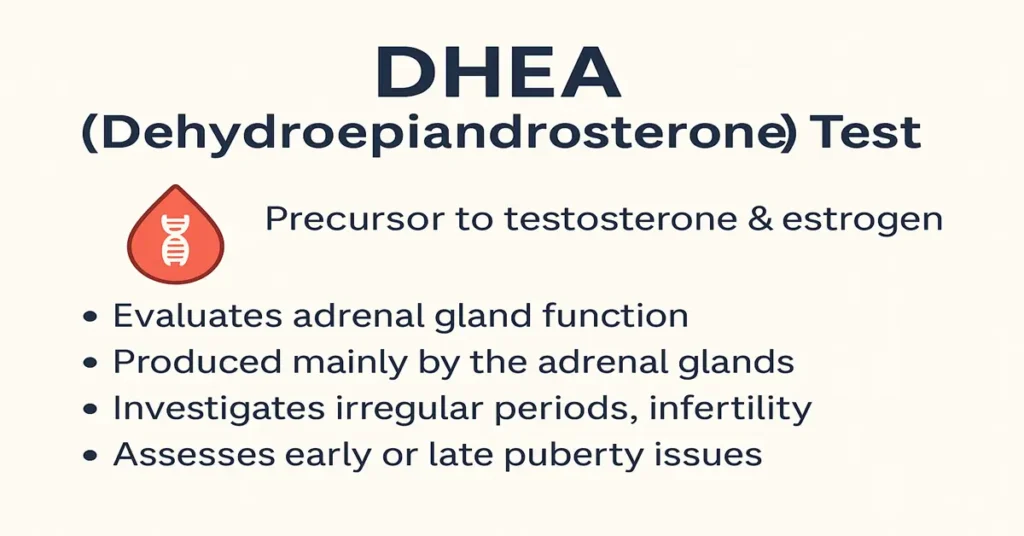
The DHEA (Dehydroepiandrosterone) Test is a blood test that measures DHEA and its sulfate form, DHEA-S, in the body. DHEA is an important hormone produced mainly by the adrenal glands and serves as a foundation for several other hormones, including testosterone and estrogen. Because it sits early in many hormonal pathways, this test offers a useful window into overall endocrine and adrenal function.
Clinicians commonly request a DHEA or DHEA-S test when evaluating hormonal imbalance, adrenal gland disorders, fertility concerns, menstrual irregularities, excess hair growth, unexplained fatigue, or signs of early or delayed puberty. In both men and women, DHEA levels can influence reproductive health, energy levels, mood, and general well-being.
What Is a DHEA Test?
A DHEA test measures two related markers:
- DHEA, the active hormone
- DHEA-S, a more stable, sulfated form that circulates at steady levels
Because DHEA-S shows less day-to-day variation, doctors often rely on it for clearer interpretation.
DHEA acts as a precursor hormone, meaning it is converted in body tissues into hormones such as testosterone, estrogen, and androstenedione. When DHEA levels shift outside the expected range, downstream hormones may also be affected, which is why this test is useful in broader hormonal assessments.
Where Is DHEA Synthesized in the Body?
DHEA is produced primarily by hormone-secreting tissues.
Main sources include:
- The adrenal cortex, which is the outer layer of the adrenal glands
- The ovaries in women
- The testes in men
After release into the bloodstream, DHEA is converted in various tissues—such as the liver, skin, and fat—into active sex hormones. Because these conversions happen throughout the body, changes in DHEA levels can influence multiple organ systems.
Main Functions and Importance of DHEA
DHEA has no single isolated role. Instead, it supports several interconnected physiological processes.
It acts as a building block for sex hormones, contributing indirectly to reproductive function and secondary sexual characteristics. It also plays a part in maintaining muscle mass and bone strength and has recognized effects on mood, energy, and stress response.
From a diagnostic point of view, measuring DHEA is especially helpful when doctors are assessing adrenal gland function, investigating hormone-producing tumors, or evaluating unexplained androgen excess or deficiency.
Causes of Low DHEA Levels
Low DHEA levels generally suggest reduced adrenal hormone output or suppression of normal hormone production.
This may be seen in adrenal insufficiency, pituitary disorders that reduce adrenal stimulation, or as a natural effect of aging. Chronic illness, prolonged stress, and long-term use of steroid medications can also lower DHEA levels. In many cases, the decline is gradual and detected only through testing rather than sudden symptoms.
Symptoms of Low DHEA Levels
When DHEA levels are low, symptoms tend to be subtle and non-specific. People may report ongoing fatigue, low mood, reduced sexual interest, or general weakness. Over time, some may notice reduced muscle strength or changes in bone health.
Because these features overlap with many other conditions, laboratory testing helps clarify whether DHEA imbalance is contributing to the picture.
Causes of High DHEA Levels
High DHEA levels usually reflect increased adrenal hormone production.
This can occur in conditions such as adrenal tumors, congenital adrenal hyperplasia, or disorders characterized by excess androgen production. In women, elevated levels are sometimes seen in polycystic ovary syndrome. Less commonly, hormone-secreting tumors of the ovaries or testes may contribute.
In children, higher-than-expected levels may be associated with early activation of adrenal hormone pathways.
Symptoms of High DHEA Levels
Symptoms vary depending on age and sex.
In women, excess DHEA may present with increased facial or body hair, acne, scalp hair thinning, or menstrual irregularities. Men may notice acne or changes related to androgen excess. In children, early development of secondary sexual features or rapid growth can be observed.
These signs reflect hormonal effects rather than the DHEA level itself and always require careful clinical correlation.
Reference Ranges
DHEA-S reference ranges vary by age and sex, and laboratories may use slightly different cutoffs.
Typical adult ranges are approximately:
- Adult men: 280–640 µg/dL
- Adult women: 65–380 µg/dL
Levels are highest in early adulthood and gradually decline with age. Results are interpreted alongside symptoms and other hormone tests.
Sample Type
The test is performed on a blood (serum) sample, collected through standard venipuncture. Sampling is often done in the morning, when hormone levels are most consistent.
Test Preparation
No fasting is usually required. Patients are advised to inform their doctor about any hormone-based medications or long-term steroid use, as these can influence results. Women may also be asked about the timing of their menstrual cycle, as this can help with interpretation.
When to Consult a Doctor
Medical advice should be sought when symptoms suggest hormonal imbalance, such as persistent fatigue, mood changes, fertility issues, or unexplained physical changes.
Consultation is particularly important if features of androgen excess develop, including rapid hair growth, severe acne, voice changes, or early puberty in children. A doctor will interpret DHEA results together with clinical findings and other hormone tests to decide the next steps.
Important Word Explanations
- DHEA: A hormone produced mainly by the adrenal glands that serves as a precursor to sex hormones.
- DHEA-S: A stable, sulfated form of DHEA commonly measured in blood tests.
- Adrenal glands: Small glands above the kidneys that produce several vital hormones.
- Precursor hormone: A hormone that is converted into other active hormones.
- Glucocorticoids: Steroid medications that can suppress natural adrenal hormone production.
- CAH (Congenital Adrenal Hyperplasia): A genetic condition that can lead to excess adrenal hormone production.
~END~
Related Posts
None found