
Dengue Test: Types, Purpose, Results, Symptoms & Complete Guide
Overview
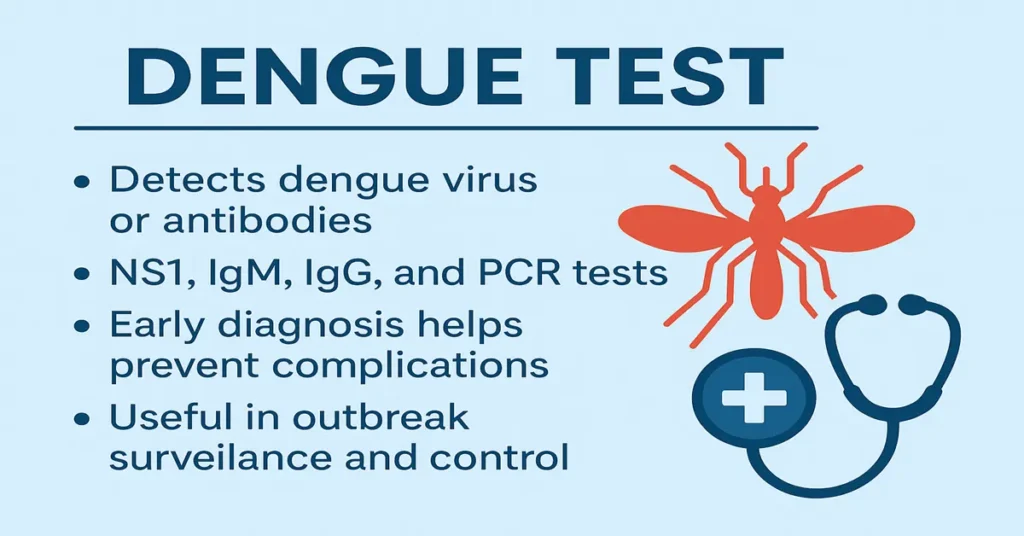
The Dengue Test is a laboratory investigation used to identify dengue infection by detecting either the dengue virus itself or the body’s immune response to it. Dengue is a mosquito-borne viral illness transmitted by the Aedes aegypti mosquito, commonly seen in tropical and subtropical regions.
In many people, dengue causes a short-lasting febrile illness. In others, especially if not recognized early, it can progress to more serious forms such as dengue hemorrhagic fever or dengue shock syndrome. Because early symptoms often resemble malaria, typhoid, chikungunya, or common viral fever, laboratory confirmation becomes essential for accurate diagnosis and safe monitoring.
Clinicians use dengue tests not only to confirm infection but also to understand the stage of illness and decide the level of observation required.
What Is a Dengue Test?
A dengue test looks for specific markers related to the dengue virus or the immune response generated against it. These markers include viral components and antibodies produced by the body.
Depending on the timing of the test in relation to fever onset, laboratories may detect viral proteins, immune antibodies, or viral genetic material. This staged appearance allows doctors to estimate whether the infection is early, active, recent, or from a past exposure.
Main Types of Dengue Tests
Several testing methods are used worldwide, each suited to a particular phase of illness.
NS1 Antigen Test
This test detects the NS1 protein released by the dengue virus during the early phase of infection. It is most useful during the first week of fever, often before antibodies are detectable. Clinically, it helps establish an early diagnosis and supports close monitoring from the beginning.
IgM and IgG Antibody Tests
These tests measure the immune response to dengue. IgM antibodies generally appear a few days after fever onset and suggest a recent or ongoing infection. IgG antibodies appear later and may persist long after recovery, indicating past exposure or a secondary dengue infection.
PCR (RT-PCR) Test
PCR testing identifies dengue viral RNA directly. It is highly specific and sensitive, particularly during the early stage of infection. In clinical practice, PCR is often used in complicated cases or when confirmation is essential.
How Dengue Develops in the Body
The dengue virus enters the body through the bite of an infected mosquito. Once inside, it circulates in the bloodstream and multiplies within cells.
During the early phase, viral components such as NS1 antigen are released into the blood. As the infection progresses, the immune system responds by producing IgM and later IgG antibodies. Dengue tests detect these different markers, helping doctors understand where the patient lies in the course of illness.
Types of Dengue Tests and Their Role
NS1 Antigen Testing (Early Phase)
This test is especially valuable during the first few days of fever. It provides early confirmation of dengue, allowing doctors to start careful monitoring before complications develop.
IgM Antibody Testing (Recent Infection)
IgM testing is useful once the initial febrile phase has passed. A positive result supports the diagnosis when NS1 is no longer detectable.
IgG Antibody Testing (Past or Secondary Infection)
IgG testing helps identify previous exposure or secondary dengue infection. Clinically, this information is important because secondary infections may behave differently and require closer observation.
PCR Testing (Definitive Early Detection)
PCR testing confirms active infection by detecting viral genetic material. It is particularly helpful in severe or high-risk cases where precise confirmation is required.
Main Functions and Importance of Dengue Test
Dengue testing plays a central role in clinical care. It confirms dengue infection, distinguishes it from other febrile illnesses, and helps determine the stage of disease. By identifying early infection, it allows timely monitoring of platelet counts, fluid status, and vital signs. In outbreak situations, testing also supports public health surveillance and control efforts.
Causes of Low or Negative Dengue Test Results
A dengue test may be negative for several reasons. The individual may not have dengue, or the test may have been performed very early before detectable markers appear. In some cases, antibody levels or viral load may be too low at the time of testing.
Clinicians often interpret negative results cautiously, especially when symptoms are suggestive, and may recommend repeat testing after a short interval.
Symptoms When Dengue Test Is Low or Negative
If the result is truly negative, dengue is unlikely. However, when testing is done very early, symptoms such as fever, headache, muscle pain, and fatigue may still be present. In such situations, doctors rely on clinical judgment and follow-up testing to clarify the diagnosis.
Causes of High or Positive Dengue Results
A positive dengue test reflects the presence of viral components or antibodies. NS1 positivity suggests early active infection, IgM positivity indicates a recent or ongoing infection, and IgG positivity points toward past exposure or secondary dengue. PCR positivity confirms active viral presence.
Each result provides context rather than standing alone, and doctors interpret them together with clinical findings.
Symptoms of High or Positive Dengue Results
Patients with confirmed dengue commonly experience sudden fever, headache, pain behind the eyes, muscle and joint pain, nausea, rashes, and marked fatigue. In some cases, warning signs such as bleeding, abdominal pain, persistent vomiting, or breathing difficulty may appear, indicating a need for urgent medical attention.
Reference Ranges
Dengue tests are reported qualitatively rather than as numeric ranges. Results are generally described as detected or not detected for NS1 and PCR, and as positive or negative for IgM and IgG antibodies. The meaning of each result depends on the test type and timing in relation to symptom onset.
Sample Type
Dengue testing requires a blood sample. Serum or plasma is commonly used for antigen and antibody testing, while plasma is often preferred for PCR during early infection.
Test Preparation
No fasting is required. Patients are usually advised to remain hydrated and to inform the doctor about the exact day fever began, as this information helps select the most appropriate test. Regular medications are generally continued unless advised otherwise.
When to Consult a Doctor
Medical consultation is important if high fever persists for more than a couple of days, or if symptoms such as severe headache, eye pain, body aches, or extreme fatigue occur. Immediate attention is required if warning signs like bleeding, severe abdominal pain, dizziness, breathing difficulty, or sudden weakness develop.
Early evaluation and appropriate testing help ensure safe monitoring and timely intervention.
Important Word Explanations
- NS1 Antigen: A viral protein released early during dengue infection.
- IgM Antibody: An immune protein indicating recent dengue infection.
- IgG Antibody: An immune protein indicating past exposure or secondary dengue.
- PCR: A laboratory test that detects dengue viral genetic material.
- Secondary Dengue: Dengue infection occurring again in the same person.
- Hemorrhagic Fever: A severe form of dengue associated with bleeding and plasma leakage.
~END~
Related Posts
None found