
Overview
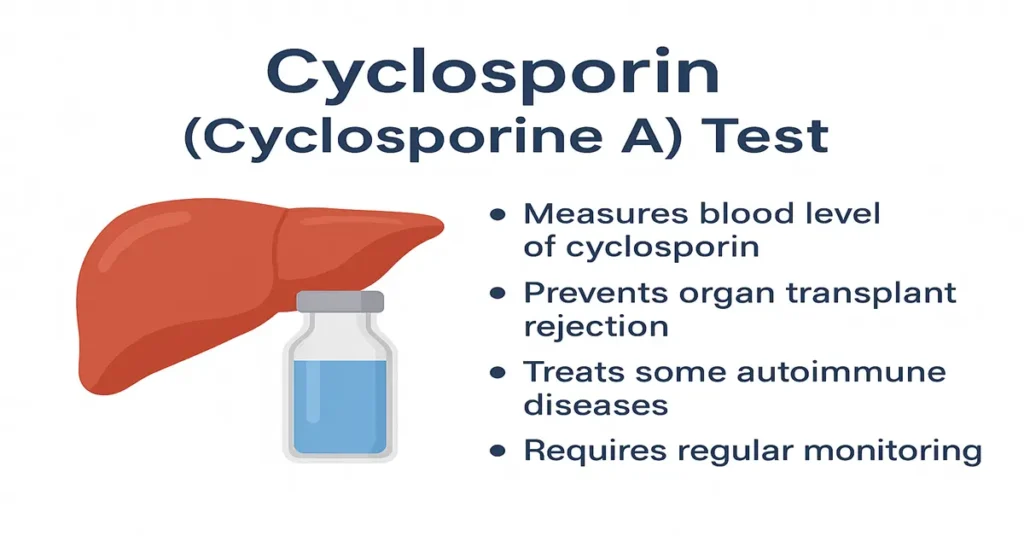
The Cyclosporine A Test (CsA Monitoring) is a blood test used to measure the concentration of cyclosporin in the bloodstream. Cyclosporin is a potent immunosuppressant medicine widely used to prevent rejection after organ transplantation and to control certain immune-mediated conditions.
In clinical practice, this test is ordered because cyclosporin works within a very narrow safety range. Small changes in blood levels can shift the balance between under-suppression of the immune system and drug-related toxicity. Regular monitoring helps clinicians keep drug levels within a range that is effective yet safe for long-term use.
From a laboratory and physician standpoint, the goal is not just to measure a number, but to understand how the drug is behaving in an individual patient over time.
Where It Is Produced / Synthesized
Cyclosporin is not produced by the human body. It is a compound originally derived from a fungus and manufactured as a pharmaceutical drug.
Once taken, the drug is absorbed through the digestive system or administered intravenously. It is then processed mainly in the liver through the cytochrome P450 enzyme system and eliminated primarily via bile. Because this metabolic process varies significantly between individuals, blood levels can differ even when the same dose is given, which explains why monitoring is such a routine part of care.
Main Functions and Importance
Cyclosporin works by suppressing specific immune responses, particularly the activity of T-lymphocytes. These immune cells are responsible for attacking foreign tissue, including transplanted organs.
Clinically, the drug plays a central role in preventing rejection after kidney, liver, heart, or lung transplantation. It is also used in selected autoimmune conditions where immune activity needs to be carefully controlled. Because its benefits and risks are closely linked to blood concentration, monitoring allows doctors to fine-tune dosing based on real-world response rather than relying on fixed schedules alone.
Causes of Low Cyclosporin Levels
Low cyclosporin levels indicate that the drug concentration has fallen below the desired therapeutic range. In practice, this raises concern about reduced immunosuppressive effect.
This situation is often related to missed doses, absorption issues, or interactions with other medicines that increase drug breakdown. In some individuals, faster liver metabolism can also contribute. Clinicians view low levels as a signal to review adherence, timing of dosing, and possible interactions rather than as a diagnosis by itself.
Symptoms of Low Levels
Symptoms related to low cyclosporin levels are indirect and depend on the underlying condition being treated. In transplant recipients, early signs may suggest reduced graft protection. In autoimmune conditions, disease-related symptoms may begin to reappear. These clinical cues often prompt testing rather than the other way around.
Causes of High Cyclosporin Levels
High cyclosporin levels indicate excessive drug concentration in the blood and raise concern for toxicity.
This may occur due to dosing errors, interactions with medicines that slow cyclosporin metabolism, or impaired liver function. Certain foods and substances can also affect how the drug is processed. From a monitoring perspective, elevated levels prompt careful reassessment to reduce the risk of organ damage.
Symptoms of High Levels
Symptoms associated with high cyclosporin levels reflect its effects on organs and the nervous system. Patients may notice changes related to kidney function, blood pressure, or neurological sensations such as tremors or headaches. Changes in gums or hair growth are also sometimes observed. These findings are important clinical signals that often lead to repeat testing and dose review.
Reference Range
Cyclosporin results are interpreted against target ranges that depend on timing and clinical context.
Most commonly, a trough level is measured, meaning blood is drawn just before the next scheduled dose to assess the lowest concentration. Target ranges may vary depending on the type of transplant, time since surgery, or the condition being treated. For this reason, reference values are individualized rather than absolute, and interpretation is always tailored to the patient’s situation.
Sample Type and Procedure
Sample Type
The test is performed on a whole blood sample collected from a vein in the arm. Timing is critical, as samples are usually drawn immediately before the next dose to measure trough levels accurately.
Test Method
Laboratories use specialized analytical techniques, such as immunoassays or chromatography-based methods, to measure cyclosporin concentration. Results are generally available within a short turnaround time, allowing timely clinical decisions.
Understanding Test Results
Cyclosporin results are not interpreted in isolation. A low result suggests underexposure, while a high result points toward overexposure. Values within the target range indicate appropriate drug levels at the time of testing.
Doctors consider these results alongside organ function tests, medication history, time since transplant or diagnosis, and any reported symptoms. This integrated approach helps guide safe dose adjustments when needed.
Test Preparation
Patients are usually advised to take cyclosporin at the same time each day and to avoid taking the dose just before a scheduled trough-level blood draw. Informing the doctor about all medications, supplements, and recent dietary changes is important, as many substances can influence cyclosporin levels. Adequate hydration is generally recommended unless otherwise advised.
When to Consult a Doctor
Medical review is important if symptoms such as unexplained fatigue, confusion, swelling, reduced urine output, or changes in blood pressure occur. New or worsening infections, skin changes, or return of autoimmune symptoms should also be discussed promptly.
Regular monitoring and timely interpretation of cyclosporin levels help clinicians maintain the delicate balance between effective immunosuppression and long-term safety.
Important Word Explanations
- Cyclosporin: A medicine that suppresses immune system activity.
- Immunosuppressant: A drug that reduces immune responses to protect transplanted organs or control immune disease.
- Trough Level: The lowest concentration of a drug in the blood, measured just before the next dose.
- Metabolism: The process by which the body breaks down drugs, mainly in the liver.
- Toxicity: Harmful effects caused by excessive drug levels.
- Therapeutic Range: The concentration range where a drug is effective and relatively safe.
~END~
Related Posts
None found