
Overview
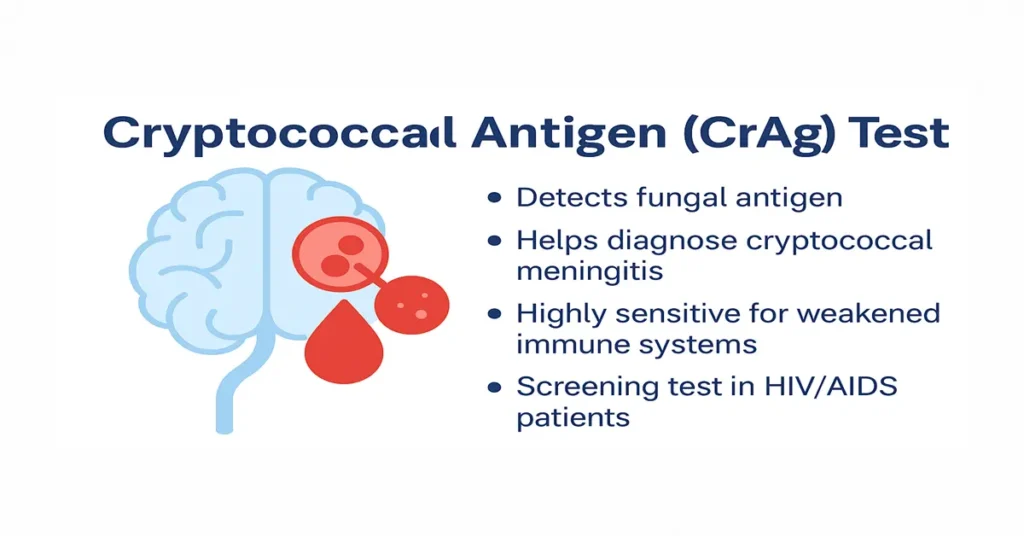
The Cryptococcal Antigen Test (CrAg Test) is a diagnostic test used to detect antigens from the capsule of the Cryptococcus fungus, most commonly Cryptococcus neoformans and Cryptococcus gattii. These antigens are polysaccharide components that become detectable when the fungus is present in the body.
Clinically, this test is most often used to identify cryptococcal infection early, particularly cryptococcal meningitis, an infection involving the brain and spinal cord. This condition can progress quietly at first and become severe if not recognized in time.
The test is especially relevant in people with weakened immune systems, such as individuals living with HIV/AIDS, patients undergoing cancer treatment, or those who have received organ transplants. Because of its high sensitivity, the CrAg test can detect very small amounts of antigen, sometimes even before clear symptoms develop, which makes it a valuable early diagnostic tool.
Where It Is Produced
The cryptococcal antigen is not produced by the human body. It originates from the outer capsule of the Cryptococcus fungus itself.
When infection occurs, components of this capsule are released into body fluids. These antigens can be detected in the bloodstream and in cerebrospinal fluid, which surrounds the brain and spinal cord. The CrAg test works by identifying these fungal antigens in the collected sample, thereby confirming exposure or active infection.
Functions and Importance of the Test
Although the test does not measure a substance made by the body, it plays an important role in clinical decision-making.
From a doctor’s perspective, the CrAg test helps identify cryptococcal infection at an early stage, sometimes before neurological symptoms become obvious. It supports the diagnosis of cryptococcal meningitis and helps assess disease activity over time by tracking antigen levels. In high-risk individuals, especially those with advanced immune suppression, the test is also used as a screening tool to detect infection before it spreads to the central nervous system.
Overall, the test provides timely information that helps guide further evaluation and close monitoring.
Causes of Low / Negative Levels
A negative or low cryptococcal antigen result means that no detectable fungal antigen is present in the tested sample.
This finding usually indicates the absence of cryptococcal infection at the time of testing. It may also be seen in individuals who have been successfully treated in the past or in very early stages of infection where antigen levels are below the detection limit.
Symptoms of Low / Negative Levels
There are no symptoms specifically associated with a negative CrAg test. The result simply suggests that cryptococcal infection is unlikely, and any symptoms present are usually due to other causes.
Causes of High / Positive Levels
A positive CrAg test indicates that cryptococcal antigen is present, suggesting an active infection.
In clinical practice, this is most commonly associated with cryptococcal meningitis or more widespread infection involving the blood, lungs, or other organs. Positive results are more frequently seen in people with compromised immunity, where the fungus can multiply and spread more easily.
The degree of positivity may reflect fungal burden, but results are always interpreted alongside clinical findings and other investigations.
Symptoms of High / Positive Levels
Symptoms related to a positive result depend on the site and extent of infection. When the central nervous system is involved, patients may experience persistent headache, fever, neck stiffness, sensitivity to light, or changes in alertness. Involvement of the lungs may present with cough or breathing discomfort, while widespread infection can cause general weakness, weight loss, or skin changes.
Doctors consider these symptoms together with laboratory results to assess severity and urgency.
Reference Ranges
CrAg test results are typically reported as negative or positive.
A negative result indicates that cryptococcal antigen was not detected and supports the absence of active infection. A positive result confirms the presence of antigen and points toward cryptococcal disease. Some laboratories also provide titers, where higher values suggest a greater amount of antigen, which can help with clinical assessment and follow-up.
Sample Type and Collection
The CrAg test can be performed on different body fluids, depending on the clinical situation.
Blood samples, usually serum or plasma, are commonly used for screening, especially in high-risk individuals. Cerebrospinal fluid is tested when infection of the brain or spinal cord is suspected. This sample is collected through a lumbar puncture under medical supervision.
Laboratory methods such as lateral flow assays or latex agglutination are widely used, as they can provide reliable results within a short time frame.
Understanding Your Results
CrAg results are interpreted in the context of symptoms, immune status, and other test findings. A negative result suggests that cryptococcal infection is unlikely at that time. A positive result indicates the presence of fungal antigen and prompts further evaluation to determine the extent of infection.
Doctors often review CrAg findings together with culture results, imaging studies, immune status assessments, and other laboratory tests to form a complete clinical picture.
Treatment Overview (Brief)
When the CrAg test is positive, it indicates the need for medical evaluation and appropriate antifungal management under specialist care. Treatment approaches depend on the site and severity of infection, as well as the patient’s immune status. The details of therapy and duration are determined by the treating physician based on established clinical guidelines and individual patient factors.
Test Preparation
In most cases, no special preparation such as fasting is required for the CrAg test.
Patients should inform their doctor about any ongoing antifungal therapy or medications that affect the immune system. If a lumbar puncture is planned, additional instructions may be given by the healthcare team to ensure safe sample collection.
When to Consult a Doctor
Medical attention should be sought if symptoms such as persistent headache, fever, neck stiffness, confusion, or unexplained neurological changes occur. People with weakened immunity, particularly those living with HIV who have not undergone recent screening, should discuss CrAg testing with their doctor as part of routine care.
Early evaluation helps clarify whether cryptococcal infection is present and supports timely clinical decisions.
Important Word Explanations
- Cryptococcus: A type of fungus that can infect the brain, lungs, or bloodstream.
- Antigen: A foreign substance from an organism that can be detected by laboratory tests.
- Cerebrospinal Fluid (CSF): The clear fluid surrounding the brain and spinal cord.
- Meningitis: Inflammation of the membranes covering the brain and spinal cord.
- Opportunistic Infection: An infection that occurs more easily when the immune system is weakened.
- Lumbar Puncture: A medical procedure used to collect cerebrospinal fluid from the lower back.
~END~
Related Posts
None found