
Creatinine Test: Meaning, Functions, Causes, Symptoms, Normal Range, and Complete Guide
Introduction
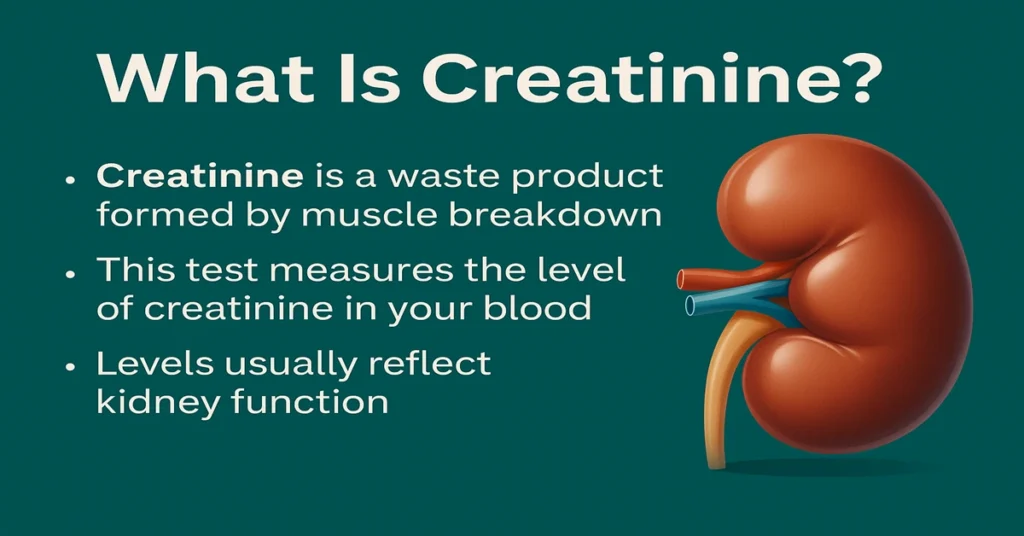
Creatinine is one of the most commonly measured substances in routine blood tests and plays a central role in evaluating kidney function. It is a natural waste product formed when muscles use creatine for everyday energy needs. In healthy individuals, creatinine is produced at a fairly steady rate and is continuously removed from the blood by the kidneys through urine.
Because of this stable production and reliable removal, the creatinine test is widely trusted by doctors as a practical indicator of how well the kidneys are filtering blood. It is often interpreted together with the estimated Glomerular Filtration Rate (eGFR) to understand kidney performance more accurately. This article explains the creatinine test in clear, calm language, similar to how it is discussed in hospitals and diagnostic centers.
What is Creatinine?
Creatinine is a waste substance generated from creatine, a compound stored in muscles that helps supply energy during movement and physical activity. Every time muscles work, a small amount of creatinine is produced as part of this normal process.
Once formed, creatinine enters the bloodstream and is carried to the kidneys. Healthy kidneys filter it efficiently and remove it through urine. Because muscle mass and daily creatine use remain relatively constant, creatinine levels in the blood usually stay within a narrow range. For this reason, changes in creatinine levels often reflect changes in kidney filtration rather than sudden shifts in production.
Where is Creatinine Produced in the Body?
Creatinine is not produced by a single organ in the traditional sense. Instead, it forms naturally as a byproduct of muscle energy use.
Creatine itself is made in organs such as the liver, kidneys, and pancreas and then transported to muscles, where it is stored as creatine phosphate. When muscles need energy, creatine phosphate breaks down, releasing energy and forming creatinine in the process.
This creatinine then moves into the bloodstream and travels to the kidneys for removal. Because this cycle operates continuously, creatinine production is usually stable unless there is a major change in muscle mass or muscle breakdown.
Main Functions and Clinical Importance
Creatinine has no useful function in the body itself. Its importance lies in what it tells doctors about kidney health.
Since the kidneys are responsible for clearing creatinine from the blood, rising creatinine levels often suggest reduced kidney filtration. Even small increases can be meaningful when tracked over time. Doctors also consider muscle mass when interpreting results, as people with more muscle naturally produce more creatinine.
Creatinine is also used to calculate eGFR, which helps detect early kidney impairment, monitor chronic kidney disease, and guide safe use of medications that affect kidney function. Because of these reasons, creatinine testing is a routine part of health checkups and hospital evaluations.
Causes of Low Creatinine Levels
Low creatinine levels are uncommon and usually not a cause for concern by themselves. They are more often related to reduced muscle mass rather than kidney problems.
Situations where low creatinine may be seen include aging, prolonged illness, malnutrition, or conditions that lead to muscle loss. Pregnancy can also lower creatinine values due to increased blood volume and changes in body fluid balance.
In most cases, low creatinine reflects body composition or nutritional status rather than an underlying kidney disorder.
Symptoms of Low Creatinine
Low creatinine does not cause symptoms on its own. When symptoms are present, they usually arise from the condition responsible for muscle loss or reduced protein stores.
These may include general weakness, reduced stamina, visible muscle thinning, or unintended weight loss. If liver disease is involved, symptoms such as jaundice or abdominal swelling may also be seen. The creatinine value itself is not the cause of these symptoms.
Causes of High Creatinine Levels
High creatinine levels are more frequently encountered and are often associated with reduced kidney filtration. When the kidneys are unable to clear creatinine efficiently, it accumulates in the blood.
This may occur due to chronic kidney disease, sudden kidney injury, dehydration that reduces kidney blood flow, or blockage in the urinary tract. Increased muscle breakdown, certain medications, and long-standing conditions such as diabetes or high blood pressure can also influence creatinine levels.
Doctors usually assess whether elevated creatinine is temporary or persistent and whether it is accompanied by changes in urine output, eGFR, or other laboratory findings.
Symptoms of High Creatinine
Creatinine itself does not cause symptoms. Any symptoms that appear are related to impaired kidney function or the underlying condition affecting the kidneys.
These may include swelling of the face or limbs, fatigue, shortness of breath, nausea, changes in urination, or difficulty concentrating. In more advanced situations, waste products can accumulate in the body, leading to broader systemic symptoms that require prompt medical evaluation.
Reference Ranges (Normal Values)
Normal creatinine values vary based on age, sex, and muscle mass. Common reference ranges include:
- Men: 0.7 – 1.3 mg/dL
- Women: 0.6 – 1.1 mg/dL
- Children: 0.3 – 1.0 mg/dL
People with higher muscle mass, such as athletes, may have values near the upper end of the normal range without kidney disease. Results are always interpreted in clinical context rather than in isolation.
Sample Type
Sample Type: Serum (blood sample)
Tube Used: Red Top (Plain Tube)
Creatinine testing is often included in kidney panels, metabolic panels, or routine health screenings.
Test Preparation
Most individuals do not need special preparation for a creatinine test. Normal hydration is important, as dehydration can temporarily raise creatinine levels.
Patients are usually advised to inform their doctor about medications that may affect kidney function and to avoid unusually heavy exercise shortly before testing, as intense muscle activity can cause a temporary rise in creatinine. Regular diet and daily routine can generally be continued unless specific instructions are given.
When to Consult a Doctor
Medical advice should be sought if creatinine levels remain above the normal range, show a rising trend, or are accompanied by symptoms such as swelling, fatigue, or reduced urine output.
People with diabetes, high blood pressure, known kidney disease, or those taking kidney-affecting medications often require regular monitoring. Early evaluation of abnormal creatinine results helps identify kidney problems before they progress.
Important Word Explanations
- Creatine: A compound stored in muscles that helps produce energy.
- Creatinine: A waste product formed when creatine breaks down during muscle activity.
- eGFR: Estimated Glomerular Filtration Rate, a calculation used to assess kidney filtration efficiency.
- Rhabdomyolysis: A condition involving rapid muscle breakdown that releases large amounts of waste into the blood.
- Azotemia: Accumulation of nitrogen-based waste products in the blood due to reduced kidney filtration.
~END~