
Overview
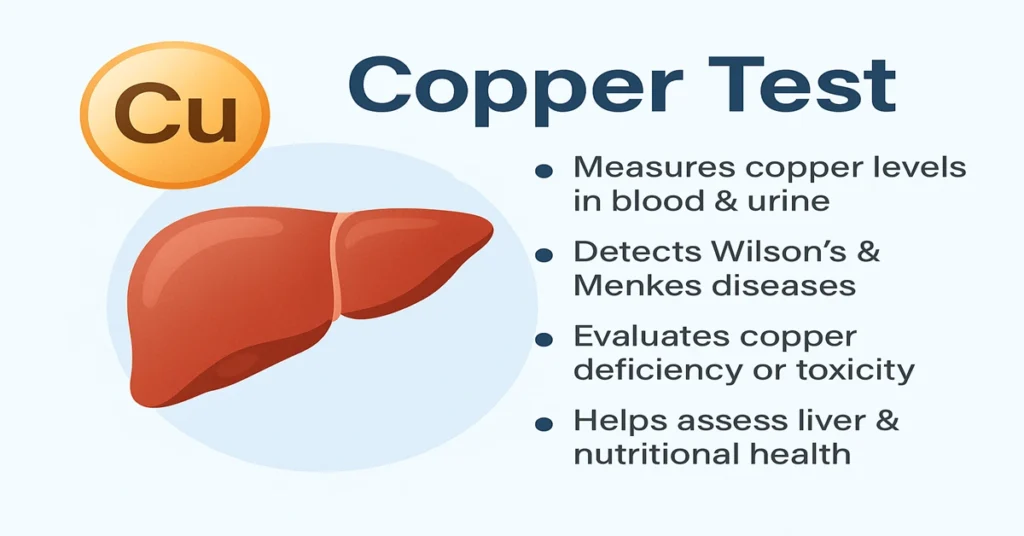
The Copper Test is a diagnostic test used to measure the amount of copper in the body, most commonly in blood, urine, or, in selected cases, liver tissue. Copper is an essential trace mineral needed in very small amounts for normal enzyme activity and several critical biological processes.
In clinical practice, copper levels matter because both deficiency and excess can be harmful. Doctors usually request this test when they need to evaluate disorders of copper balance, especially genetic conditions such as Wilson’s disease or Menkes disease, or when liver function and nutrient absorption are in question. The test helps identify imbalance early, before organ-related complications become established.
Where Copper Comes From
Copper is not produced by the body and must be obtained through the diet.
After ingestion, copper is absorbed in the small intestine and transported to the liver. In the liver, it binds mainly to a protein called ceruloplasmin, which helps regulate copper distribution. From there, copper is delivered to various organs, including the brain, heart, kidneys, and muscles, where it supports normal cellular function.
This tightly regulated pathway explains why disturbances in absorption, transport, or storage can significantly alter copper levels.
Main Functions and Importance
Copper plays a supporting role in many essential processes, largely through enzymes that depend on it to function properly.
It contributes to energy production at the cellular level, supports the formation of connective tissue and bone, and is necessary for normal iron handling and red blood cell production. Copper is also involved in maintaining nervous system integrity, immune function, skin and hair pigmentation, and antioxidant defense mechanisms.
From a clinical standpoint, measuring copper helps doctors understand whether these systems may be affected by imbalance rather than serving as a test of daily nutritional intake.
Causes of Low Copper Levels
Low copper levels indicate reduced availability of this mineral in the bloodstream and may reflect problems with intake, absorption, or internal handling.
This finding is often linked to malnutrition, chronic digestive conditions that impair absorption, or inherited disorders that interfere with copper transport. In some cases, copper may be retained abnormally in tissues such as the liver, leading to lower circulating levels despite overall excess.
Symptoms of Low Copper Levels
Symptoms related to low copper levels develop gradually and are usually indirect. They may include features related to impaired blood formation, reduced nerve function, or weakened immunity. Clinicians interpret these symptoms together with laboratory findings rather than relying on copper levels alone.
Causes of High Copper Levels
High copper levels suggest excessive accumulation or reduced clearance of copper from the body.
This situation is most commonly associated with genetic conditions that impair copper excretion, as well as chronic liver disease where normal processing and elimination are disrupted. Environmental exposure or excessive supplementation can also contribute in certain circumstances.
In clinical evaluation, elevated copper levels prompt careful assessment of liver function and genetic factors rather than immediate conclusions.
Symptoms of High Copper Levels
Symptoms related to elevated copper levels depend on which organs are affected.
Liver involvement may lead to signs of liver stress, while nervous system involvement can present with changes in movement, coordination, or behavior. Eye findings, such as characteristic discoloration at the corneal margin, may also be noted in specific conditions. These signs help guide further testing and confirm the clinical picture.
Reference Ranges
Copper reference ranges vary depending on the type of sample tested and the laboratory performing the analysis.
Blood tests reflect circulating copper, urine tests assess copper excretion over time, and liver measurements evaluate stored copper directly. Values outside the reference range suggest imbalance, but interpretation always depends on the testing method, clinical findings, and accompanying investigations.
Sample Type and Collection
The Copper Test can be performed using different sample types based on clinical need.
Blood samples are most commonly used for initial assessment and are collected through routine venipuncture. A 24-hour urine collection may be requested when copper excretion needs to be evaluated, particularly in suspected genetic disorders. In rare situations, a liver biopsy may be performed to directly measure copper stored in liver tissue.
Each sample type provides different information, and doctors select the approach that best fits the clinical question.
Understanding the Results
Copper test results are interpreted alongside symptoms, medical history, and related tests.
Low values suggest deficiency or abnormal distribution, while high values point toward accumulation or impaired clearance. Normal values generally indicate balanced copper handling at the time of testing. Additional tests, such as ceruloplasmin measurement, are often used to clarify the underlying cause.
Test Preparation
In most cases, fasting is not required for copper testing.
Patients should inform their doctor about any mineral supplements or medications they are taking, as these can influence results. For urine testing, careful collection over the full 24-hour period is important to ensure accuracy. Following specific instructions from the healthcare provider helps avoid misleading results.
When to Consult a Doctor
Medical advice should be sought if symptoms such as persistent fatigue, unexplained anemia, neurological changes, jaundice, or eye discoloration develop. Individuals with a family history of inherited copper disorders should also discuss screening and testing with their doctor.
Early evaluation of copper imbalance helps clinicians identify underlying conditions and plan appropriate follow-up before significant organ damage occurs.
Important Word Explanations
- Copper: A trace mineral essential for enzyme activity and normal body function.
- Wilson’s Disease: An inherited condition causing excessive copper buildup in organs.
- Menkes Disease: A genetic disorder leading to copper deficiency due to impaired transport.
- Ceruloplasmin: A liver-produced protein that binds and transports copper in the blood.
- Kayser-Fleischer Rings: Copper deposits visible at the edge of the cornea in certain conditions.
- Trace Mineral: A nutrient required in very small amounts for normal health.
~END~
Related Posts
None found