
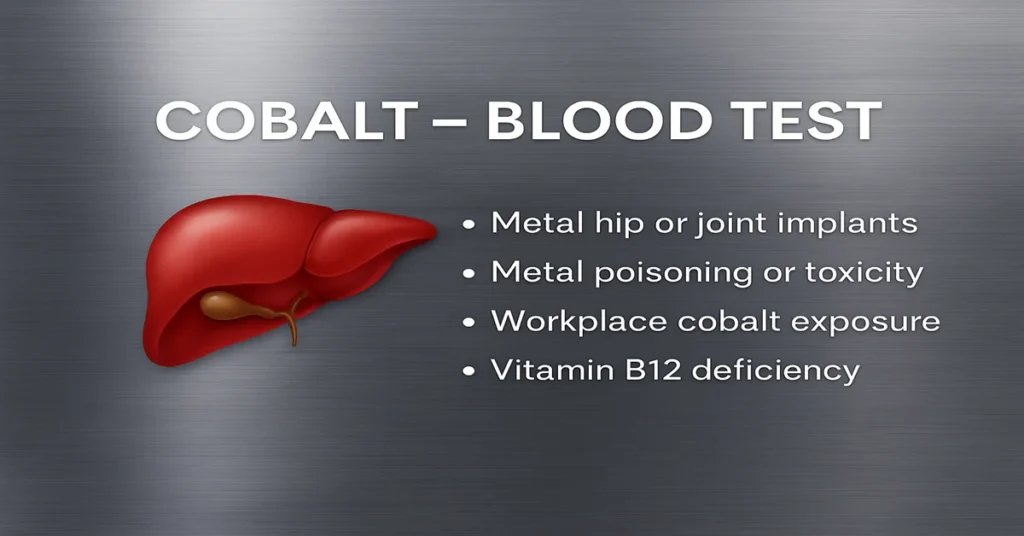
What is Cobalt Blood Test?
The Cobalt Blood Test measures the amount of cobalt present in the bloodstream. Cobalt is a naturally occurring trace element and forms an essential part of vitamin B12 (cobalamin), a nutrient required for healthy red blood cell formation and proper nervous system function.
In normal circumstances, cobalt is present in the body only in very small amounts. When levels rise above this range, it may signal excessive exposure rather than a nutritional issue. For this reason, the test is most often used in clinical situations such as monitoring occupational metal exposure, assessing possible metal toxicity, or evaluating patients with metal joint implants, particularly metal-on-metal hip replacements.
From a laboratory perspective, this test helps distinguish normal trace exposure from levels that may warrant closer medical attention.
Where Cobalt is Found or Produced in the Body
Cobalt is not produced by the human body. It enters the body primarily through food as part of vitamin B12.
Once absorbed:
- Small amounts circulate in the blood
- Most is stored in the liver
- Excess cobalt is eliminated mainly through the kidneys in urine
Under usual conditions, blood cobalt levels remain very low. Elevated levels are typically linked to external sources, such as prolonged occupational exposure or gradual release from metal implants.
Main Functions and Importance
Cobalt’s biological importance is closely tied to its role within vitamin B12 rather than as a free element.
In this context, it supports:
- Red blood cell production, helping prevent anemia
- Nervous system health, through maintenance of nerve coverings
- Normal cellular activity, including DNA synthesis and repair
- Metabolic processes, particularly those involving fats and amino acids
Clinically, cobalt is beneficial only in trace amounts. Both deficiency-related effects (usually reflecting low vitamin B12) and excess exposure can lead to health concerns, which is why blood measurement is useful in selected cases.
Causes of Low Cobalt Levels
True cobalt deficiency is uncommon. When low levels are identified, they are usually interpreted alongside signs of vitamin B12 deficiency, rather than as an isolated cobalt issue.
Situations that may contribute include:
- Diets very low in animal-derived foods
- Conditions that impair vitamin B12 absorption
- Long-standing gastrointestinal disorders affecting nutrient uptake
In practice, cobalt measurement alone is rarely used to diagnose deficiency without supporting clinical findings.
Symptoms of Low Cobalt Levels
Symptoms attributed to low cobalt generally reflect vitamin B12 deficiency rather than cobalt itself. These may include fatigue, weakness, pale skin, sensory changes in the hands or feet, balance difficulties, or cognitive and mood changes.
Laboratory results are interpreted carefully to determine whether these features align with broader nutritional or absorption-related concerns.
Causes of High Cobalt Levels (Cobalt Toxicity)
Elevated blood cobalt levels most often indicate excess exposure rather than dietary intake.
Common clinical scenarios include:
- Metal-on-metal joint implants, where gradual wear releases cobalt particles into the bloodstream
- Occupational exposure, especially in mining, welding, metal cutting, or smelting industries
- Excessive intake from supplements or accidental exposure
- Reduced kidney function, which can limit cobalt elimination
In these cases, blood testing helps quantify exposure and guide further evaluation.
Symptoms of High Cobalt Levels (Cobalt Toxicity)
High cobalt levels can affect multiple organ systems. Symptoms vary depending on exposure level and duration and may involve the gastrointestinal system, nervous system, hearing or vision, thyroid function, or cardiovascular health.
From a clinical standpoint, the test result serves as a signal to look more closely at exposure history and related findings rather than as a standalone diagnosis.
Reference Ranges
Blood cobalt levels are typically reported as:
- Normal: less than 1 µg/L
- Mildly elevated: 1–7 µg/L, suggesting possible exposure
- High: above 7 µg/L, raising concern for excessive exposure or implant-related release
Exact reference limits may vary slightly between laboratories and are always interpreted in clinical context.
Sample Type
The test is performed on a venous blood sample, collected using trace element–free equipment to avoid contamination.
In some cases, a urine cobalt test may also be requested to assess ongoing exposure and elimination.
Test Preparation
No fasting is required. Patients are usually advised to:
- Inform the doctor about metal implants or occupational exposure
- Mention recent surgeries or use of vitamin or mineral supplements
- Ensure the laboratory follows trace element collection protocols
These steps help improve result accuracy.
When to Consult a Doctor
Cobalt testing is typically discussed if a person:
- Has unexplained neurological, hearing, or visual symptoms
- Develops fatigue or cardiac symptoms with a history of metal exposure
- Works in environments involving cobalt
- Has a metal joint implant and develops unexplained systemic symptoms over time
In such cases, the test supports clinical assessment and helps determine whether further investigation is needed.
Important Word Explanations
- Cobalt: A trace element required in very small amounts, mainly as part of vitamin B12
- Cobalamin (Vitamin B12): A vitamin containing cobalt, essential for blood and nerve health
- Trace Element: A mineral needed by the body in minimal quantities
- Toxicity: Harmful effects caused by excessive levels of a substance
- Cardiomyopathy: A condition involving weakening of the heart muscle
- Implant Wear: Gradual release of metal particles from joint prostheses over time
~END~
Related Posts
None found