
Overview
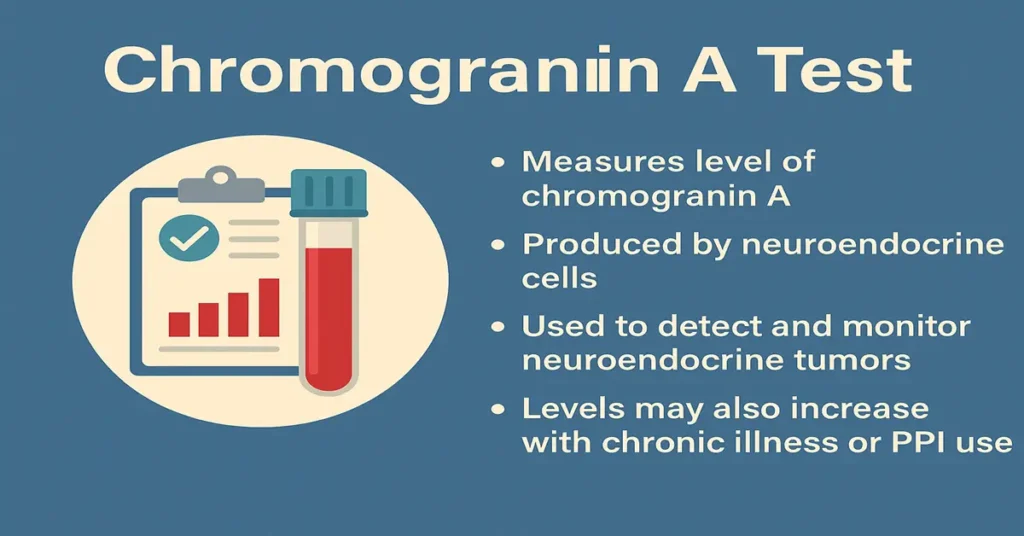
The Chromogranin A (CgA) Test is a specialized blood test used to measure the level of chromogranin A, a protein released by neuroendocrine cells. These cells are present in several organs and play a role in hormone release in response to signals from the nervous system.
In routine clinical practice, this test is mainly used as a tumor marker to help detect and monitor neuroendocrine tumors (NETs). These tumors arise from hormone-producing cells and include conditions such as carcinoid tumors, pheochromocytoma, neuroblastoma, and pancreatic islet cell tumors.
It is equally important to understand that elevated chromogranin A levels are not always due to cancer. Non-cancerous conditions—such as chronic kidney disease or long-term use of acid-reducing medications—can also influence results. For this reason, CgA is always interpreted in the broader clinical context.
What is Chromogranin A?
Chromogranin A is a naturally occurring protein stored inside neuroendocrine cells. When these cells release hormones, chromogranin A is released along with them into the bloodstream.
From a laboratory perspective, chromogranin A is useful because many neuroendocrine tumors release it in increased amounts. Measuring its level provides indirect insight into neuroendocrine activity in the body. However, it is a marker, not a diagnosis by itself.
Where is Chromogranin A Produced in the Body?
Chromogranin A is produced and released by neuroendocrine cells, which are distributed across multiple organs rather than confined to one location.
Common sites include:
- Adrenal medulla (inner portion of the adrenal glands)
- Pancreatic islet cells
- Gastrointestinal tract, especially the stomach and intestines
- Thyroid gland (C-cells)
- Other hormone-secreting tissues within the nervous and endocrine systems
Whenever these cells are stimulated to release hormones—such as during stress or tumor activity—chromogranin A may also be released into the blood.
Functions and Importance of Chromogranin A
Under normal conditions, chromogranin A supports several neuroendocrine processes rather than acting as a hormone itself.
It functions primarily as a precursor protein, meaning it can be broken down into smaller peptides that help regulate hormone secretion, vascular tone, and communication between the nervous and endocrine systems.
In medical practice, its importance lies in its role as a biochemical marker. Doctors use CgA levels to help detect suspected neuroendocrine tumors, assess disease activity over time, and monitor response to treatment or recurrence during follow-up. Elevated values are always confirmed with imaging or tissue studies, as CgA is not specific to cancer alone.
Causes of Low Chromogranin A Levels
Low or undetectable chromogranin A levels are generally considered normal. They often reflect minimal neuroendocrine activity or normal biological variation.
Clinically, low levels do not point toward a specific disease and are rarely a cause for concern.
Symptoms of Low Levels
There are no known symptoms directly associated with low chromogranin A levels. The test is not used to diagnose deficiency or functional problems related to low values.
Causes of High Chromogranin A Levels
Elevated chromogranin A levels can occur in a variety of conditions, both malignant and non-malignant.
Common clinical associations include:
- Neuroendocrine tumors, such as carcinoid tumors, pheochromocytoma, pancreatic islet cell tumors, medullary thyroid carcinoma, and neuroblastoma
- Chronic kidney disease, where reduced clearance leads to accumulation
- Chronic atrophic gastritis, which increases neuroendocrine stimulation in the stomach
- Long-term use of proton pump inhibitors (PPIs), which can raise gastrin and CgA levels without tumor activity
- Liver disease, where metabolism and clearance of proteins may be reduced
Because of these multiple influences, an elevated result is never interpreted in isolation.
Symptoms of High Chromogranin A Levels
Symptoms, when present, usually relate to the underlying condition rather than the CgA level itself.
Depending on the cause, patients may experience:
- Flushing, diarrhea, or wheezing in hormone-secreting tumors
- Palpitations, sweating, or blood pressure changes in adrenal-related conditions
- Abdominal discomfort, weight changes, or digestive symptoms
- General fatigue or weakness
These features reflect excess hormone activity rather than chromogranin A alone.
Reference Range
Reference ranges may vary slightly between laboratories, but typical values are:
- < 100 ng/mL – Within expected limits
- 100–500 ng/mL – May reflect increased neuroendocrine activity or medication effect
- > 500 ng/mL – Raises suspicion for neuroendocrine pathology and requires further evaluation
An elevated value prompts correlation with medications, kidney function, and imaging studies rather than immediate conclusions.
Sample Type and Test Procedure
The test requires a blood sample, collected from a vein in the arm using standard technique.
From a laboratory standpoint, medication history is particularly important. Acid-suppressing drugs, especially proton pump inhibitors, can significantly influence results and may need to be withheld before testing, based on clinical judgment.
Test Preparation
No complex preparation is usually required, but patients should inform their doctor about all ongoing medications. In some settings, fasting and morning sample collection are preferred to improve consistency.
Underlying conditions such as kidney or liver disease should also be communicated, as they can affect interpretation.
When to Consult a Doctor
Discussion with a doctor is appropriate if chromogranin A is tested in the context of unexplained symptoms such as flushing, persistent digestive complaints, or when monitoring a known neuroendocrine condition.
If levels are elevated, the next steps are guided by the overall clinical picture and may include imaging or additional laboratory evaluation. The test serves as a signal, not a final answer.
Important Word Explanations
- Neuroendocrine Cells: Specialized cells that release hormones in response to nerve signals
- Tumor Marker: A blood substance used to help detect or monitor certain cancers
- Catecholamines: Stress-related hormones such as adrenaline and noradrenaline
- PPI (Proton Pump Inhibitor): Medications that reduce stomach acid production
- Carcinoid Syndrome: A group of symptoms caused by hormone-secreting neuroendocrine tumors
~END~
Related Posts
None found