
Overview
The Chlamydia trachomatis Test is a laboratory test used to detect infection caused by Chlamydia trachomatis, one of the most common sexually transmitted bacterial infections worldwide. It can affect both men and women and is well known for being silent in its early stages, meaning many people carry the infection without noticeable symptoms.
From a clinical standpoint, this is exactly why testing matters. When chlamydia goes undetected, it can quietly progress and later contribute to reproductive and urinary complications such as pelvic inflammatory disease (PID), infertility, ectopic pregnancy, and chronic pelvic pain. The purpose of this test is early identification—before long-term damage or further transmission occurs.
What Is the Chlamydia trachomatis Test?
The Chlamydia trachomatis Test is performed to confirm whether a person currently has an infection caused by the Chlamydia trachomatis bacterium. Transmission occurs primarily through unprotected sexual contact, including vaginal, anal, or oral sex. The infection can also be passed from an infected mother to her baby during childbirth.
Because symptoms are often absent or very mild, especially in the early phase, testing becomes the most reliable way to detect infection. Clinically, the test is commonly recommended for sexually active individuals, people with new or multiple partners, pregnant women during routine antenatal care, and anyone with symptoms suggestive of a sexually transmitted infection.
Where Is It Produced or Synthesized in the Body?
Chlamydia trachomatis is not produced by the human body. It enters the body through direct contact with infected mucosal surfaces.
Once inside:
- The bacteria infect mucous membranes of the cervix, urethra, rectum, throat, or eyes
- They multiply within host cells rather than freely circulating in the blood
- The immune system responds by generating antibodies, although this response may not immediately eliminate the infection
Laboratory testing focuses on detecting the bacterial genetic material or, in some contexts, immune markers that indicate infection.
Main Functions and Importance of the Test
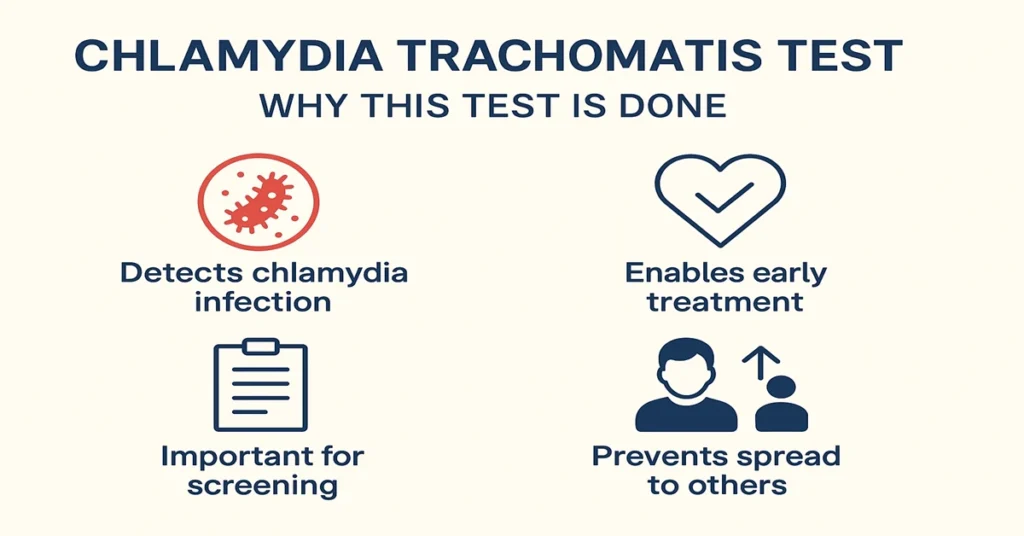
From a diagnostic perspective, this test serves both individual patient care and public health prevention.
It helps to:
Identify active infection
The test confirms whether Chlamydia trachomatis is currently present, even when symptoms are absent.
Enable early medical intervention
Early detection allows treatment before complications develop, which is particularly important in reproductive-age individuals.
Reduce long-term complications
Untreated infection can ascend the reproductive tract or involve adjacent structures, leading to fertility-related issues.
Limit transmission
Identifying infection allows timely partner notification and reduces spread within the community.
Support routine screening
In many clinical settings, chlamydia testing is part of routine STI screening, especially in younger, sexually active populations.
Causes of Low or Negative Levels
A negative Chlamydia trachomatis test means that no detectable bacterial material was found in the sample.
Common clinical interpretations include:
- No current infection
- Testing performed very early, before bacterial levels became detectable
- Previous infection that has already been cleared after treatment
In cases where symptoms persist despite a negative result, clinicians often consider repeat testing or evaluation for other infections.
Symptoms of Low/Negative Levels
A negative result itself does not produce symptoms.
- In asymptomatic individuals, it simply confirms the absence of infection
- In symptomatic patients, urinary discomfort or discharge may be due to another condition such as a urinary tract infection or a different sexually transmitted infection
Further testing is usually guided by symptoms rather than by the negative result alone.
Causes of High or Positive Levels
A positive test indicates detection of Chlamydia trachomatis genetic material, confirming an active infection.
Clinically, this may reflect:
- A newly acquired infection
- Reinfection after previous treatment
- A long-standing infection that remained unnoticed due to lack of symptoms
The result indicates bacterial presence, not how long the infection has been present or how severe it is.
Symptoms of High or Positive Levels
Many individuals with chlamydia remain asymptomatic, particularly in the early phase. When symptoms occur, they tend to be subtle and vary by sex.
In women, symptoms may include urinary discomfort, changes in vaginal discharge, lower abdominal pain, discomfort during intercourse, or irregular bleeding.
In men, symptoms can involve burning during urination, penile discharge, or testicular discomfort.
In both sexes, rectal symptoms or eye irritation may occur depending on the site of exposure.
From a clinical standpoint, the absence of symptoms does not imply a harmless infection—this is why routine testing is emphasized.
Reference Ranges
Chlamydia test results are reported qualitatively:
- Negative: No Chlamydia trachomatis DNA or RNA detected
- Positive: Chlamydia trachomatis DNA or RNA detected, indicating infection
Cut-off values and reporting formats may vary slightly depending on the laboratory and testing platform.
Sample Type and Testing Methods
The sample collected depends on exposure and clinical presentation.
Common sample types include:
- Urine samples (frequently used for screening)
- Swabs from the cervix, vagina, urethra, rectum, or throat when indicated
The most widely used method is the Nucleic Acid Amplification Test (NAAT), which is highly sensitive and specific. Other methods, such as antigen detection or culture, are used less commonly.
Test Preparation
No fasting is required.
Patients are usually advised to avoid urinating for a short period before urine collection and to inform the doctor about recent antibiotic use, as this may influence results. For swab-based tests, avoiding topical products beforehand is generally recommended.
When to Consult a Doctor
Medical advice should be sought if you experience:
- Burning or discomfort during urination
- Unusual genital discharge
- Pelvic or lower abdominal pain
- Pain during sexual activity
- Recent unprotected sexual contact or exposure to an infected partner
From a clinical perspective, early testing and confirmation help prevent complications, protect reproductive health, and reduce further transmission.
Important Word Explanations
- Chlamydia trachomatis: A bacterium that causes the sexually transmitted infection chlamydia
- STI: An infection transmitted through sexual contact
- NAAT: A molecular test that detects bacterial DNA or RNA
- PID: Infection and inflammation of the female reproductive organs
- Ectopic Pregnancy: A pregnancy that develops outside the uterus, often linked to prior pelvic infection
~END~
Related Posts
None found