
Overview
The Chikungunya Virus Test is a laboratory test used to confirm infection caused by the chikungunya virus, a mosquito-borne virus transmitted mainly through the bite of Aedes aegypti and Aedes albopictus mosquitoes. In routine clinical settings, this test is considered when a patient presents with sudden fever, significant joint pain, body aches, rash, and fatigue—features that commonly raise suspicion of chikungunya.
Because chikungunya shares many symptoms with other mosquito-borne illnesses such as dengue and Zika, laboratory confirmation plays an important role. The test helps clinicians move beyond symptom-based assessment and reach a more confident diagnosis.
What Is the Chikungunya Virus Test?
The Chikungunya Virus Test is designed to determine whether a person has been infected with the chikungunya virus, either recently or in the past. Infection occurs when a mosquito carrying the virus bites a person and introduces the virus into the bloodstream.
Depending on the stage of illness, the test may detect:
- Antibodies (IgM and IgG), which reflect the body’s immune response to the virus
- Viral RNA by RT-PCR, which confirms the presence of the virus itself during the early phase of illness
From a clinical perspective, the timing of symptoms is crucial. Doctors usually choose the test based on how many days have passed since fever or joint pain began, helping distinguish chikungunya from conditions such as dengue, Zika, or malaria.
Where Is the Virus Produced in the Body?
The chikungunya virus does not originate in the human body. It is introduced through a mosquito bite and then enters the bloodstream.
After entry:
- The virus infects body cells and begins to replicate
- The immune system responds by producing virus-specific antibodies
- Either the antibodies or the viral genetic material become detectable in blood samples
Laboratory testing relies on this immune and viral activity to confirm infection.
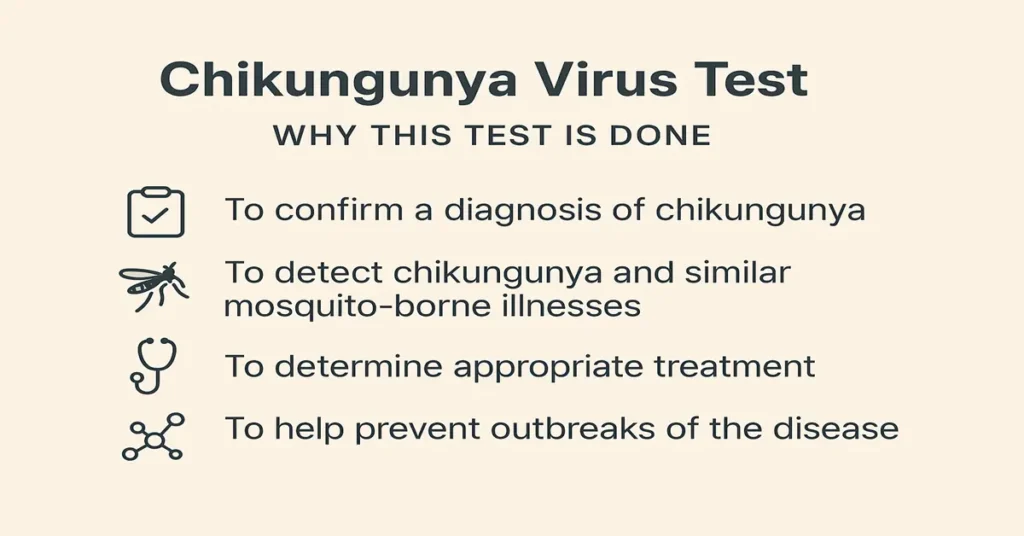
Main Functions and Importance of the Test
Clinically, the Chikungunya Virus Test functions mainly as a confirmatory test rather than a general screening tool.
It helps to:
Confirm recent or active infection
IgM antibodies usually appear within the first week of illness, while IgG antibodies develop later and tend to persist.
Differentiate chikungunya from similar illnesses
Joint pain and fever overlap with many mosquito-borne infections. Laboratory confirmation helps avoid diagnostic uncertainty.
Support clinical decision-making
Although there is no virus-specific treatment, confirming the diagnosis helps doctors plan appropriate monitoring and supportive care.
Assist public health surveillance
Identifying confirmed cases supports outbreak detection and mosquito control efforts in affected areas.
Causes of Low or Negative Results
A negative result generally indicates no laboratory evidence of chikungunya infection at the time of testing. Common clinical explanations include:
- No exposure to the virus
- Testing performed very early, before antibodies have formed
- Symptoms caused by another infection with similar features
In early illness, clinicians often interpret a negative result cautiously and may advise repeat testing if clinical suspicion remains.
Symptoms of Low or Negative Levels
A negative test result does not cause symptoms on its own.
- In healthy individuals, it simply reflects the absence of infection
- In symptomatic patients, fever or joint pain may be due to another viral or bacterial illness
When symptoms persist despite an initial negative test, further evaluation is usually guided by clinical judgment rather than the test result alone.
Causes of High or Positive Results
A positive result indicates that the immune system has responded to the chikungunya virus or that viral material is present in the blood.
Depending on the finding:
- IgM positivity suggests a recent infection
- IgG positivity indicates past exposure
- PCR positivity confirms active infection, typically in the early phase
These results reflect immune or viral activity rather than the severity of illness.
Symptoms of High or Positive Levels
When infection is present, symptoms usually begin a few days after a mosquito bite.
Common clinical features include:
- Sudden onset of high fever
- Prominent joint pain, often involving wrists, ankles, fingers, and knees
- Muscle aches, headache, and back pain
- Skin rash in many patients
- Fatigue and joint stiffness that may persist beyond the acute phase
From a clinician’s viewpoint, lingering joint discomfort is a well-recognized feature of chikungunya and often explains ongoing follow-up visits.
Reference Ranges
Chikungunya test results are typically reported qualitatively rather than as numeric values:
- Negative: No antibodies or viral RNA detected
- Positive: Antibodies or viral RNA detected, indicating infection
- Equivocal/Borderline: Inconclusive result; repeat testing may be considered
Interpretation always takes symptom duration and clinical context into account.
Sample Type and Testing Methods
Sample type:
Blood (serum or plasma)
Common methods used:
- ELISA for IgM and IgG antibody detection
- RT-PCR for viral RNA detection in early illness
These tests are performed in diagnostic laboratories and do not require fasting.
Test Preparation
No special preparation is required.
Informing the doctor about the day symptoms started is helpful, as it guides test selection. Being well hydrated and relaxed before blood collection is generally sufficient.
When to Consult a Doctor
Medical advice should be sought if you experience:
- Sudden fever with significant joint pain
- Rash, headache, or muscle aches following mosquito exposure
- Persistent fatigue or joint stiffness
- Recent travel to, or residence in, mosquito-affected regions
Although chikungunya is rarely life-threatening, early confirmation helps ensure appropriate monitoring and reduces uncertainty for both patients and clinicians.
Important Word Explanations
- Chikungunya Virus: A mosquito-borne virus that causes fever and joint pain
- Aedes Mosquito: The mosquito species responsible for transmitting chikungunya and related viruses
- Antibodies (IgM, IgG): Immune proteins produced in response to infection
- ELISA: A laboratory method used to detect antibodies in blood
- RT-PCR: A molecular test that detects viral genetic material
- Vector-borne Disease: An infection transmitted by insects such as mosquitoes
~END~
Related Posts
None found