
Overview
The Ceruloplasmin Test is a blood test used to measure the level of ceruloplasmin, a copper-carrying protein produced by the liver. Ceruloplasmin plays a central role in transporting copper in the blood and in maintaining the balance between copper and iron in the body.
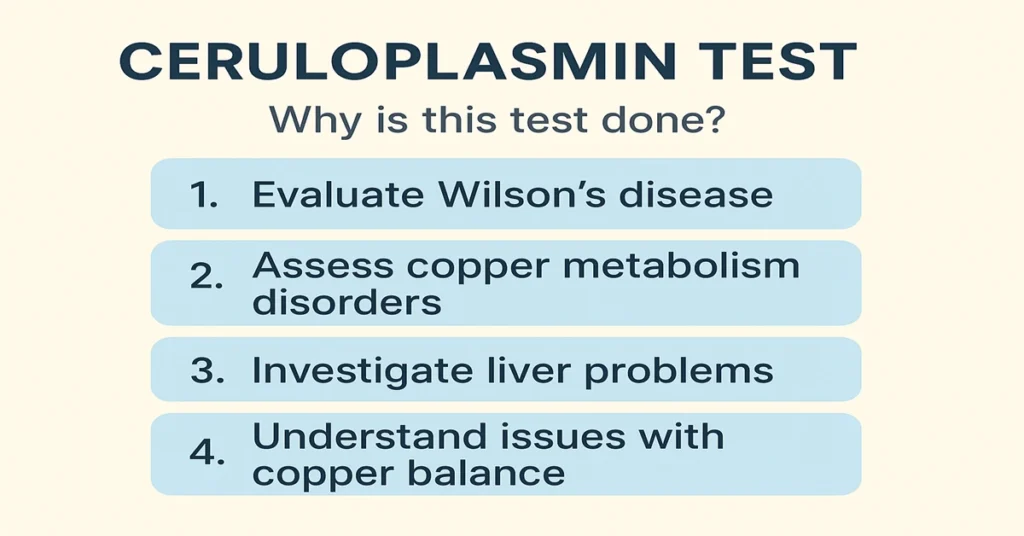
Clinically, this test is most often requested when doctors suspect disorders of copper metabolism—especially Wilson’s disease—or when evaluating unexplained liver, neurological, or metabolic findings. Ceruloplasmin levels, when interpreted alongside other copper studies, help clarify whether copper handling in the body is normal or disrupted.
What Is the Ceruloplasmin Test?
Ceruloplasmin is a blue-colored plasma protein that carries nearly 95% of circulating copper in the blood. In addition to transport, it functions as a ferroxidase enzyme, helping convert iron into a form that can be safely transported by transferrin.
The Ceruloplasmin Test measures the concentration of this protein in the blood. From a laboratory perspective, abnormal values act as signals rather than standalone diagnoses:
- Low ceruloplasmin suggests impaired copper incorporation or transport, commonly seen in Wilson’s disease
- High ceruloplasmin is often a reflection of inflammation, hormonal influence, or physiological stress rather than copper overload
Where Is Ceruloplasmin Produced in the Body?
Ceruloplasmin is synthesized in the liver. During its production, copper is incorporated into the protein before it is released into the bloodstream.
Because of this close link, ceruloplasmin levels often reflect liver synthetic function. When liver health is compromised, or when copper binding is defective, ceruloplasmin production and release may be reduced, even if total body copper is increased.
Main Functions and Importance
Ceruloplasmin supports several essential metabolic processes:
Copper Transport
It safely binds and transports copper in the bloodstream, preventing free copper from causing oxidative damage to tissues.
Iron Metabolism (Ferroxidase Activity)
Ceruloplasmin converts iron into a form that can attach to transferrin. This step is important for normal red blood cell production and for preventing iron accumulation in tissues.
Antioxidant Protection
By binding copper and participating in redox reactions, ceruloplasmin helps limit oxidative stress and cellular injury.
Copper–Iron Balance
Its dual role links copper and iron metabolism, making ceruloplasmin a useful indicator when disturbances in either system are suspected.
Causes of Low Ceruloplasmin Levels
Low ceruloplasmin levels usually indicate altered copper metabolism or reduced liver production. Common clinical associations include:
Wilson’s Disease
A genetic condition in which copper is not properly excreted, leading to tissue accumulation despite low circulating ceruloplasmin.
Advanced Liver Disease
Chronic liver damage can reduce the liver’s ability to synthesize ceruloplasmin.
Protein-Loss Conditions
States such as nephrotic syndrome may lower circulating protein levels, including ceruloplasmin.
Nutritional Deficiency or Rare Genetic Disorders
Severe malnutrition or rare conditions affecting copper handling may also reduce levels.
Symptoms of Low Ceruloplasmin Levels
Symptoms are not caused by low ceruloplasmin itself but by the underlying disorder. In conditions such as Wilson’s disease, clinical features may include:
- Neurological changes such as tremors, poor coordination, or speech difficulty
- Behavioral or psychiatric changes, including mood disturbances
- Liver-related signs such as jaundice, fatigue, or abnormal liver tests
- Characteristic eye findings such as Kayser–Fleischer rings
These patterns often prompt further copper-specific testing rather than relying on ceruloplasmin alone.
Causes of High Ceruloplasmin Levels
Elevated ceruloplasmin levels are usually a reactive finding rather than a primary disorder. Common situations include:
- Pregnancy or estrogen exposure
- Inflammatory or infectious states
- Acute illness or tissue injury
- Certain malignancies associated with systemic inflammation
In these settings, ceruloplasmin behaves as an acute-phase reactant, rising as part of the body’s generalized response.
Symptoms of High Ceruloplasmin Levels
High ceruloplasmin levels themselves do not produce symptoms. Any clinical features present are typically related to the underlying cause, such as infection, inflammation, hormonal changes, or systemic illness.
Reference Ranges
Reference ranges may vary slightly by laboratory, but commonly reported values include:
- Adults: 20–50 mg/dL
- Low: below 20 mg/dL
- High: above 50 mg/dL
Doctors usually interpret ceruloplasmin alongside related tests such as serum copper, urinary copper excretion, and liver function studies to reach a meaningful conclusion.
Sample Type and Test Method
Sample type:
Blood (serum or plasma)
Test methods:
Immunoturbidimetric or nephelometric assays are commonly used in clinical laboratories.
The test requires only a small blood sample and does not require fasting.
Test Preparation
No special preparation is needed.
It is helpful to inform your doctor if you are pregnant, taking estrogen-containing medications, or have known liver or metabolic conditions, as these factors can influence results.
When to Consult a Doctor
Medical review is advised if you experience:
- Unexplained neurological symptoms such as tremors or coordination problems
- Signs of liver disease, including jaundice or persistent fatigue
- Behavioral or mood changes without a clear cause
- Abnormal liver tests or copper-related test results
- A family history of Wilson’s disease or copper metabolism disorders
Early evaluation allows timely investigation and monitoring, helping prevent long-term organ damage.
Important Word Explanations
- Ceruloplasmin: A liver-produced protein that carries copper in the blood
- Wilson’s Disease: A genetic disorder causing copper accumulation in organs
- Kayser–Fleischer Rings: Copper deposits visible at the edge of the cornea
- Ferroxidase: Enzyme activity that enables proper iron transport
- Acute-phase Reactant: A protein that increases during inflammation or illness
- Nephrotic Syndrome: A kidney condition causing loss of proteins in urine
~END~
Related Posts
None found