
Overview
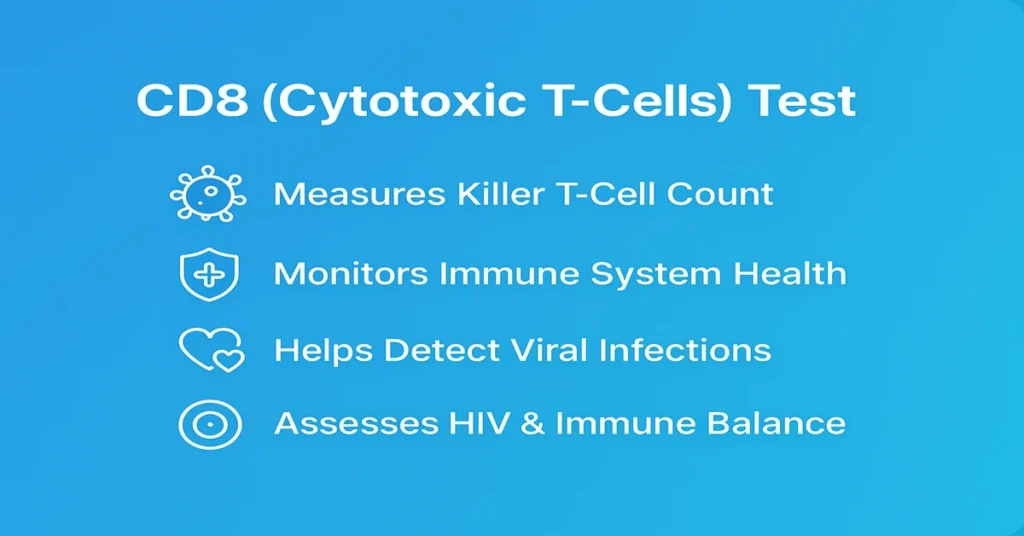
The CD8 (Cytotoxic T-Cells) Test measures the number or percentage of CD8 T-lymphocytes in the blood. CD8 cells are a specialized group of T-cells that play a direct protective role in the immune system. They are often referred to as “cytotoxic” or “killer” T-cells because they identify and destroy virus-infected cells, abnormal cells, and certain cancer cells.
In routine clinical practice, this test is rarely interpreted on its own. Doctors usually review it alongside the CD4 (Helper T-Cells) test to understand the overall strength and balance of the immune system. This combined view is especially important in people with HIV infection, chronic viral illnesses, autoimmune conditions, or those receiving immunosuppressive therapies.
Where It Is Synthesized or Produced in the Body
CD8 T-cells develop through a structured process within the immune system.
They begin life as immature lymphocytes in the bone marrow, where all blood cells are formed. From there, they migrate to the thymus gland. In the thymus, these cells mature and acquire specific surface markers, including the CD8 molecule, which defines their cytotoxic role.
Once mature, CD8 cells circulate continuously through the bloodstream, lymph nodes, spleen, and other tissues. In these locations, they survey the body for infected or abnormal cells and are ready to respond when a threat is detected.
Main Functions and Importance
CD8 T-cells are essential for the body’s cell-mediated immune defense. Their role is active and targeted, focused on eliminating harmful cells rather than coordinating the response.
They recognize cells infected with viruses and trigger their destruction, helping to stop viral replication. CD8 cells also participate in immune surveillance by identifying and removing cells that show early cancer-like changes. In infections caused by organisms that live inside cells, CD8 activity becomes particularly important.
After an infection resolves, a portion of CD8 cells persists as memory cells. These memory cells allow the immune system to respond more rapidly and effectively if the same infection occurs again. CD8 cells also function in close coordination with CD4 helper cells, and the balance between these two populations is a key indicator of immune health.
Causes of Low CD8 Levels
A reduced CD8 count generally reflects weakened immune defense or reduced immune cell production.
Advanced HIV infection is a well-recognized cause, as prolonged viral activity can affect multiple T-cell populations. Severe or long-standing viral illnesses may also exhaust CD8 cells over time. Conditions that suppress bone marrow function, such as aplastic anemia or other marrow disorders, can lead to lower CD8 numbers.
Cancer treatments like chemotherapy or radiation commonly reduce CD8 levels as part of their broader effects on rapidly dividing cells. Long-term use of immunosuppressive medications may also lower CD8 counts by intentionally dampening immune activity.
Symptoms of Low CD8 Levels
When CD8 levels are low, the body’s ability to clear viral infections is reduced. This may present as infections that occur more frequently, last longer than expected, or recur soon after recovery.
People may notice persistent fatigue, slower healing, or a general sense of reduced resilience to illness. In severe immune suppression, particularly in advanced HIV disease, opportunistic infections may develop and signal the need for urgent medical evaluation.
Causes of High CD8 Levels
Elevated CD8 counts usually indicate that the immune system is actively responding to a stimulus rather than a primary disorder of the cells themselves.
Acute or chronic viral infections commonly raise CD8 levels, as the body increases cytotoxic activity to control infected cells. Chronic immune stimulation from ongoing infections may keep levels persistently high. Autoimmune diseases can also increase CD8 counts due to sustained immune activation.
In rarer cases, certain blood cancers involving T-cells may lead to abnormally high CD8 numbers, which require careful interpretation alongside clinical findings and additional tests.
Symptoms of High CD8 Levels
High CD8 levels do not usually cause symptoms on their own. Any symptoms present are typically related to the underlying condition driving immune activation.
For example, viral infections may cause fever, body aches, or swollen lymph nodes, while autoimmune conditions may be associated with joint pain, rashes, or fatigue. In these settings, CD8 elevation is viewed as a reflection of immune response rather than a problem by itself.
Reference Ranges
Typical adult reference ranges can vary slightly between laboratories, but commonly accepted values include:
- Absolute CD8 count: 150 – 1,000 cells/µL
- CD8 percentage of lymphocytes: 20 – 35%
- CD4:CD8 ratio: 1.0 – 3.0
A CD4:CD8 ratio below 1.0 is often associated with immune suppression, while higher ratios may be seen in immune activation. Trends over time are usually more informative than a single measurement.
Sample Type and Testing Method
Sample Type:
Venous blood sample collected from a vein in the arm.
Testing Method:
The test is performed using flow cytometry. In this method, blood cells are labeled with fluorescent markers that specifically bind to CD8 molecules. The cells are then counted and analyzed as they pass through a laser-based analyzer. CD8 testing is commonly performed together with CD3 and CD4 measurements to provide a complete immune profile.
Test Preparation
No fasting or special preparation is required. It is helpful to inform your doctor about any current infections or medications, particularly immunosuppressive or antiviral drugs, as these can influence results.
If possible, testing is avoided during acute illness or fever, since temporary immune activation can raise CD8 counts and make interpretation less clear.
When to Consult a Doctor
You should discuss CD8 test results with your doctor if you have frequent or prolonged infections, unexplained fatigue, fever, swollen lymph nodes, or known immune-related conditions. Regular monitoring is especially important for individuals with HIV, those undergoing cancer treatment, or patients receiving long-term immunosuppressive therapy.
Your doctor may review CD8 results alongside CD4 and CD3 values, recommend additional immune tests, or adjust ongoing treatment plans based on the overall immune profile.
Important Word Explanations
- CD8 Cells: Cytotoxic T-cells that destroy virus-infected and abnormal cells.
- Flow Cytometry: A laboratory technique used to identify and count specific immune cells.
- Cytotoxic: Refers to the ability to kill targeted cells.
- CD4:CD8 Ratio: A comparison of helper and cytotoxic T-cells used to assess immune balance.
- Immunodeficiency: A state in which the immune system’s ability to fight infections is reduced.
~END~
Related Posts
None found