
Overview
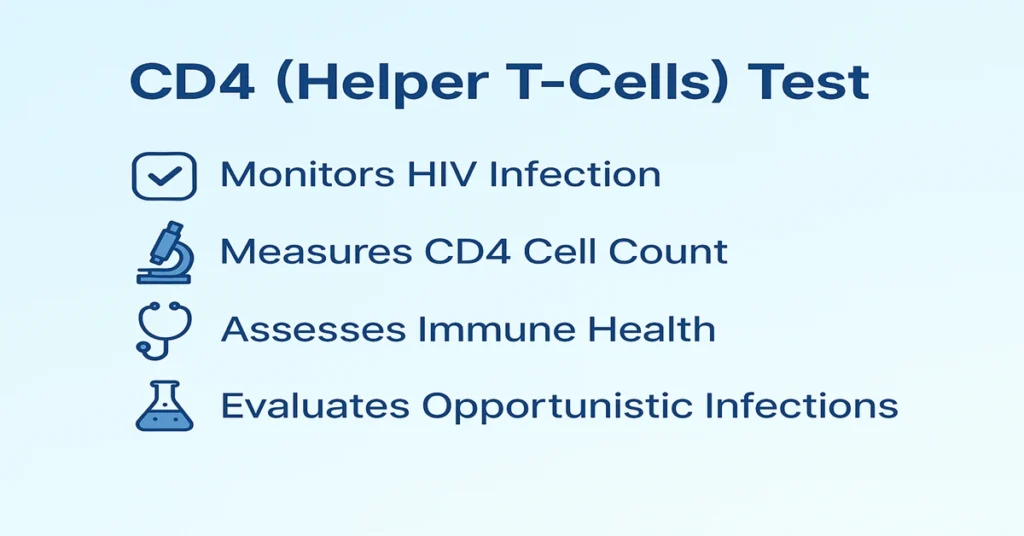
The CD4 (Helper T-Cells) Test is a blood test that measures the number or percentage of CD4 cells in the bloodstream. CD4 cells are a specialized group of T-lymphocytes and are central to how the immune system functions. They are often called “helper cells” because they coordinate and direct the activity of other immune cells, rather than attacking infections on their own.
In day-to-day clinical practice, this test is most commonly used to monitor HIV infection, where CD4 cells are directly targeted by the virus. Beyond HIV, it also provides a clear picture of overall immune strength and is useful in assessing immune suppression caused by medications, cancers, or chronic illnesses, as well as tracking immune recovery during treatment.
Where It Is Synthesized or Produced in the Body
CD4 T-cells develop through a carefully regulated process within the immune system.
They begin as immature lymphocyte precursors in the bone marrow. These cells then migrate to the thymus gland, where they mature and acquire defining surface markers, including the CD4 molecule. This maturation step is crucial, as it allows the cells to correctly recognize threats and interact with other immune components.
Once mature, CD4 cells circulate continuously through the blood, lymph nodes, spleen, and other lymphoid tissues. From these locations, they monitor for infections and help organize the body’s immune response when needed.
Main Functions and Importance
CD4 T-cells act as the coordinators of the immune system. Rather than directly destroying infected cells, they guide and amplify the work of other immune cells so that responses are effective and well controlled.
They stimulate B-cells to produce antibodies, activate cytotoxic (CD8) T-cells that kill infected or abnormal cells, and release cytokines that fine-tune immune and inflammatory activity. Just as importantly, CD4 cells help maintain balance, preventing immune responses from becoming either too weak or excessively aggressive.
Because of this central role, the CD4 test is a cornerstone in evaluating immune health. In HIV care, it helps assess disease progression and response to antiretroviral therapy. In other settings, it supports the evaluation of immune suppression related to medications, malignancies, or systemic illnesses.
Causes of Low CD4 Levels
A low CD4 count generally reflects reduced immune capacity. One of the most well-known causes is HIV infection, where the virus selectively infects and destroys CD4 cells over time. When levels fall significantly, the immune system becomes less capable of controlling infections.
Other situations can also lower CD4 counts. Severe or prolonged infections may temporarily suppress levels, while chemotherapy or radiation therapy can reduce T-cell production as part of their broader effects on rapidly dividing cells. Bone marrow disorders and long-term use of immunosuppressive medications can similarly reduce CD4 numbers.
Symptoms of Low CD4 Levels
When CD4 levels are low, the immune system struggles to defend the body effectively. This often shows up as frequent or persistent infections, slower recovery from routine illnesses, or infections caused by organisms that rarely cause disease in healthy individuals.
General symptoms such as fatigue, unexplained weight loss, low-grade fever, or night sweats may also be present. When CD4 counts fall to very low levels, the risk of opportunistic infections increases substantially, which is why persistently low results always warrant careful medical evaluation.
Causes of High CD4 Levels
Elevated CD4 counts are less common and are usually a reflection of immune activation rather than a problem by themselves. Temporary increases may be seen during acute infections, when the immune system is responding actively.
Higher counts can also appear in autoimmune conditions, where immune activity is chronically increased. In patients recovering from infection, immune suppression, or after starting effective therapy, rising CD4 levels are often interpreted as a sign of immune recovery rather than disease.
Symptoms of High CD4 Levels
High CD4 levels alone usually do not cause symptoms. Any symptoms that are present typically relate to the underlying condition driving immune activation, such as joint pain or rashes in autoimmune disease, or mild systemic symptoms during an infection.
For this reason, elevated CD4 values are always interpreted in context, alongside other immune markers and the patient’s clinical picture.
Reference Ranges
Normal CD4 values vary by laboratory and individual factors, but commonly accepted adult ranges include:
- Absolute CD4 count: 500 – 1,500 cells/µL
- CD4 percentage of lymphocytes: 30 – 60%
- Critical level: Below 200 cells/µL, indicating severe immune compromise and increased risk of opportunistic infections
In people living with HIV, trends over time are often more informative than a single result.
Sample Type and Testing Method
Sample Type:
Venous blood collected from a vein in the arm.
Testing Method:
CD4 testing is performed using flow cytometry, a highly precise laboratory technique. Cells are tagged with fluorescent markers that bind specifically to CD4 molecules and are then counted as they pass through a laser-based analyzer. The test is commonly performed alongside CD3 and CD8 measurements to provide a broader view of immune balance.
Test Preparation
No fasting or special preparation is required. It is helpful to inform your doctor about any current infections or medications, particularly steroids, chemotherapy, or other immunosuppressive drugs, as these can influence results.
In routine HIV care, CD4 testing is often repeated at regular intervals to monitor immune status and treatment response.
When to Consult a Doctor
You should discuss CD4 test results with your doctor if you have recurrent or unusual infections, ongoing fatigue, unexplained weight loss, or known conditions that affect immunity. Regular monitoring is especially important for people with HIV, those receiving antiretroviral therapy, or individuals on long-term immune-modifying medications.
Based on the results and overall clinical context, your doctor may recommend additional immune tests, closer follow-up, or adjustments to ongoing treatment plans.
Important Word Explanations
- CD4 Cells: Helper T-lymphocytes that coordinate immune responses.
- T-Lymphocytes: White blood cells involved in cell-mediated immunity.
- Flow Cytometry: A laboratory method used to identify and count specific cell populations.
- Opportunistic Infection: An infection that occurs more easily when immunity is weakened.
- Antiretroviral Therapy (ART): Medication used to control HIV and support immune recovery.
~END~
Related Posts
None found