
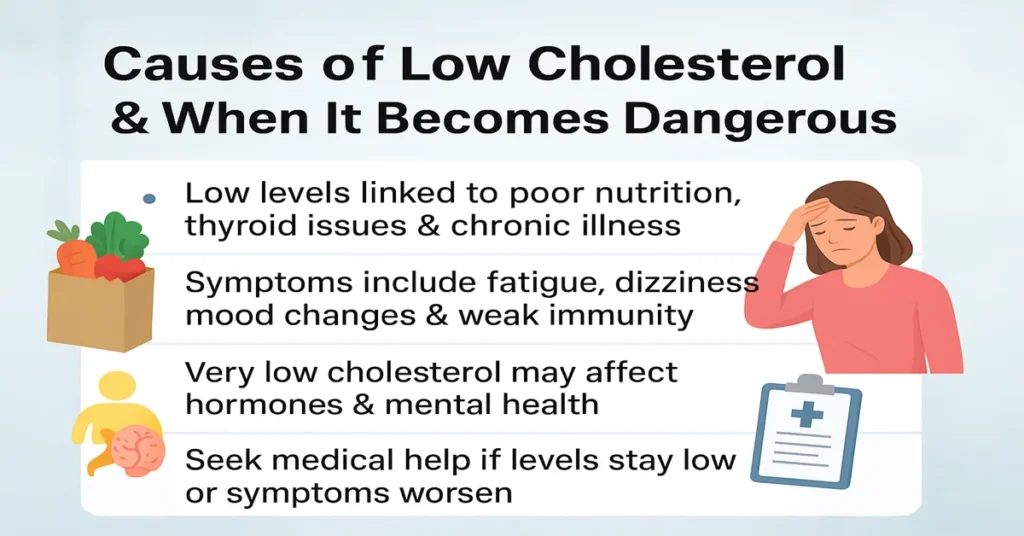
Causes of Low Cholesterol & When It Becomes Dangerous
Overview
Cholesterol is usually discussed when it is high, but very low cholesterol can also create health problems. Cholesterol is a natural substance made by the liver and is essential for building hormones, maintaining cell membranes, producing vitamin D, and forming digestive bile acids.
In routine clinical practice, low cholesterol is less common than high cholesterol, but when it does appear, doctors usually pause and look for an underlying reason rather than dismiss it as harmless. Persistently low cholesterol can affect brain function, hormone balance, immunity, and overall energy levels.
This article explains why cholesterol levels drop, what symptoms may appear, when low cholesterol becomes dangerous, and when medical attention is necessary.
Short Overview
Cholesterol is measured in three main ways:
LDL (Low-Density Lipoprotein) – often called “bad cholesterol,” but still required in small amounts
HDL (High-Density Lipoprotein) – “good cholesterol,” helps remove excess cholesterol from blood
Total Cholesterol – the combined value of LDL, HDL, and other lipid components
Low cholesterol usually refers to very low total cholesterol or LDL, which may interfere with normal body functions if it remains low over time.
Causes of Low Cholesterol Levels
Low cholesterol rarely occurs without a reason. In everyday lab practice, it is usually linked to nutritional, hormonal, liver-related, or metabolic issues.
Nutritional deficiencies
Diets extremely low in fats or calories reduce the raw materials needed for cholesterol production. This is often seen in people following very restrictive diets.
Hyperthyroidism
An overactive thyroid increases metabolism and breaks down cholesterol faster than the body can replace it.
Chronic infections or inflammation
Long-standing infections or inflammatory conditions may lower cholesterol as part of the body’s stress response.
Liver disorders
Because cholesterol is produced in the liver, advanced liver disease or liver failure can reduce cholesterol levels.
Malabsorption problems
Conditions such as celiac disease, inflammatory bowel disease, or chronic diarrhea prevent proper absorption of dietary fats.
Genetic factors
Rare inherited conditions can cause naturally very low LDL and total cholesterol levels.
Medication effects
Cholesterol-lowering drugs or certain supplements may sometimes reduce cholesterol more than intended.
Severe illness or prolonged stress
Major illness, trauma, or long-term physical stress can disrupt fat metabolism and lower cholesterol.
Symptoms of Low Cholesterol Levels
Low cholesterol often develops silently. Symptoms usually appear only when levels remain low for a long time.
Common symptoms include:
Persistent fatigue or low energy
Dizziness or general weakness
Mood changes such as depression or anxiety
Poor concentration or memory issues
Hormonal imbalance symptoms
Muscle weakness
Digestive discomfort
Frequent infections
Clinically, many of these symptoms relate to cholesterol’s role in hormone production and brain chemistry.
Why Low Cholesterol Can Be Dangerous
Cholesterol supports several critical systems. When levels fall too low, these systems may not function properly.
Hormone imbalance
Cholesterol is required to produce cortisol, estrogen, testosterone, and vitamin D. Low levels can disturb hormonal balance.
Mental health effects
Very low cholesterol has been associated with altered serotonin activity, which may influence mood and emotional stability.
Stroke risk
Extremely low cholesterol has been linked in some cases to a higher risk of hemorrhagic (bleeding) stroke.
Weakened immunity
Cholesterol supports immune cell membranes. Low levels may reduce the body’s ability to fight infections.
Cell and tissue weakness
Every cell membrane contains cholesterol. Low levels can slow healing and reduce cell stability.
Digestive and liver effects
Insufficient cholesterol can impair bile acid production, affecting digestion and nutrient absorption.
Low cholesterol becomes concerning when it is persistent, unexplained, or associated with symptoms.
Lifestyle & Diet Factors That Can Lower Cholesterol Too Much
Some habits unintentionally push cholesterol below healthy levels.
Very low-fat diets
Completely avoiding fats limits cholesterol production.
Overuse of cholesterol-lowering supplements
High doses of certain supplements may excessively reduce lipid levels.
Excessive exercise with inadequate calorie intake
Seen in people with very low body fat and high energy expenditure.
Irregular meals or prolonged fasting
Disrupts normal fat metabolism and cholesterol balance.
Once identified, these factors are usually reversible.
When Low Cholesterol Becomes a Medical Emergency
Immediate medical evaluation is needed if low cholesterol is accompanied by:
Severe weakness or collapse
Confusion or memory disturbances
Sudden mood or behavioral changes
Signs of liver disease such as jaundice
Rapid or unexplained weight loss
Persistent digestive problems
Chest discomfort or irregular heartbeat
These signs may point to serious underlying illness rather than cholesterol itself.
How Low Cholesterol Is Usually Managed
Management focuses on correcting the underlying cause rather than simply increasing cholesterol numbers.
Doctors may recommend:
Improving overall nutrition and calorie balance
Including adequate healthy fats in meals
Addressing thyroid, liver, or digestive disorders
Reviewing medications or supplements
Avoiding extreme or restrictive diets
Any changes should be guided by medical advice, especially when cholesterol is very low.
When to See a Doctor
Consult a doctor if:
Cholesterol remains very low on repeated tests
There are mood changes, anxiety, or depression
Symptoms of liver or thyroid problems appear
Infections become frequent
Weight loss is unexplained
Digestive or absorption issues persist
Fatigue interferes with daily life
Further tests such as thyroid profile, liver function tests, vitamin levels, or detailed lipid analysis may be required.
Test Preparation
For accurate cholesterol testing:
Fast for 9–12 hours if advised
Drink water normally
Avoid alcohol for 24 hours
Do not overeat fatty foods the night before
Inform the doctor about medicines or supplements
Rest briefly before blood collection
Good preparation helps avoid misleading results.
Important Word Explanations
Cholesterol: A fat-like substance essential for hormones, cell membranes, and vitamin D
Hypocholesterolemia: Abnormally low cholesterol levels
LDL: Low-density lipoprotein, required in small amounts
HDL: High-density lipoprotein that helps remove excess cholesterol
Malabsorption: Poor absorption of nutrients from the gut
Hormone imbalance: Inadequate production of essential hormones
People Also Ask
Is low cholesterol always dangerous?
No. Mildly low values without symptoms are often harmless, but persistent or very low levels need evaluation.
Can low cholesterol be temporary?
Yes. Acute illness, stress, or dietary changes can temporarily lower cholesterol.
Does low cholesterol always mean a disease?
Not always. Sometimes it reflects diet or metabolism, but doctors check for hidden causes if it persists.
When do doctors usually worry about low cholesterol?
When it is repeatedly low, unexplained, or associated with symptoms like fatigue or mood changes.
Is repeat testing common for low cholesterol?
Yes. Repeat testing helps confirm whether the low value is temporary or persistent.
Can cholesterol return to normal on its own?
Often yes, once the underlying cause is identified and corrected.
~END~