
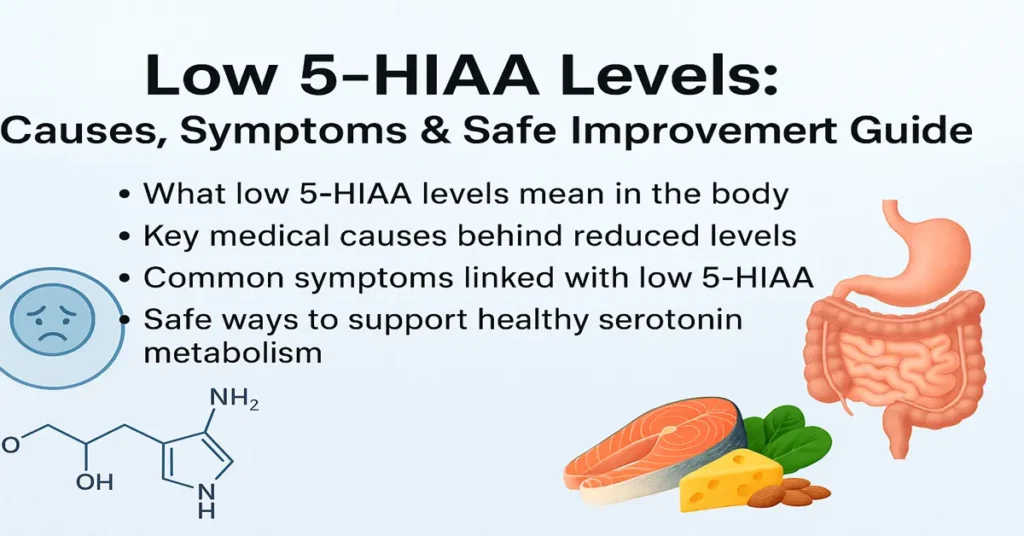
Causes and Symptoms of Low 5-HIAA Levels
Overview of Low Levels
5-HIAA, or 5-hydroxyindoleacetic acid, is the main breakdown product of serotonin. It is measured in urine to understand how the body produces, uses, and eliminates serotonin. In routine lab practice, this test is most commonly ordered when doctors want to rule out conditions linked with high serotonin. Low values are usually less alarming, but they still carry clinical meaning when seen repeatedly or along with symptoms.
Low 5-HIAA levels generally suggest one of three things: reduced serotonin production, altered excretion through the kidneys, or technical factors related to urine collection. Many patients worry when they see a “low” flag on the report, but clinically, this finding often needs context before it is considered significant.
What Low 5-HIAA Actually Means
A low 5-HIAA value does not automatically mean disease. In many cases, it reflects temporary influences such as diet, medication use, or an incomplete urine sample. Clinically, doctors usually pause at this point and correlate the value with symptoms, kidney function, gut health, and how the sample was collected.
Only when low levels are persistent and accompanied by relevant symptoms do they prompt a deeper evaluation of serotonin metabolism or absorption pathways.
Major Medical Causes of Low 5-HIAA Levels
Several medical and non-medical factors can contribute to reduced 5-HIAA values.
Low Serotonin Production
Some individuals naturally produce lower serotonin levels. This may be influenced by genetics, long-term stress, inadequate intake of tryptophan-rich foods, or poor absorption in the gut. In such cases, the body simply has less serotonin to break down into 5-HIAA.
Kidney-Related Factors
Because 5-HIAA is eliminated through urine, reduced kidney filtration can lead to lower measured levels. Clinically, this does not always mean serotonin is low—it may reflect reduced excretion.
Malabsorption Conditions
Conditions affecting the intestine, such as chronic diarrhea, celiac disease, or inflammatory bowel disorders, can reduce absorption of nutrients needed for serotonin synthesis. Over time, this may lower 5-HIAA output.
Medication Effects
Certain medications can alter serotonin metabolism or interfere with how 5-HIAA appears in urine. Antidepressants, monoamine oxidase inhibitors, and some blood pressure drugs are common examples. In routine practice, medication history is essential when interpreting results.
Dietary Influences
Low protein intake or diets lacking tryptophan can temporarily reduce serotonin production. This effect is usually mild and reversible.
Incomplete or Incorrect Urine Collection
One of the most common non-medical reasons for low values is collection error. Missing urine during the 24-hour period, excessive dilution, or improper storage can falsely lower results.
Symptoms Seen With Low Levels
Low 5-HIAA itself does not cause symptoms. Any symptoms seen are related to the underlying condition affecting serotonin metabolism or overall health.
Commonly reported complaints may include:
Low or flat mood
Poor sleep quality
Reduced appetite
General fatigue
Digestive discomfort or irregular bowel habits
Lower tolerance to stress
These symptoms are non-specific and should never be attributed to 5-HIAA alone. Clinically, they are assessed alongside other findings.
Health Risks of Persistently Low Levels
In most patients, low 5-HIAA values are not dangerous. However, when levels remain consistently low, they may point toward:
Long-standing nutritional deficiencies
Chronic gut absorption issues
Underlying kidney problems
Disorders affecting serotonin pathways
Identifying these contributors early allows doctors to address the root cause rather than the lab value itself.
How Levels Are Addressed Safely
5-HIAA is a diagnostic marker, not a target for direct correction. Management always focuses on supporting normal serotonin metabolism and correcting underlying issues.
Nutritional Balance
Adequate protein intake supports tryptophan availability, which is necessary for serotonin production. A balanced diet is usually sufficient.
Gut Health Support
Improving digestion and absorption helps normalize many biochemical markers over time.
Managing Chronic Conditions
When kidney or intestinal disorders are present, proper medical management often brings 5-HIAA values back into range.
Medication Review
Doctors may adjust test timing or interpretation rather than stopping essential medications.
Accurate Test Collection
Ensuring correct 24-hour urine collection is one of the most effective ways to avoid misleading low results.
Additional Information
The 5-HIAA test is primarily designed to detect elevated serotonin production, such as in carcinoid syndrome. Low values are usually secondary findings. In real-world practice, doctors rarely act on a single low reading unless it fits a broader clinical picture.
Test Preparation
Patients are usually advised to avoid certain foods such as bananas, avocados, walnuts, tomatoes, and pineapple if instructed, as these can affect results. Medication instructions should be followed carefully. Urine collection must be complete for the full 24 hours, and storage instructions should be strictly followed.
When to See a Doctor
Medical advice is recommended if:
Symptoms such as fatigue, mood changes, or digestive issues persist
Low values remain on repeat testing
There is a known kidney or intestinal condition
Testing is being done as part of serotonin-related disease evaluation
Sample Type
The test is performed using a 24-hour urine sample. A preservative is often included in the collection container, and proper handling is essential for reliable results.
Important Word Explanations
Serotonin
A chemical messenger involved in mood, digestion, and many body functions
Metabolite
A substance formed when the body breaks down another chemical
24-hour urine test
A test where all urine passed over one full day is collected
Tryptophan
An amino acid required for serotonin production
Carcinoid syndrome
A condition where certain tumors produce excess serotonin
People Also Ask
Is a low 5-HIAA result serious?
Usually not. Most low results are mild and related to diet, medications, or collection factors.
Can low 5-HIAA levels be temporary?
Yes. Temporary changes are very common and often normalize on repeat testing.
Does a low value always mean low serotonin?
No. It may reflect reduced excretion or test-related factors rather than true deficiency.
When do doctors usually worry about low levels?
When values stay low on repeated tests and symptoms suggest an underlying disorder.
Is repeat testing common with low 5-HIAA?
Yes. Doctors often repeat the test to confirm accuracy before drawing conclusions.
Can diet alone affect this result?
Diet can influence it slightly, but major changes usually involve other contributing factors.
~END~