
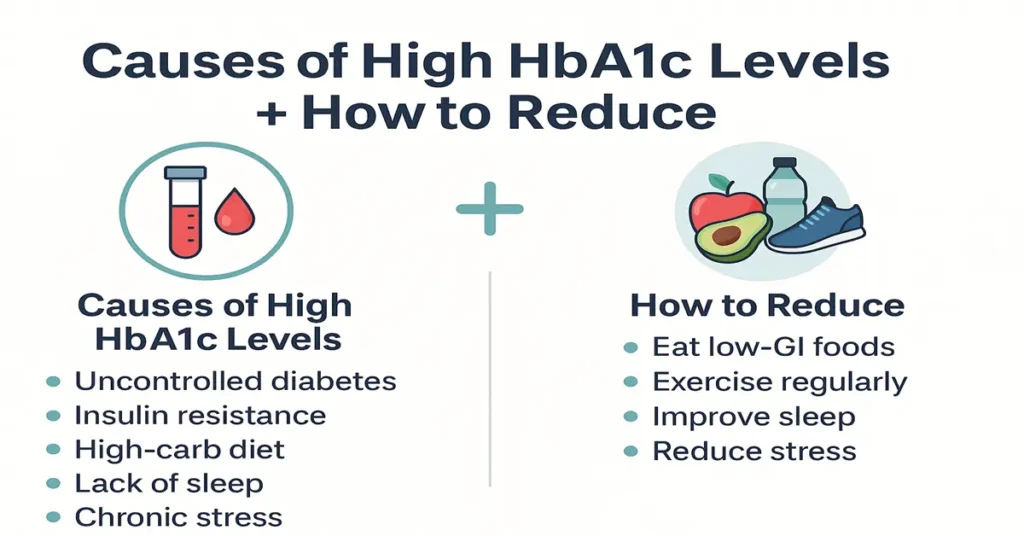
Causes of High HbA1c Levels + How to Reduce Them Naturally
Overview
HbA1c, also known as glycated hemoglobin, is a blood test that reflects your average blood sugar level over the last 2–3 months. In routine lab and OPD practice, this test helps doctors understand long-term glucose control rather than day-to-day fluctuations.
When HbA1c is high, it does not mean sugar went up suddenly. Clinically, it usually tells us that blood sugar has remained on the higher side for many weeks. This is why HbA1c is used to diagnose diabetes, assess control in known diabetics, and estimate the risk of long-term complications.
High HbA1c builds up slowly. It is influenced by ongoing glucose levels, lifestyle habits, hormonal balance, medication use, and certain medical conditions. This article explains why HbA1c rises, what it usually indicates, and how doctors generally approach lowering it naturally through consistent, safe measures.
What High HbA1c Indicates
A raised HbA1c commonly signals that the body has been exposed to excess glucose over time. In practice, it often reflects:
Poor overall blood sugar control
Repeated fasting or post-meal sugar elevations
Underlying insulin resistance
Increased risk of diabetes-related complications if levels stay high
Doctors interpret HbA1c along with symptoms and other glucose tests.
Common HbA1c ranges
Normal: below 5.7%
Prediabetes: 5.7% to 6.4%
Diabetes: 6.5% or higher
Poor control (in known diabetes): usually above 7%
Medical Causes of High HbA1c
Uncontrolled diabetes
The most frequent cause is persistently elevated blood sugar. In real-world settings, this often happens due to missed medications, irregular intake, inconsistent follow-up, or difficulty maintaining daily control.
Insulin resistance
When body cells do not respond properly to insulin, glucose stays in the bloodstream. This is commonly seen in overweight individuals and in conditions like PCOS, thyroid disorders, and fatty liver. In labs, these patients often show gradually rising HbA1c despite modest fasting values.
High carbohydrate or sugar-heavy diet
Frequent intake of refined carbohydrates and sugary foods causes repeated glucose spikes. Over weeks, these spikes contribute significantly to higher HbA1c, even if individual readings don’t always seem extreme.
Stress and hormonal changes
Chronic stress increases cortisol levels, which raise blood sugar. Clinically, we often notice higher HbA1c in people with prolonged mental or physical stress.
Poor sleep patterns
Inadequate or disturbed sleep affects insulin sensitivity. Patients with irregular sleep schedules often show unexplained worsening of HbA1c.
Sedentary lifestyle
Long periods of sitting reduce glucose utilization by muscles. In routine practice, physical inactivity is one of the most consistent contributors to elevated HbA1c.
Thyroid disorders
Both underactive and overactive thyroid conditions can disturb glucose metabolism, indirectly raising HbA1c.
Liver and kidney conditions
These organs play a role in glucose storage, release, and clearance. When their function is impaired, sugar control becomes unstable over time.
Certain medications
Drugs such as steroids, some psychiatric medications, immunosuppressants, and high-dose hormonal pills are known to raise blood sugar and HbA1c.
Infections or prolonged illness
Ongoing infections or inflammatory states raise glucose levels. If this continues for weeks, HbA1c may increase.
Symptoms of High HbA1c
HbA1c itself does not cause symptoms, but sustained high glucose does.
Commonly reported symptoms
Excessive thirst
Frequent urination
Persistent tiredness
Blurred vision
Slow wound healing
Unexplained weight loss
Increased hunger
Irritability
Dry mouth
Tingling or numbness in hands and feet
Severe symptoms requiring urgent attention
Vomiting
Fruity-smelling breath
Difficulty breathing
Confusion
These features may indicate serious metabolic imbalance and need immediate medical evaluation.
How to Reduce High HbA1c Naturally
HbA1c reflects a 3-month average, so improvement is gradual. In clinical practice, doctors focus on consistent daily habits rather than quick fixes.
Diet-related approaches
Eating foods that release sugar slowly helps reduce repeated spikes. Whole grains, legumes, vegetables, and whole fruits are commonly recommended. Excess refined carbohydrates and sugary foods are usually limited. Portion control is equally important, as even healthy foods in excess can raise glucose.
Balancing meals with adequate protein and healthy fats helps stabilize post-meal sugar levels. Fiber-rich foods slow glucose absorption and are often encouraged.
Lifestyle-related approaches
Light physical activity after meals, such as short walks, is commonly advised to blunt post-meal sugar rise. Regular exercise improves insulin sensitivity over time.
Adequate sleep supports hormonal balance and glucose regulation. Good hydration prevents concentration-related sugar elevation. Stress-reduction practices are often suggested, as stress hormones directly affect blood sugar.
Supplements and natural agents
Some supplements are studied for glucose control, but in routine practice, doctors advise using them only under medical supervision. They are never considered a replacement for prescribed treatment.
When High HbA1c Becomes Dangerous
Persistently raised HbA1c increases health risks over time.
Short-term effects may include fatigue, frequent infections, blurred vision, and delayed healing.
Long-term risks include nerve damage, kidney disease, heart disease, stroke, vision problems, foot ulcers, and sexual dysfunction.
In general clinical terms, HbA1c above 8% significantly raises complication risk. Values above 10% are considered poorly controlled and require urgent medical review.
When to See a Doctor
Medical consultation is advised if HbA1c reaches diabetic range, symptoms of high sugar appear, glucose readings stay high, or if there is numbness, visual disturbance, or persistent fatigue. Pregnant individuals with raised HbA1c should seek early care. If HbA1c does not improve despite consistent lifestyle efforts, professional review is essential.
Doctors may reassess medications, dosing schedules, monitoring frequency, and overall management strategy.
Important Word Explanations
HbA1c: Reflects average blood sugar over about three months
Hyperglycemia: High blood sugar
Insulin resistance: Reduced response of body cells to insulin
Glycation: Binding of glucose to hemoglobin
Low-GI foods: Foods that release glucose slowly into the blood
People Also Ask
Is a high HbA1c result always serious?
Not always. Doctors consider the value along with symptoms, duration, and other test results.
Can HbA1c be temporarily high?
Yes. Prolonged illness, stress, or infections can raise it temporarily.
Does high HbA1c always mean diabetes?
No. Values in the borderline range may indicate prediabetes rather than diabetes.
When do doctors usually worry about HbA1c?
Concern increases when levels remain high over time or rise despite efforts to control sugar.
Is repeat testing common for HbA1c?
Yes. Repeat testing helps confirm trends and monitor long-term control.
How long does it take to see HbA1c improvement?
Changes are usually seen over weeks to months, not days, because HbA1c reflects long-term glucose levels.
~END~