
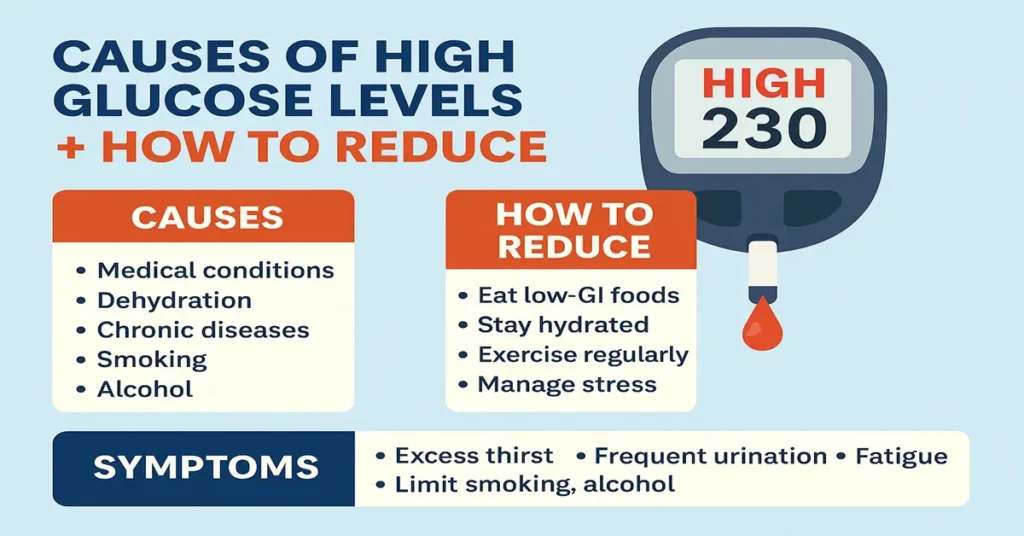
Causes of High Glucose (Blood Sugar) Levels + How to Reduce
Maintaining a healthy blood glucose level is essential for steady energy, clear thinking, and long-term organ health. In routine OPD practice, many patients come worried only when reports show “high sugar,” often without realizing that blood glucose usually rises slowly over time. High blood sugar, medically called hyperglycemia, is commonly linked to diabetes, but it can also appear in people without diabetes due to stress, illness, lifestyle habits, or temporary body changes.
When high glucose is ignored for long periods, it quietly affects the nerves, kidneys, eyes, heart, and immune system. This article explains why blood sugar rises, what it usually means clinically, common triggers doctors look for, typical symptoms, and safe, practical ways to reduce and stabilize glucose levels at home.
What Are High Glucose Levels?
High glucose levels mean that blood sugar remains above the normal range instead of returning to baseline after meals or overnight.
Common reference points doctors use are:
Fasting glucose above 125 mg/dL
Post-meal (PP) glucose above 180 mg/dL
A single high reading does not always mean disease. In daily lab practice, doctors look for repeated elevations, trends over time, and associated symptoms before labeling it as a problem.
Medical Causes of High Glucose Levels
High blood sugar usually has an underlying reason. Identifying that reason is more important than reacting to a single number.
Insulin resistance
This is the most common cause. The body produces insulin, but the cells do not respond effectively. As a result, glucose stays in the blood instead of entering the cells. This is frequently seen with weight gain, sedentary lifestyle, and genetic tendency.
Type 1 and Type 2 diabetes
In diabetes, blood sugar rises because insulin is either not produced adequately or not used properly. This requires long-term monitoring rather than short-term correction.
Hormonal disorders
Certain hormones naturally raise blood sugar. Conditions such as thyroid imbalance, Cushing’s syndrome, or excess growth hormone increase glucose production in the liver. Clinically, doctors suspect this when sugar remains high despite reasonable diet control.
Infections and acute stress
Fever, viral infections, injuries, or surgery trigger stress hormones that temporarily raise blood sugar. In routine lab work, this is commonly seen during acute illness and often settles after recovery.
Pancreatic problems
The pancreas produces insulin. Inflammation, surgery, or damage to the pancreas can reduce insulin availability and raise glucose levels.
Medication effects
Some medicines increase blood sugar as a side effect. Steroids, certain diuretics, birth control pills, and anti-seizure drugs are common examples. Doctors usually review medications before making any changes.
Dehydration and Its Role in High Glucose Levels
Dehydration is an often-overlooked reason for sudden high sugar readings.
When the body lacks enough water:
Blood becomes concentrated
Glucose is less diluted
Kidneys struggle to flush out excess sugar
Even mild dehydration, especially in hot weather or during illness, can cause temporary spikes. In practice, doctors often advise repeating the test after proper hydration before drawing conclusions.
Chronic Conditions Linked With High Glucose
Some long-term conditions make glucose control more difficult.
Kidney disorders reduce glucose clearance from the blood.
Liver disease disrupts normal glucose storage and release.
Heart disease affects circulation and insulin efficiency.
Polycystic Ovary Syndrome (PCOS) is commonly associated with insulin resistance in women.
In such cases, sugar control improves only when the underlying condition is addressed.
Smoking and Alcohol as Triggers
Lifestyle habits play a strong role in persistent hyperglycemia.
Smoking reduces insulin sensitivity and increases inflammation, pushing glucose higher over time.
Alcohol can cause unpredictable sugar changes. Some drinks raise sugar quickly, while heavy or long-term use damages the liver, worsening glucose control. Sweet mixers and drinking on an empty stomach add to the problem.
Symptoms of High Glucose Levels
High blood sugar often develops silently.
Early symptoms may include increased thirst, frequent urination, dry mouth, tiredness, and headaches.
As levels remain high, people may notice blurred vision, slow-healing wounds, increased hunger, or mood changes.
With prolonged elevation, symptoms like numbness in hands or feet, unexplained weight loss, extreme fatigue, nausea, or fruity-smelling breath may appear.
Clinically, symptoms guide urgency more than the number alone.
How to Reduce High Glucose Levels Naturally at Home
Reducing high glucose safely focuses on consistency, not quick fixes.
Dietary Approaches That Support Lower Glucose
Choosing foods that release sugar slowly helps maintain balance. Whole grains, beans, lentils, vegetables, and foods rich in fiber prevent sharp spikes. Fiber slows sugar absorption and supports gut health.
Limiting refined carbohydrates and sugary snacks is important, as these cause rapid rises in glucose. Adding protein and healthy fats to meals helps sugar rise more gradually and keeps you full longer.
Lifestyle Habits That Make a Real Difference
Regular hydration prevents false elevations and supports kidney function.
A short walk after meals helps muscles use glucose more efficiently and reduces post-meal spikes.
Adequate sleep is essential, as poor sleep increases stress hormones that raise sugar.
Stress management matters. In clinical settings, people under constant stress often show unstable glucose levels despite similar diets.
Reducing smoking and alcohol intake improves insulin response over time.
Natural Supplements With Caution
Some supplements are discussed in glucose control, such as magnesium, cinnamon, fenugreek, or alpha-lipoic acid. These should never replace medical advice and are best used only after discussing with a doctor, especially for people with diabetes or other chronic illnesses.
When High Glucose Levels Become Dangerous
High blood sugar needs medical attention when fasting or post-meal levels stay high on repeated tests, when symptoms like constant thirst, weight loss, numbness, or frequent infections appear, or when sudden severe symptoms develop.
Very high glucose can lead to serious emergencies like diabetic ketoacidosis or hyperosmolar states, which require immediate hospital care.
Test Preparation for Blood Sugar Testing
For accurate results, fasting tests usually require 8–10 hours without food. Alcohol should be avoided for at least 24 hours before testing. Always inform the doctor about ongoing medicines, especially insulin or tablets.
Important Word Explanations
Hyperglycemia means abnormally high blood sugar.
Insulin resistance refers to poor response of body cells to insulin.
Glycemic Index is a scale that shows how fast a food raises blood sugar.
Insulin is the hormone that allows glucose to enter cells.
DKA is a serious complication caused by extremely high sugar levels.
People Also Ask
Is high blood sugar always diabetes?
No. Temporary stress, infections, dehydration, or medications can also raise sugar.
Can high glucose be temporary?
Yes. Illness, poor sleep, or dehydration can cause short-term increases.
When do doctors usually worry about high sugar?
When readings stay high on repeated tests or symptoms start appearing.
Is repeat testing common?
Very common. Doctors often repeat tests to confirm trends.
Can lifestyle changes really lower glucose?
In many early or mild cases, yes. Consistent habits make a big difference.
Does one high reading damage the body?
Usually no. Long-term uncontrolled levels cause damage, not a single spike.
~END~
Related Posts
None found
Cool Post.
I have fun with, cause I found exactly what I used to be taking a look for.
You’ve ended my four day long hunt! God Bless you man. Have a great day.
Bye