
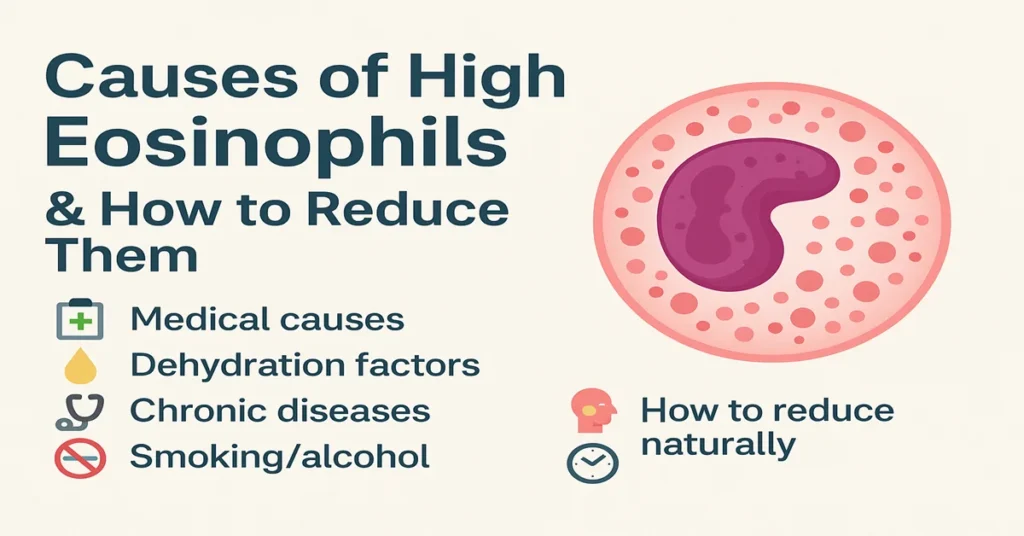
Causes of High Eosinophil Levels and How to Reduce Them Naturally
Eosinophils are white blood cells involved in allergic reactions, asthma-related inflammation, parasite defense, and certain immune responses. In routine OPD and lab practice, a raised eosinophil count—called eosinophilia—most often points toward allergy or chronic inflammation rather than something immediately dangerous. Still, persistently high values deserve attention, not panic.
Clinically, doctors look at eosinophils as signals, not diagnoses. A mild rise may be harmless and temporary, while higher or sustained elevations prompt a closer look at allergies, infections, medications, or chronic conditions. This article explains the common causes, how dehydration and lifestyle factors influence results, what symptoms usually mean, and how doctors think about natural, supportive ways to help levels settle when the cause is mild and reversible.
What Are High Eosinophils (Eosinophilia)?
Eosinophils are measured in a Complete Blood Count (CBC).
In most laboratories, a typical eosinophil count ranges from 50 to 500 cells/µL (reference ranges can vary slightly).
Values above this range are labeled as eosinophilia. Clinically, eosinophilia is described as mild, moderate, or severe based on how high the count is and whether symptoms are present. A single elevated value is less important than the trend over time and the clinical context.
Medical Causes of High Eosinophil Levels
Allergic reactions
Allergy is the most common cause. Dust, pollen, seasonal allergies, food allergies, drug reactions, and skin allergies can all increase eosinophils. During an allergic response, eosinophils rise to manage inflammation. In routine practice, counts often fall once exposure reduces or symptoms settle.
Asthma
Asthma—especially allergic asthma—often shows raised eosinophils. Here, eosinophils reflect airway inflammation. Doctors correlate the count with breathing symptoms rather than treating the number alone.
Parasitic infections
Parasites trigger a strong eosinophil response. Roundworms, hookworms, tapeworms, and pinworms are common examples, particularly in areas with sanitation challenges. Treating the infection usually normalizes the count.
Skin diseases
Chronic skin inflammation such as eczema, dermatitis, psoriasis, or fungal infections can keep eosinophils elevated as the immune system remains active.
Autoimmune and inflammatory conditions
Conditions like inflammatory bowel disease, celiac disease, vasculitis, or rheumatoid arthritis can cause ongoing immune stimulation and higher eosinophils.
Lung disorders
Chronic allergic lung conditions, long-standing asthma, COPD with allergic features, or eosinophilic pneumonia may show persistent eosinophilia.
Medications
Some drugs can raise eosinophils, including certain antibiotics, anti-seizure medicines, NSAIDs, and even herbal products. Drug history is always reviewed when eosinophils rise unexpectedly.
Rare but serious causes
Very high or steadily increasing eosinophils may require evaluation for bone marrow disorders, leukemia, or hypereosinophilic syndrome (HES). These are uncommon and usually come with other abnormal findings.
Dehydration and High Eosinophils
Dehydration does not increase eosinophils directly. It concentrates the blood, making cell counts appear higher. Fever, vomiting, diarrhea, heavy sweating, high salt intake, or excess caffeine/alcohol can contribute. Rehydration often brings values back toward baseline.
Chronic Diseases Linked to High Eosinophils
Long-term gastrointestinal inflammation, endocrine disorders (such as adrenal issues), chronic allergic lung disease, and persistent skin conditions can maintain elevated eosinophils over time. In these cases, managing the underlying condition is more important than focusing on the number alone.
Smoking and Alcohol Effects
Smoking irritates airways and sustains inflammation, commonly raising eosinophils—especially in people with asthma or allergies. Heavy alcohol intake disrupts immune balance and can worsen inflammatory responses. Reducing or stopping both often helps counts settle gradually.
Symptoms of High Eosinophils
Eosinophilia itself usually does not cause symptoms. Complaints come from the underlying cause. Commonly reported issues include cough, wheezing, breathing difficulty, skin rashes or itching, allergic eye or nasal symptoms, abdominal discomfort (with parasites), fatigue, or fever. Persistence beyond a few weeks warrants evaluation.
How Doctors Think About Reducing High Eosinophils Naturally
When eosinophilia is mild and linked to lifestyle or exposure, doctors usually recommend supportive steps rather than aggressive treatment.
Identifying and avoiding allergens is key. Improving indoor air quality—regular cleaning, washing bedding, controlling dust and humidity—often reduces allergic triggers.
Adequate hydration helps avoid falsely elevated readings and supports immune balance.
A balanced, anti-inflammatory diet supports regulation: fruits and vegetables, whole grains, omega-3 sources, and natural anti-inflammatory foods are commonly advised, while excess sugar and processed foods are minimized.
Stress management matters. Chronic stress sustains inflammation. Simple practices—breathing exercises, meditation, light exercise, and time outdoors—are often suggested.
Good sleep (7–9 hours) allows immune regulation.
Avoiding smoking and limiting alcohol reduces airway and tissue irritation.
Treating underlying infections—especially parasitic causes—brings eosinophils down naturally once the trigger resolves. Self-medication is discouraged, as some drugs can worsen eosinophilia.
When High Eosinophils Become Concerning
Doctors usually investigate further if eosinophils stay high for 4–8 weeks, continue rising on repeat tests, or are associated with severe asthma, breathing difficulty, organ enlargement, persistent fever, weight loss, or suspected lung disease. Additional tests are chosen based on symptoms and history.
Test Preparation for Eosinophil Test
No fasting is usually required. Maintain normal hydration. Avoid smoking and alcohol before testing. Inform the doctor about medications, recent infections, allergies, or asthma symptoms, as these influence results.
When to Consult a Doctor
Seek medical advice if high eosinophils persist on repeated tests, breathing becomes difficult, skin rashes recur, abdominal pain suggests parasites, fever lasts several days, or there is unexplained weight loss. Early evaluation clarifies whether the rise is temporary or needs monitoring.
Important Word Explanations
| Term | Simple Explanation |
|---|---|
| Eosinophils | White blood cells involved in allergy, asthma, parasite defense, and immune regulation. |
| Eosinophilia | A condition where eosinophil levels are higher than normal. |
| Inflammation | The body’s response to irritation or infection. |
| Allergen | A substance that triggers an allergic reaction. |
| Parasite | An organism living in the body that can cause infection. |
People Also Ask
Is a high eosinophil count always serious?
No. Mild elevations are common with allergies and often temporary.
Can eosinophils rise during allergy season?
Yes. Seasonal allergies frequently increase eosinophils.
Does high eosinophils always mean parasites?
No. Allergies and asthma are more common causes.
When do doctors usually worry about eosinophils?
When levels are very high, persistent, or linked with breathing or systemic symptoms.
Is repeat testing common for eosinophilia?
Yes. Trends over time are more useful than a single result.
Can someone feel normal with high eosinophils?
Yes. Many people have no symptoms, especially with mild elevations.
~END~
Gut geschriebener Post!
Ich fand die Informationen wirklich hilfreich.
Weiter so mmit dden tollen Artikeln
wwll written posts, really best